Methodological Considerations for Evaluating Policy Impacts on Transgender and Non-Binary Youth Suicidality
Why It Matters
Accurate evidence on how legislation affects youth mental health is critical for lawmakers, courts, and advocacy groups; flawed estimates can misdirect policy and funding decisions.
Key Takeaways
- •Post‑treatment observations largely from a single state skew results
- •Control states may not share comparable pre‑law trends
- •Alternative specifications produce widely varying effect sizes
- •Transparent methodology essential for credible policy impact studies
Pulse Analysis
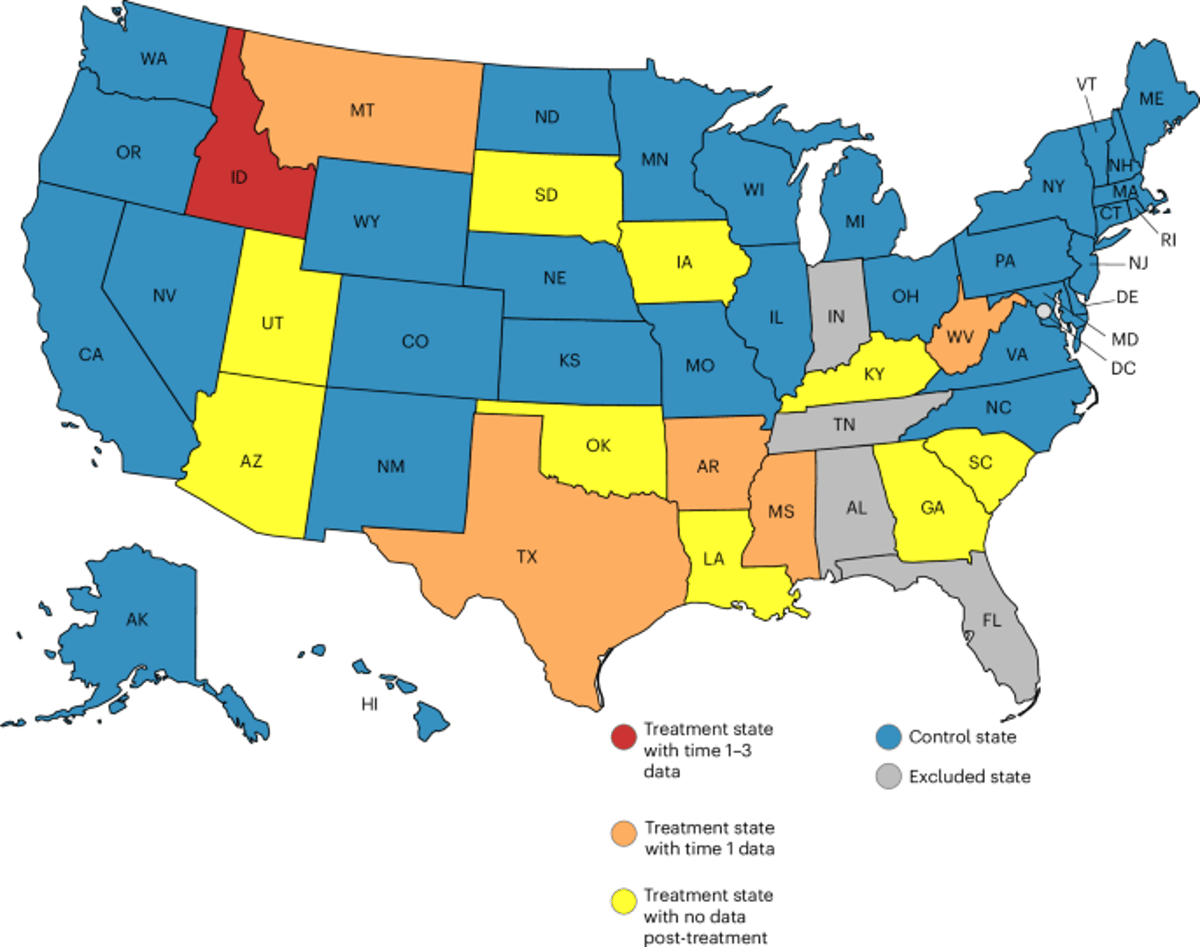
Recent scholarship has increasingly linked state‑level policies to health outcomes for LGBTQ+ populations, but establishing causality demands rigorous design. Difference‑in‑differences (DD) is a popular tool because it can isolate policy effects when randomized trials are impossible. However, DD relies on strong assumptions—most notably that treatment and control units would have followed parallel trends absent the intervention. When data are sparse or unevenly distributed across states, these assumptions become fragile, risking biased conclusions that can ripple through public discourse.
The Nature Human Behaviour commentary zeroes in on three core methodological flaws in the Lee et al. study. First, the post‑law observation window is dominated by a single state, inflating its influence on the overall estimate. Second, the control group includes states with divergent pre‑law suicide‑attempt trajectories, undermining the parallel‑trend premise. Third, re‑running the analysis with alternative specifications—different time windows, weighting schemes, or covariate sets—produces effect sizes ranging from negligible to substantial. This variability signals that the reported increase in suicidality is not robust and should be treated as provisional pending further validation.
For policymakers, courts, and funders, the takeaway is clear: policy impact research must meet high standards of transparency and reproducibility. Researchers should disclose data sources, justify control selection, and present sensitivity analyses alongside primary results. Such practices enable stakeholders to assess the credibility of findings before they shape legislation or allocate resources. As debates over transgender rights intensify, evidence‑based approaches will be essential to balance civil liberties with public health objectives, ensuring that interventions are guided by solid science rather than methodological shortcuts.
Methodological considerations for evaluating policy impacts on transgender and non-binary youth suicidality
Comments
Want to join the conversation?
Loading comments...