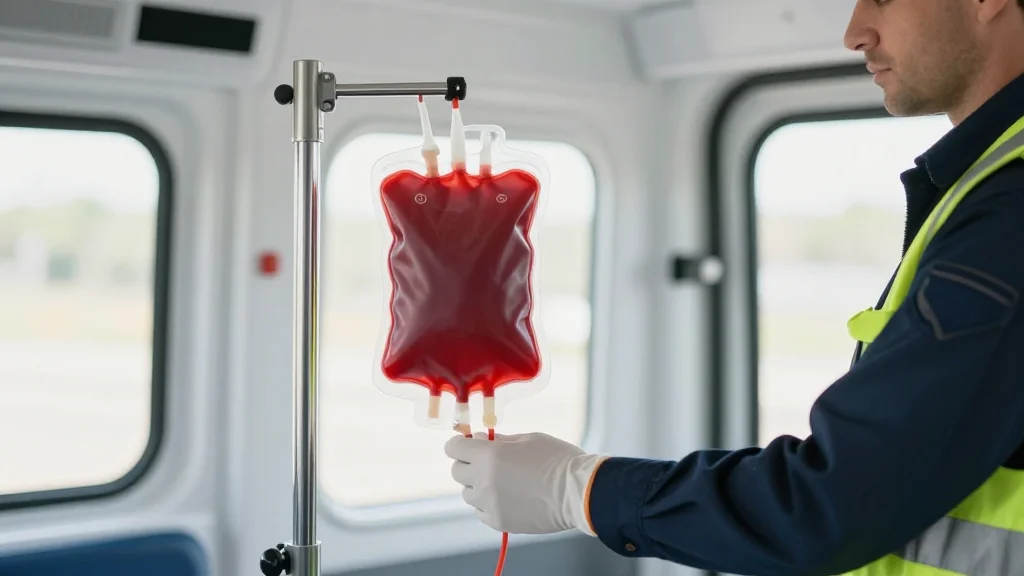
More Ambulances Are Carrying Blood for Transfusions. Experts Say It Will Save Lives
Why It Matters
The ability to deliver blood on scene shortens the time to definitive care, directly lowering death rates for severe hemorrhage. Scaling the program could transform trauma outcomes across both urban and rural emergency systems.
Key Takeaways
- •300 EMS agencies now carry pre‑hospital blood, up from few dozen
- •Type O blood used, compatible with all patients
- •NHTSA allocated $50 million to expand ambulance blood programs
- •Pre‑hospital transfusion can cut trauma mortality by 37 %
- •Blood must stay cooled, then warmed, and expires quickly
Pulse Analysis
Pre‑hospital blood transfusion, once a battlefield innovation, is rapidly moving into civilian emergency medicine. In the United States, roughly 300 of the 15,000 EMS agencies now stock type O blood, a universal donor product that can be given without cross‑matching. The shift has been driven by advances in portable blood‑warming devices and a growing evidence base that early plasma and red‑cell infusion improves survival. States from Oregon to Florida are piloting programs, and the National Highway Traffic Safety Administration has earmarked $50 million to accelerate deployment.
Clinical studies cited by the American College of Emergency Physicians indicate a 37 % reduction in mortality when transfusion begins within the golden minutes of severe hemorrhage. Paramedics in Hartford report patients stabilizing in as little as one minute, buying crucial time for transport to definitive care. The financial outlay—while modest compared with overall trauma system budgets—delivers high‑value returns by preventing deaths and reducing intensive‑care stays. Moreover, the universal type O supply simplifies logistics, allowing both urban and remote agencies to adopt the protocol with minimal blood‑type testing.
Despite the promise, logistical hurdles remain. Blood must be stored at controlled temperatures, rotated before expiration, and warmed immediately before infusion, requiring specialized equipment and rigorous training. Rural services face supply‑chain constraints, while urban fleets must manage inventory turnover to avoid waste. Policy makers are therefore focusing on standardizing protocols, securing reimbursement pathways, and integrating blood‑stock monitoring into existing EMS software. As more agencies join the 2 % early adopters, the cumulative effect could reshape trauma care, turning minutes into survivable outcomes nationwide.
More ambulances are carrying blood for transfusions. Experts say it will save lives
Comments
Want to join the conversation?
Loading comments...