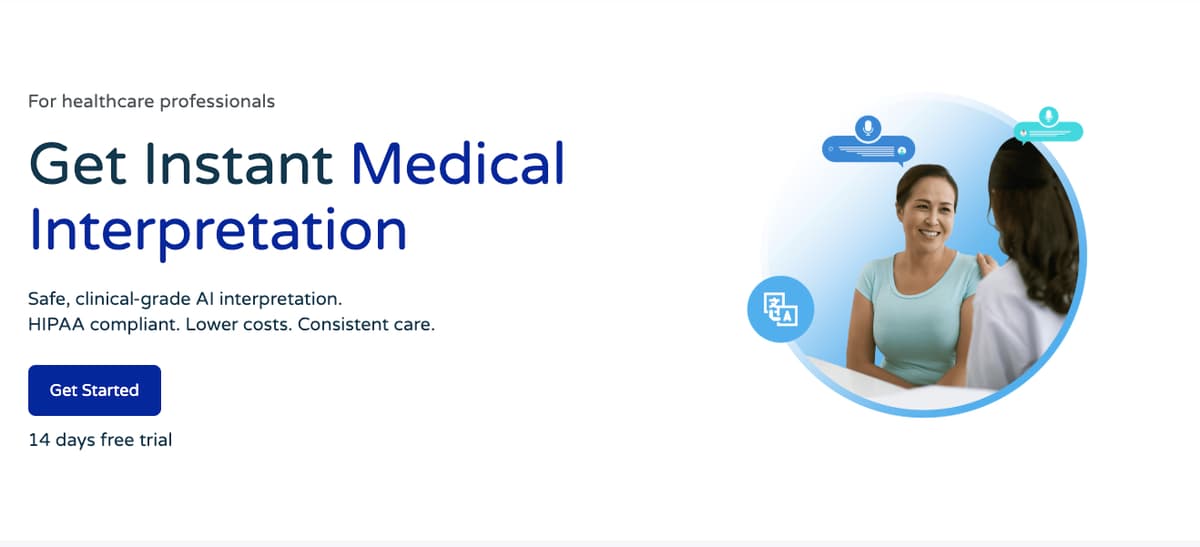
NEJM Catalyst Study Validates No Barrier’s Hybrid AI-Human Model for High-Stakes Surgical Communication
Why It Matters
Hybrid language‑access solutions can boost patient satisfaction and streamline surgical workflows, giving health systems a competitive edge in an increasingly multilingual market.
Key Takeaways
- •Hybrid AI-human model outperforms single-mode interpretation in patient preference
- •AI delivers instant, private translation for routine surgical communication
- •Remote video remains essential for emotionally charged, high-stakes conversations
- •Study validates embedding language access into core clinical workflows
- •Supports over 40 languages, addressing diverse U.S. patient populations
Pulse Analysis
The rise of artificial intelligence in health care has moved beyond diagnostic assistance to direct patient communication. Language barriers, especially for non‑English‑preferring patients, have long contributed to poorer outcomes and heightened anxiety during surgery. The recent NEJM Catalyst study at Mass General Brigham provides the first independent validation of an AI‑first translation platform, No Barrier, by measuring patient acceptance through a modified technology acceptance model. By focusing on perceived usefulness, ease of use, and cultural alignment, the research offers a data‑driven view of how AI can complement, rather than replace, human interpreters.
The study’s most striking insight is the demand for a hybrid infrastructure. While remote video interpretation excels in conveying empathy during high‑stakes, emotionally charged discussions, No Barrier’s real‑time AI delivers instantaneous, HIPAA‑compliant translations for routine exchanges, reducing wait times that can stall surgical workflows. This dual‑mode approach not only preserves the human connection patients crave but also frees clinical staff from scheduling bottlenecks. The result is a measurable boost in patient satisfaction and a smoother, faster flow of critical information in operating rooms.
For health systems competing for a diverse patient base, integrating a flexible language‑access stack becomes a strategic differentiator. The platform’s support for more than 40 languages aligns with the United States’ growing multilingual demographics, while its compliance framework satisfies stringent privacy regulations. As hospitals adopt the hybrid model, they can expect lower interpreter costs, improved documentation accuracy, and stronger trust among underserved communities. The NEJM Catalyst validation signals to investors and administrators that AI‑human collaboration is not a niche experiment but a scalable solution poised to reshape clinical communication standards.
NEJM Catalyst Study Validates No Barrier’s Hybrid AI-Human Model for High-Stakes Surgical Communication
Comments
Want to join the conversation?
Loading comments...