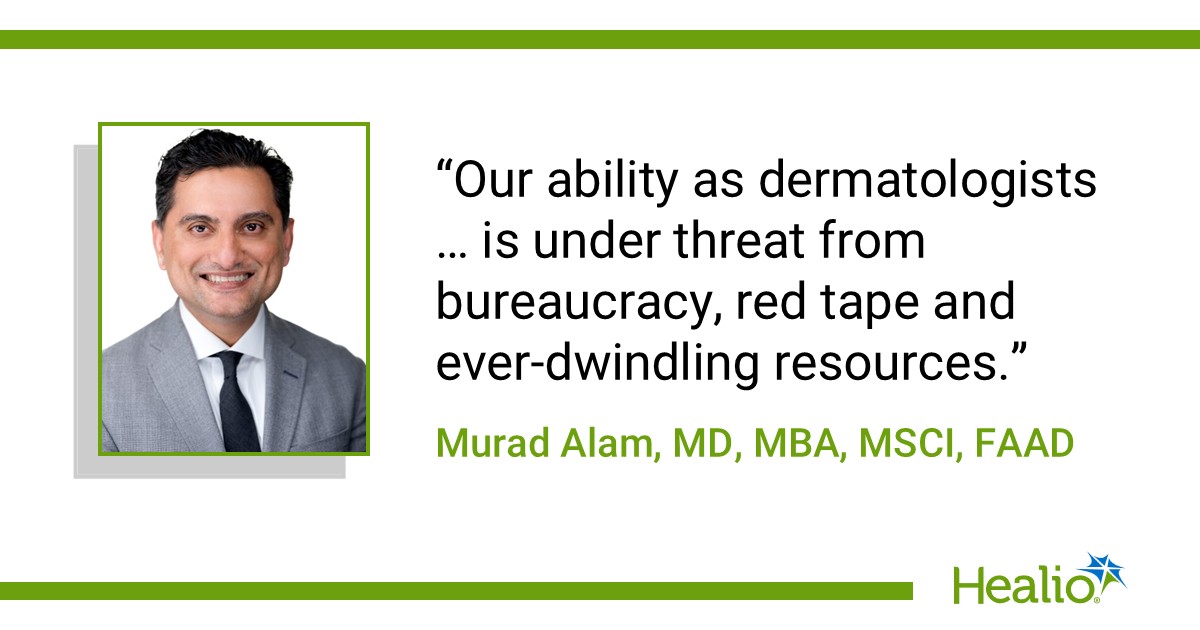
New AAD Leaders Aim to Fix ‘Broken’ Access to Care, Serve Next Generation of Dermatologists
Companies Mentioned

Why It Matters
Dermatology practices are confronting unsustainable reimbursement cuts that threaten patient access and the specialty’s pipeline, making AAD’s advocacy crucial for the industry’s financial health and future talent retention.
Key Takeaways
- •AAD president Alam targets broken access-to-care model.
- •Weinstein prioritizes stabilizing Medicare fee schedule for dermatologists.
- •Medicare conversion factor up 0.75% in 2026, still below inflation.
- •AAD will explore AI integration and engage next‑gen dermatologists.
- •Advocacy plan includes patient mobilization, congressional lobbying, limited PAC funding.
Pulse Analysis
The American Academy of Dermatology’s leadership transition arrives at a pivotal moment for the specialty. Alam’s inaugural address highlighted a systemic “access‑to‑care” crisis driven by bureaucratic hurdles, shrinking practice budgets, and a fee schedule that has not kept pace with inflation. By convening senior clinicians and policy experts, the AAD aims to craft data‑driven advocacy that can influence Medicare reforms and protect the viability of outpatient dermatology clinics, especially those serving underserved populations.
Medicare’s physician fee schedule, the primary revenue source for many dermatologists, saw only a 0.75% increase in the 2026 conversion factor, moving from $32.35 to roughly $32.58. Adjusted for inflation, this remains far below the $70 level that experts argue is necessary for sustainable practice operations. The gap fuels burnout, deters new graduates from opening private offices, and concentrates care in urban centers. Weinstein’s promise to champion a fee‑schedule overhaul reflects broader concerns across specialties that underfunded Medicare payments jeopardize the U.S. health‑care safety net.
Beyond reimbursement, the AAD’s agenda embraces emerging technologies and workforce renewal. Recognizing AI’s potential to enhance diagnostic accuracy, the academy plans to develop guidelines that balance innovation with ethical standards. Simultaneously, it seeks to attract early‑career dermatologists by offering mentorship, leadership pathways, and a stronger voice in policy debates. By aligning advocacy, technology, and generational engagement, the AAD hopes to secure a resilient future for dermatology, ensuring patients receive timely, high‑quality skin care.
New AAD leaders aim to fix ‘broken’ access to care, serve next generation of dermatologists
Comments
Want to join the conversation?
Loading comments...