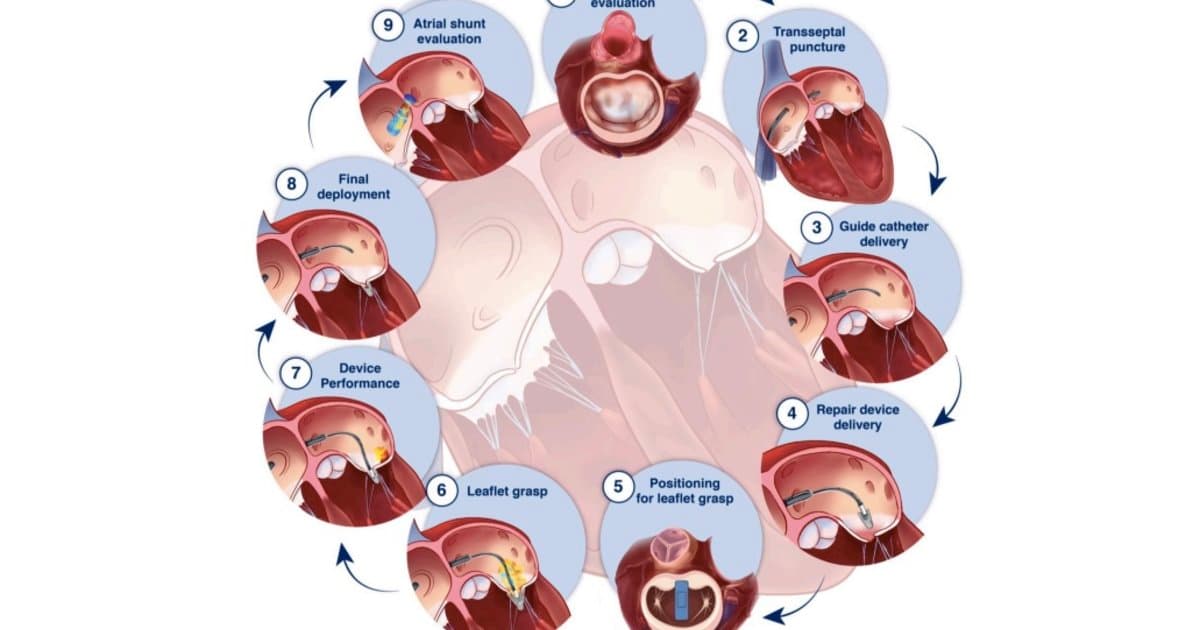
New Guideline Standardizes Echo Guidance for Mitral Transcatheter Edge-to-Edge Repairs
Why It Matters
Standardized imaging protocols are expected to raise success rates, reduce complications, and accelerate broader adoption of M‑TEER across hospitals.
Key Takeaways
- •ASE guideline mandates 3‑D multiplanar reconstruction for M‑TEER imaging.
- •Real‑time 2‑D/3‑D manipulation required for accurate leaflet clipping.
- •Standardized imaging reduces variability among non‑center operators.
- •Consistent use expected to boost procedural success and patient outcomes.
Pulse Analysis
M‑TEER has become a cornerstone of minimally invasive mitral regurgitation therapy, offering patients a catheter‑based alternative to open surgery. As the procedure spreads from high‑volume structural‑heart centers to community hospitals, the quality of intraprocedural imaging has emerged as a critical determinant of outcomes. Without a unified approach, operators with varying echo expertise risk suboptimal device positioning, higher residual regurgitation, and longer procedure times, which can erode the clinical and economic advantages of the technique.
The ASE’s new guideline tackles these challenges by making 3‑D multiplanar reconstruction (3‑D MPR) the preferred imaging modality for M‑TEER. 3‑D MPR delivers simultaneous orthogonal views, enabling precise assessment of leaflet anatomy, clip orientation, and transseptal puncture location. The recommendations also outline a step‑by‑step workflow for image acquisition, real‑time communication between echocardiographers and interventionalists, and competency benchmarks for practitioners. By codifying best practices, the guideline aims to harmonize training, reduce procedural variability, and ultimately improve patient safety.
For the broader cardiovascular market, the guideline signals a push toward higher‑quality imaging infrastructure and specialized staffing. Device manufacturers may see increased demand for advanced 3‑D echo platforms, while hospitals will need to invest in training programs to meet ASE competency standards. The expected rise in procedural efficiency and outcome consistency could translate into lower overall costs for payers, making M‑TEER a more attractive option for a wider patient population. As adoption accelerates, the guideline positions ASE as a key influencer in shaping the future landscape of structural‑heart interventions.
New guideline standardizes echo guidance for mitral transcatheter edge-to-edge repairs
Comments
Want to join the conversation?
Loading comments...