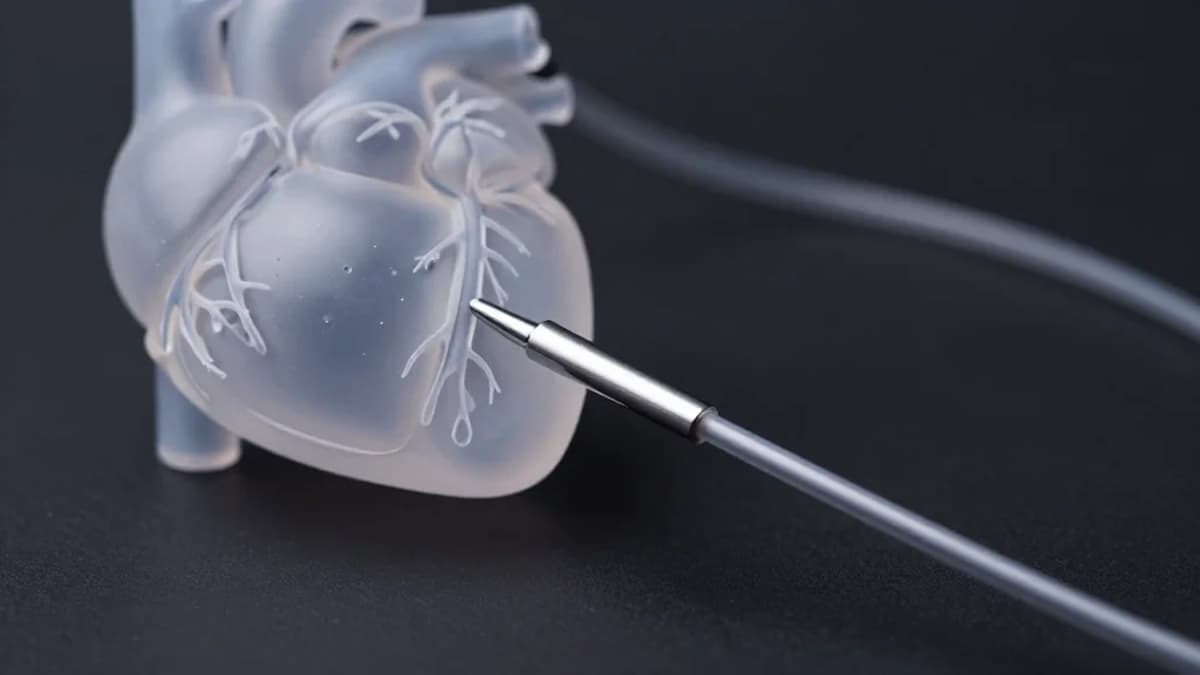
Next-Generation Guide Extension Catheter Delivers Value During Complex PCI
•March 9, 2026
0
Why It Matters
CrossFAST addresses key limitations of first‑generation GECs, enhancing procedural success and patient safety in complex PCI, which could accelerate radial access adoption and lower complication costs.
Key Takeaways
- •CrossFAST cleared FDA Dec 2024.
- •Enables deep coronary intubation without balloon tracking.
- •Reduces dissection risk versus first‑gen GECs.
- •Improves speed of stent delivery in tortuous vessels.
- •Supports radial access procedures with extra catheter support.
Pulse Analysis
Guide extension catheters have become essential tools in percutaneous coronary intervention, especially as operators shift toward radial access, which often limits the amount of support a standard guide catheter can provide. Traditional, blunt‑ended GECs help negotiate calcified or tortuous lesions but carry a notable risk of vessel dissection and can prolong procedure time. The need for a more refined delivery system grew as complex PCI cases increased, prompting manufacturers to explore micro‑catheter‑based designs that preserve vessel integrity while maintaining the pushability required for deep lesion access.
The CrossFAST system, cleared by the FDA in December 2024, introduces an edgeless transition between the outer catheter and a micro‑catheter‑led delivery shaft, eliminating the need for balloon‑assisted tracking. In early clinical experience, physicians reported rapid advancement through heavily calcified and tortuous segments, delivering stents to distal targets without inducing dissection. The device’s pushability and the ability to withdraw the inner catheter before stent deployment shorten ischemic time, a critical factor in patient safety. Moreover, the system succeeded where conventional GECs and rotational atherectomy failed, demonstrating versatility across proximal and distal lesions.
By addressing the shortcomings of first‑generation guide extensions, CrossFAST could reshape procedural workflows and expand the adoption of radial PCI for complex anatomies. Shorter procedure times and reduced complication rates translate into lower resource utilization and potentially higher reimbursement for hospitals. As more operators gain familiarity, the market may see a shift toward micro‑catheter‑led platforms, prompting competitors to accelerate innovation. Ongoing registries will be essential to confirm long‑term safety and to define optimal patient selection, but early data suggest a meaningful step forward for interventional cardiology.
Next-generation guide extension catheter delivers value during complex PCI
0
Comments
Want to join the conversation?
Loading comments...