Novel Pulsed Field Ablation Technology ‘Works’
Why It Matters
The technology promises deeper, more durable lesions with minimal heating, potentially redefining AF ablation standards and expanding market opportunities for next‑generation electroporation devices.
Key Takeaways
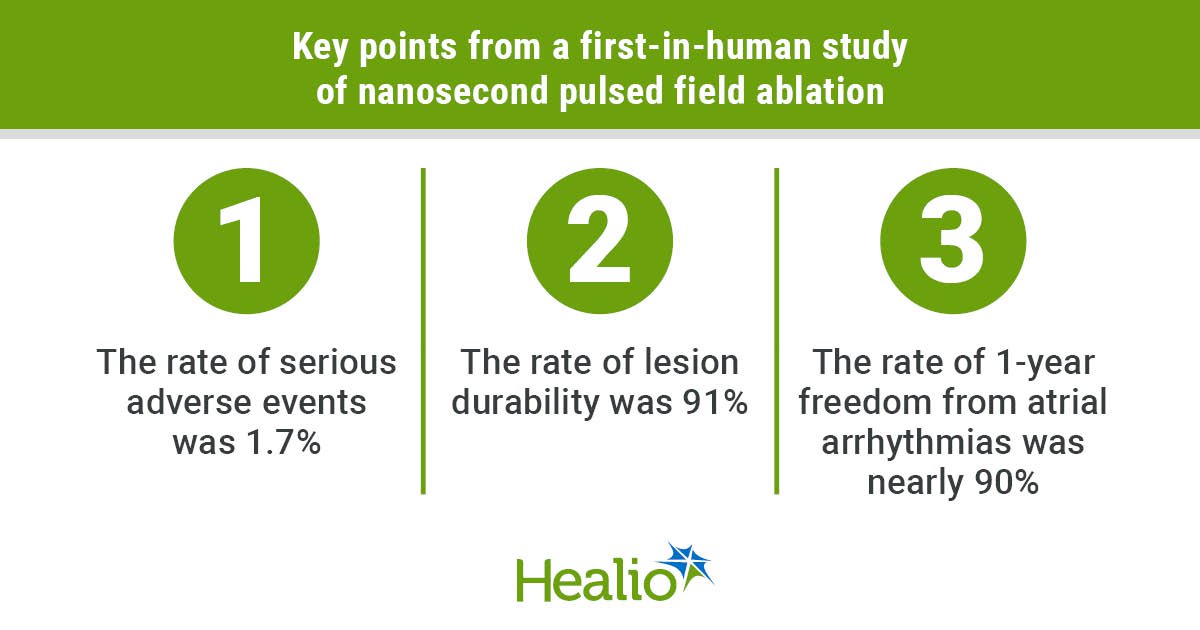
- •Nanosecond PFA achieved 91% lesion durability at 2‑3 months
- •1‑year arrhythmia‑free rate reached 89.7% in paroxysmal AF patients
- •Serious adverse events occurred in only 1.7% of 177 participants
- •Procedure time averaged 65 minutes, fluoroscopy 9 minutes
- •PFA delivered >10,000 V without appreciable tissue heating
Pulse Analysis
Pulsed‑field ablation has emerged as a non‑thermal alternative to radiofrequency energy for atrial fibrillation (AF) treatment, but existing microsecond systems struggle with lesion durability and collateral heating. By compressing each electrical impulse to the nanosecond scale, Pulse Biosciences' CellFX nsPFA 360 can raise voltage to over 10,000 V while keeping thermal spread negligible. This engineering breakthrough addresses the long‑standing trade‑off between lesion depth and safety, positioning nanosecond PFA as a potentially superior modality for pulmonary‑vein isolation.
The inaugural human study, presented at Heart Rhythm 2026 and published in JACC: Clinical Electrophysiology, enrolled 177 patients with paroxysmal AF across three centers. Acute success was universal, with a mean procedure time of 65 minutes and fluoroscopy exposure limited to nine minutes. At the 2‑3‑month remap, 91% of lesions remained electrically isolated, and one‑year follow‑up showed an 89.7% freedom‑from‑arrhythmia rate. Serious complications were rare—three events (1.7%) comprising pericardial effusion, hemolysis‑related kidney injury, and stroke—while silent cerebral lesions appeared in 11.4% of the MRI subgroup, on the low end of contemporary benchmarks.
Although the device is not yet cleared for U.S. commercial use, the early data have ignited interest among electrophysiologists and investors. A pivotal trial is now recruiting, and the technology could reduce reliance on deep sedation or paralytics by minimizing skeletal‑muscle stimulation. As multiple firms race to launch second‑generation PFA catheters, nanosecond pulse delivery may set a new efficacy and safety baseline, reshaping procedural workflows and expanding the addressable AF patient pool.
Novel pulsed field ablation technology ‘works’
Comments
Want to join the conversation?
Loading comments...