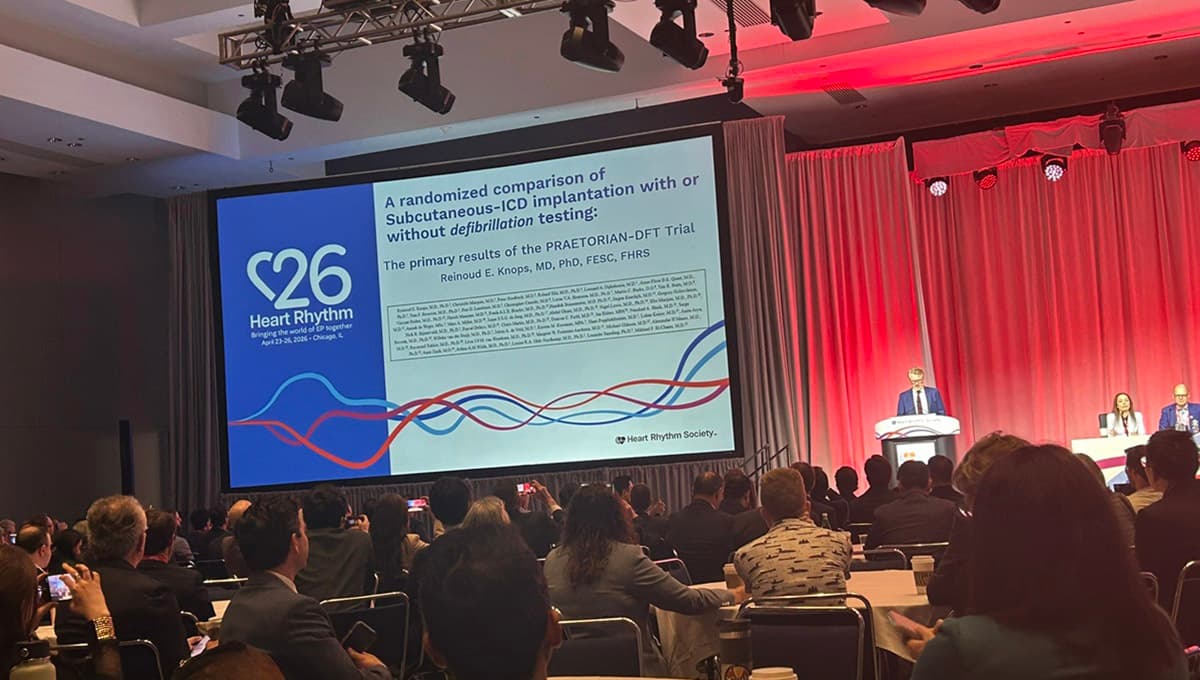
PRAETORIAN-DFT: Safe to Forgo Defibrillation Testing for S-ICD Implant
Why It Matters
Eliminating routine DFT reduces procedural risk and resource use, potentially accelerating S‑ICD adoption and prompting guideline revisions.
Key Takeaways
- •No-DFT strategy met non-inferiority with 1.7% vs 2.3% failed shocks.
- •Complication rate fell to 1.7% without DFT versus 4.8% with DFT.
- •PRAETORIAN score below 90 predicts over 99% defibrillation success.
- •965 patients, median 41‑month follow‑up, showed similar all‑cause mortality.
- •Results may drive guideline updates and increase subcutaneous ICD uptake.
Pulse Analysis
Defibrillation testing has long been a standard step after implantable cardioverter‑defibrillator placement, primarily to confirm shock efficacy. In transvenous systems, trials such as SIMPLE and NORDIC ICD have already rendered routine testing largely obsolete, citing anesthesia risks and procedural complexity. The subcutaneous ICD, however, retained a recommendation for DFT because optimal device positioning is critical for successful shock delivery. The PRAETORIAN scoring system, based on post‑implant chest X‑ray geometry, emerged as a non‑invasive proxy, predicting successful defibrillation with >99% accuracy when the score is under 90.
The PRAETORIAN‑DFT trial, presented at Heart Rhythm 2026 and published in *Circulation*, randomized 965 patients to either conventional DFT or a no‑DFT pathway guided by the PRAETORIAN score. Over a median 41‑month follow‑up, the primary endpoint—failed first shocks for spontaneous ventricular tachyarrhythmias—occurred in 1.7% of the no‑DFT group versus 2.3% in the DFT group, satisfying a pre‑specified non‑inferiority margin. Mortality rates were virtually identical, while early complications dropped from 4.8% with DFT to 1.7% without, underscoring the safety advantage of omitting the test.
These findings have immediate practice implications. By removing the need for anesthesia‑driven testing, electrophysiology labs can streamline S‑ICD procedures, lower costs, and reduce patient exposure to ICU stays or cardiac decompensation. The data also pressure professional societies to revise current guidelines, which still advocate routine DFT. Wider acceptance of a no‑DFT protocol could accelerate S‑ICD uptake, especially in centers hesitant about the logistical burden of testing, and set the stage for further research into high‑score cases and alternative intra‑procedural verification methods.
PRAETORIAN-DFT: Safe to Forgo Defibrillation Testing for S-ICD Implant
Comments
Want to join the conversation?
Loading comments...