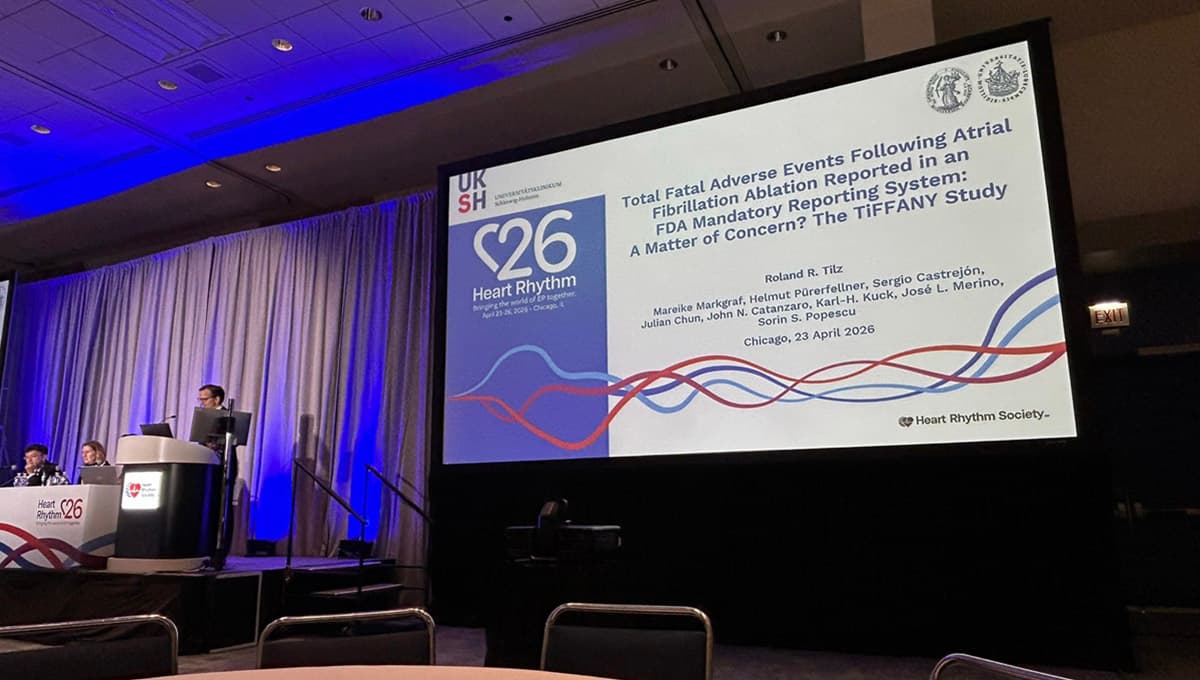
Rare Fatal Arrhythmias After PFA Highlighted in MAUDE Analysis
Companies Mentioned
Why It Matters
The data challenge the perception of PFA as uniformly safer, prompting clinicians and manufacturers to reassess risk management and data‑collection practices.
Key Takeaways
- •PFA mortality estimated at 17.8 per 100k, double thermal ablation
- •Fatal arrhythmic events occur at ~3.2 per 100k PFA procedures
- •Cardiac tamponade remains top cause of death across ablation methods
- •MAUDE data may over‑represent novel‑technology complications
- •Experts call for mandatory prospective safety registry for PFA
Pulse Analysis
Pulsed‑field ablation (PFA) entered the electrophysiology arena with the promise of reducing thermal injury‑related complications such as atrio‑esophageal fistula and phrenic nerve palsy. Early clinical trials and registries painted a picture of a markedly safer alternative to radiofrequency and cryoballoon ablation, driving rapid adoption in U.S. and European centers. However, as the technology scales to sicker patient cohorts, rare but severe events—particularly fatal arrhythmias—have begun to surface, prompting a re‑examination of its risk profile.
The TiFFANY study leveraged the FDA’s MAUDE database, manufacturer sales figures, and the large‑scale EMBOL‑AF registry to estimate real‑world mortality. Researchers identified 427 fatal events from 2014‑2025, with PFA accounting for 38.7% of deaths reported after 2021. The estimated fatal arrhythmic rate of 3.2 per 100,000 PFA procedures (about 1.8 per 100,000 for ventricular tachycardia/fibrillation) suggests a mortality risk roughly double that of thermal ablation (RR 2.08). While MAUDE’s voluntary nature may inflate novel‑technology complications, the consistency of the signal across multiple data sources underscores a genuine safety concern.
For clinicians, the immediate implication is heightened vigilance: extended rhythm monitoring post‑PFA and transparent discussion of arrhythmic risk with patients become essential. Industry stakeholders are urged to support a mandatory prospective safety registry to capture granular procedural data and outcomes, enabling more accurate incidence calculations. Until such infrastructure exists, clinicians must balance PFA’s advantages against its emerging risk profile, tailoring therapy choices to individual patient anatomy and comorbidities while advocating for robust post‑market surveillance.
Rare Fatal Arrhythmias After PFA Highlighted in MAUDE Analysis
Comments
Want to join the conversation?
Loading comments...