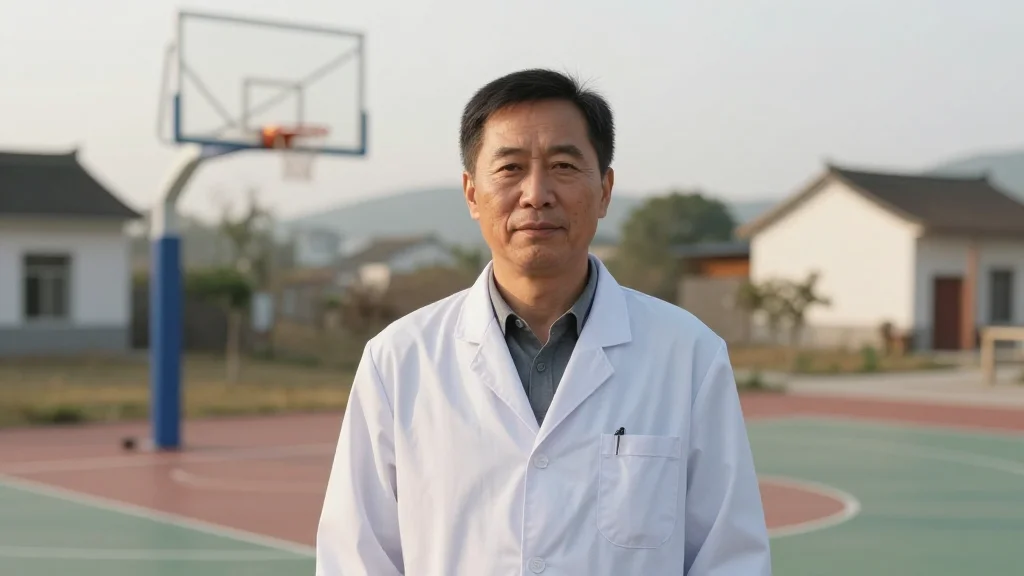
Reconfiguring Health Coproduction: Infrastructure, Village Doctors, and Physical Activity in Rural China
Why It Matters
Understanding the trade‑off between staffing and facilities helps policymakers allocate resources more efficiently, directly influencing rural health outcomes and cost‑effectiveness.
Key Takeaways
- •Village doctors boost rural residents' physical activity participation.
- •New sports facilities partially replace need for additional doctors.
- •Infrastructure expansion reshapes health promotion pathways in villages.
- •Policymakers must balance human and material investments for impact.
Pulse Analysis
Coproduction, the joint effort of service users and providers, has become a cornerstone of public‑health strategy worldwide. In rural China, however, the concept often overlooks the structural scaffolding that enables or constrains such collaboration. By framing village doctors as the human element and sports facilities as the material counterpart, the study applies Actor‑Network Theory to reveal how non‑human actants—like gyms and walking tracks—interact with frontline health workers to shape physical‑activity behaviors. This perspective shifts the conversation from purely relational dynamics to a broader systems view, highlighting the importance of tangible assets in health promotion.
The empirical findings show a nuanced balance: doctors undeniably raise participation rates in exercise programs, yet each additional facility diminishes the incremental benefit of hiring more doctors. In practical terms, a well‑equipped village can achieve comparable activity levels with fewer health workers, suggesting that infrastructure can act as a force multiplier. This substitution effect does not render human capacity obsolete; rather, it reconfigures the production process, allowing limited medical staff to focus on more complex tasks while residents benefit from accessible, well‑maintained spaces for movement.
For policymakers, the implications are clear. Investment decisions should weigh the marginal returns of expanding the health‑promotion workforce against the cost‑effectiveness of building or upgrading sports infrastructure. A mixed‑strategy approach—targeted training for village doctors combined with strategic facility upgrades—can maximize health outcomes while containing expenditures. Moreover, the study’s insights can inform scaling efforts in other low‑resource settings, where the balance between human and material inputs often dictates the success of community‑based health initiatives. Future research could explore long‑term sustainability and the role of digital tools in further enhancing coproduction efficiency.
Reconfiguring Health Coproduction: Infrastructure, Village Doctors, and Physical Activity in Rural China
Comments
Want to join the conversation?
Loading comments...