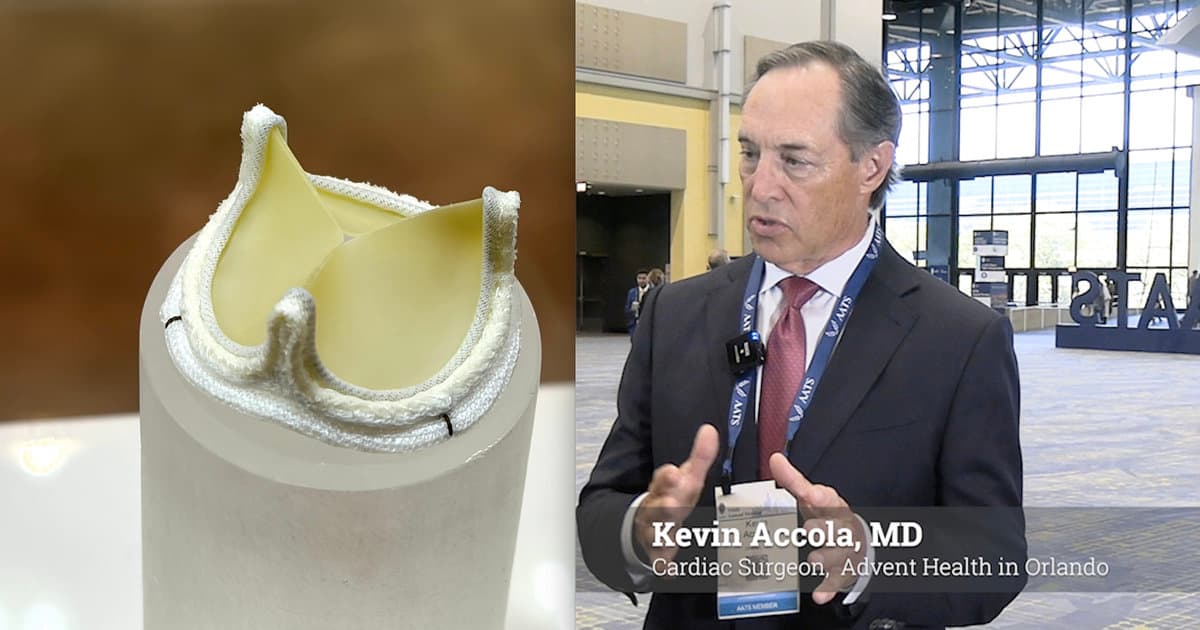
Resilia Tissue Developed by Edwards Lifesciences Associated with Long-Term Durability
Why It Matters
Demonstrated long‑term durability reduces the need for repeat valve surgeries, influencing treatment algorithms for younger aortic stenosis patients and potentially expanding the role of bioprosthetic valves.
Key Takeaways
- •97.9% freedom from structural valve deterioration at 10 years
- •Resilia tissue resists calcification via calcium‑blocking and dry storage
- •Trial data may shift younger patients toward bioprosthetic valves
- •Over 500,000 patients treated with Edwards' Resilia valves worldwide
- •TAVR durability expectations could improve using same Resilia leaflets
Pulse Analysis
The rapid adoption of transcatheter aortic valve replacement (TAVR) has pushed it past the 80 % share of aortic valve procedures in the United States, driven by patient preference for less invasive therapy. However, durability remains a sticking point, especially for younger cohorts who may outlive a bioprosthetic valve and face repeat interventions. Surgical bioprostheses have traditionally been favored for patients under 70 because they are expected to last 10‑15 years, while early TAVR data suggested a shorter lifespan due to crimp‑induced stress. Clinicians therefore balance procedural risk against long‑term valve performance when recommending treatment pathways.
The COMMENCE surgical aortic valve trial provides the first decade‑long evidence for Edwards Lifesciences’ Resilia tissue, a proprietary leaf‑let platform engineered to block calcium deposition and stored dry to preserve structural integrity. Ten‑year outcomes show 97.9 % freedom from structural valve deterioration, 97.8 % freedom from reoperation, and stable hemodynamics, even though the cohort included relatively young patients who historically experience higher rates of valve degeneration. These figures surpass most historical benchmarks for bioprosthetic durability and suggest that the calcium‑blocking chemistry and dry‑storage process effectively mitigate the primary failure mode of tissue valves.
If the durability advantage translates to Edwards’ Sapien TAVR devices, the market could see a paradigm shift. Surgeons and heart teams may feel more comfortable recommending a bioprosthetic strategy earlier, reducing reliance on mechanical valves and lifelong anticoagulation. The data also give device manufacturers a competitive lever, prompting rivals to accelerate their own tissue‑engineering programs. For payers, fewer repeat procedures mean lower long‑term costs, while patients benefit from fewer surgeries over a lifetime. As the evidence base expands, regulatory bodies may update guidelines to reflect the emerging durability profile of Resilia‑based valves.
Resilia tissue developed by Edwards Lifesciences associated with long-term durability
Comments
Want to join the conversation?
Loading comments...