Return to Sport After Arthroscopic Rotator Cuff Repair: Epidemiology and Prognostic Factors in a Swiss Multi-Centre Cohort
Why It Matters
Understanding the modifiable and non‑modifiable predictors of RTS enables clinicians to tailor rehabilitation, improving functional recovery and patient satisfaction in a growing market of active adults undergoing shoulder surgery.
Key Takeaways
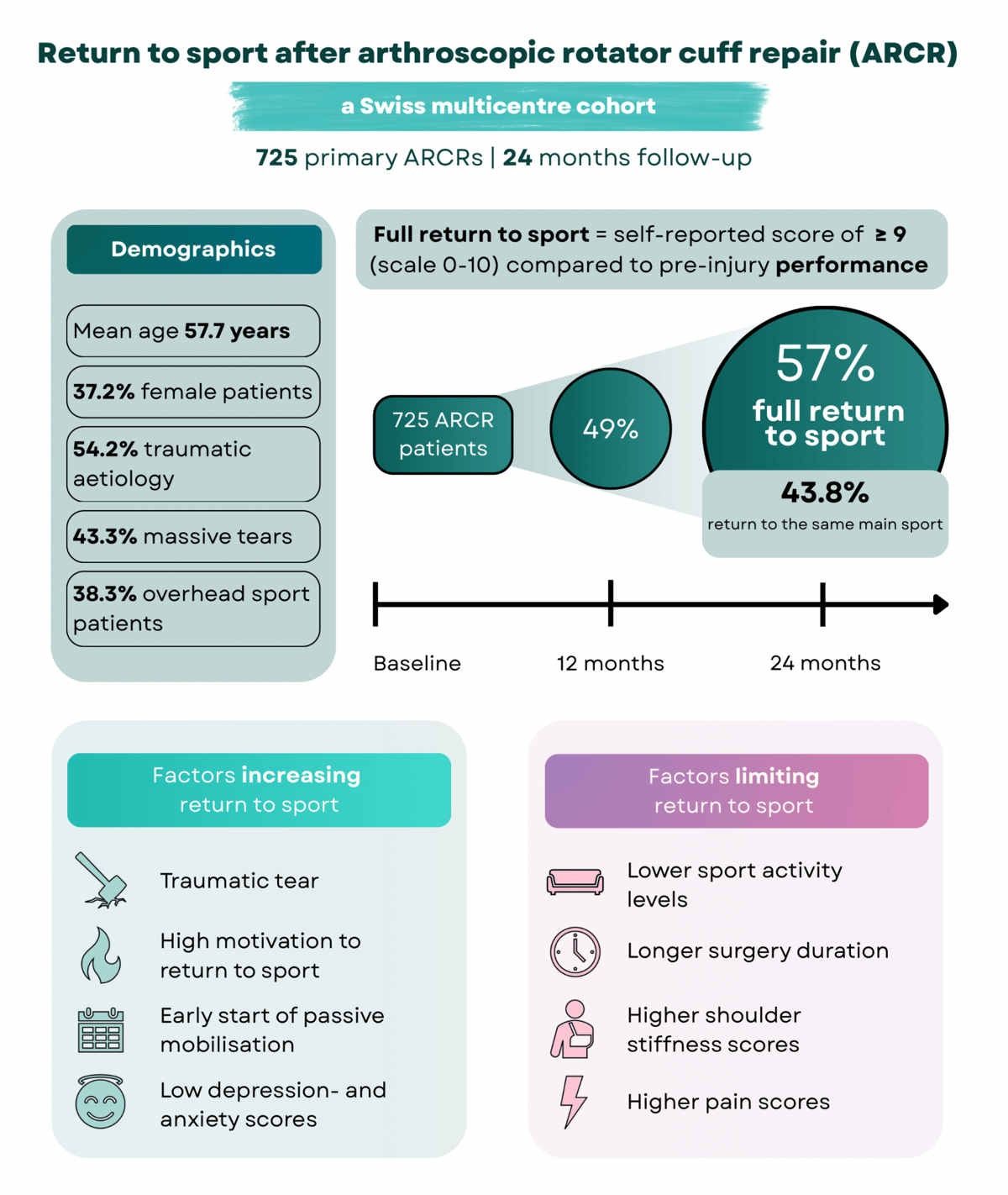
- •57% achieve full return to sport within two years post‑ARCR.
- •Early passive mobilization and higher pre‑injury activity boost RTS odds.
- •Age, injury trauma, and operated‑side dominance predict full RTS.
- •Psychological readiness, especially motivation, strongly influences return outcomes.
- •Overhead sport participation does not affect RTS success rates.
Pulse Analysis
Arthroscopic rotator cuff repair has become the standard of care for both partial‑ and full‑thickness tears, especially among physically active adults. While surgical techniques have advanced, the literature on post‑operative return‑to‑sport (RTS) remains fragmented, often focusing on niche athlete groups. This Swiss cohort, encompassing 725 patients across multiple centres, fills a critical gap by delivering robust, population‑level data on RTS timelines, sport types, and patient‑reported outcomes, offering a benchmark for clinicians worldwide.
The study reveals that just over half of patients resume full sport participation within two years, with a notable advantage for those who suffered traumatic injuries and those who began passive mobilization early in the rehab process. Psychological variables—particularly motivation levels and depression scores—emerged as powerful determinants, underscoring the need for integrated mental‑health assessments in post‑operative protocols. Interestingly, participation in overhead sports such as swimming or tennis did not diminish RTS success, challenging assumptions that these activities inherently carry higher risk of delayed recovery.
For orthopedic surgeons and physical therapists, these insights translate into actionable strategies: prioritize early, controlled passive motion, assess and support patients' mental readiness, and customize activity progression based on age and injury mechanism rather than sport type alone. As the demand for joint‑preserving shoulder surgery rises among the aging yet active population, incorporating these evidence‑based predictors can enhance patient satisfaction, reduce re‑injury rates, and ultimately drive better long‑term functional outcomes. Future research should explore targeted psychological interventions and refine rehabilitation timelines to further boost RTS rates.
Return to sport after arthroscopic rotator cuff repair: epidemiology and prognostic factors in a Swiss multi-centre cohort
Comments
Want to join the conversation?
Loading comments...