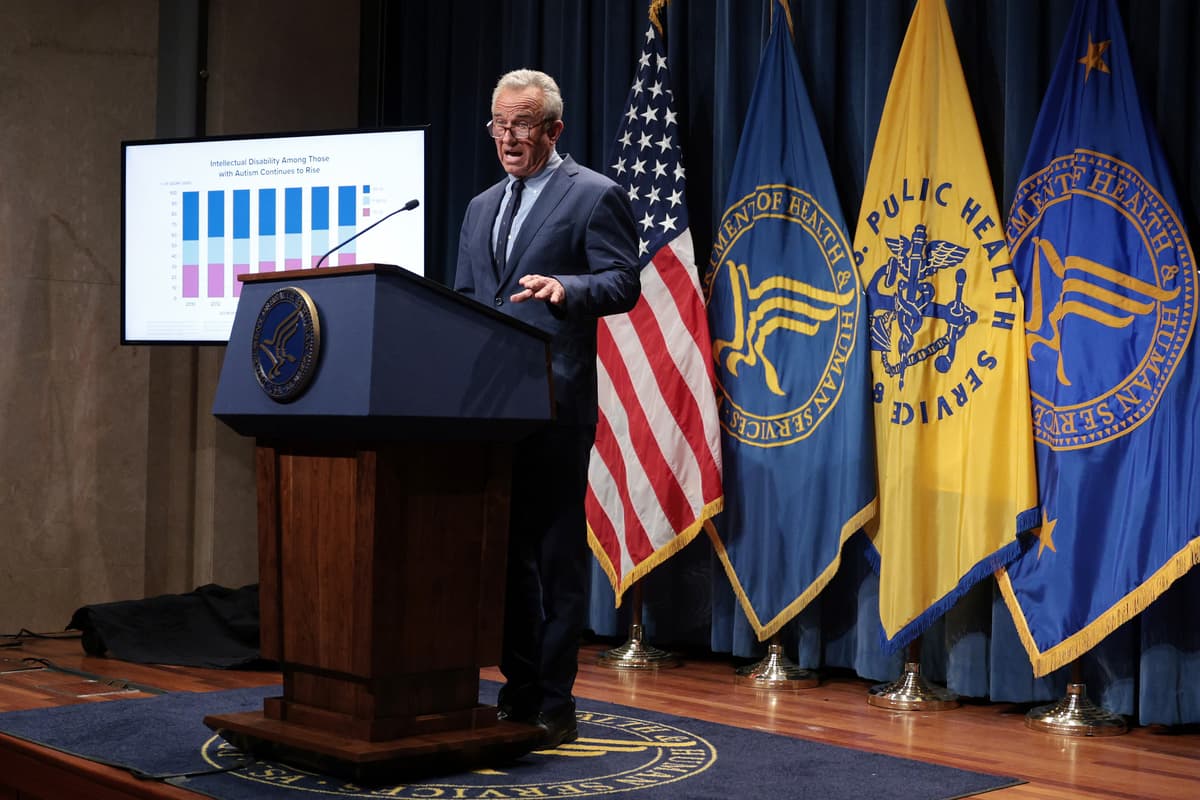
RFK Jr. Seeks To Peek at Americans’ Medical Records for Clues on Autism and Vaccines
Why It Matters
The move could reshape national health data governance, potentially expanding federal surveillance while igniting debates over privacy and the legitimacy of vaccine‑autism research.
Key Takeaways
- •Kennedy seeks HHS access to 90% of U.S. medical records by 2028
- •State health exchanges cite legal hurdles and privacy concerns over data sharing
- •Nebraska’s CyncHealth received $13.6 M contracts, $2.4 M for Kennedy project
- •Federal officials propose $3 per person annual fee for data provision
Pulse Analysis
Health information exchanges (HIEs) are the backbone of modern patient care, allowing hospitals and clinics to share records instantly across state lines. While their primary purpose is to improve clinical coordination and respond to infectious‑disease outbreaks, the federal push to repurpose these networks for vaccine‑autism research represents a novel, controversial use case. By tapping into the granular data held by HIEs, policymakers hope to create a real‑time surveillance system, but the legal framework governing state‑run exchanges often restricts bulk data extraction without explicit consent, creating a friction point between public‑health ambitions and established privacy statutes.
The political dimension adds further complexity. Kennedy’s agenda, bolstered by allies in the Trump‑aligned "Make America Healthy Again" movement, seeks to challenge the long‑standing consensus that vaccines are safe. Federal officials have outlined a $3‑per‑person annual fee to fund the data pipeline, projecting coverage of 90% of the U.S. population by 2028. Yet state leaders in Maryland, Indiana and others have resisted, citing contractual limits and the need for extensive approvals from hospitals, research boards, and state legislators. Nebraska’s CyncHealth stands out as a rare collaborator, securing $13.6 million in contracts and allocating $2.4 million to Kennedy’s initiative, highlighting how funding incentives can sway participation despite broader hesitancy.
If the program proceeds, it could set a precedent for federal access to detailed health records, reshaping the balance between surveillance and individual privacy. Proponents argue that richer data could uncover rare adverse events and inform chronic‑disease strategies, while opponents warn that the focus on debunked vaccine‑autism theories may divert resources from evidence‑based public‑health priorities. The outcome will likely influence future legislation on health‑data sharing, the credibility of vaccine safety monitoring, and the public’s trust in how personal medical information is used by the government.
RFK Jr. Seeks To Peek at Americans’ Medical Records for Clues on Autism and Vaccines
Comments
Want to join the conversation?
Loading comments...