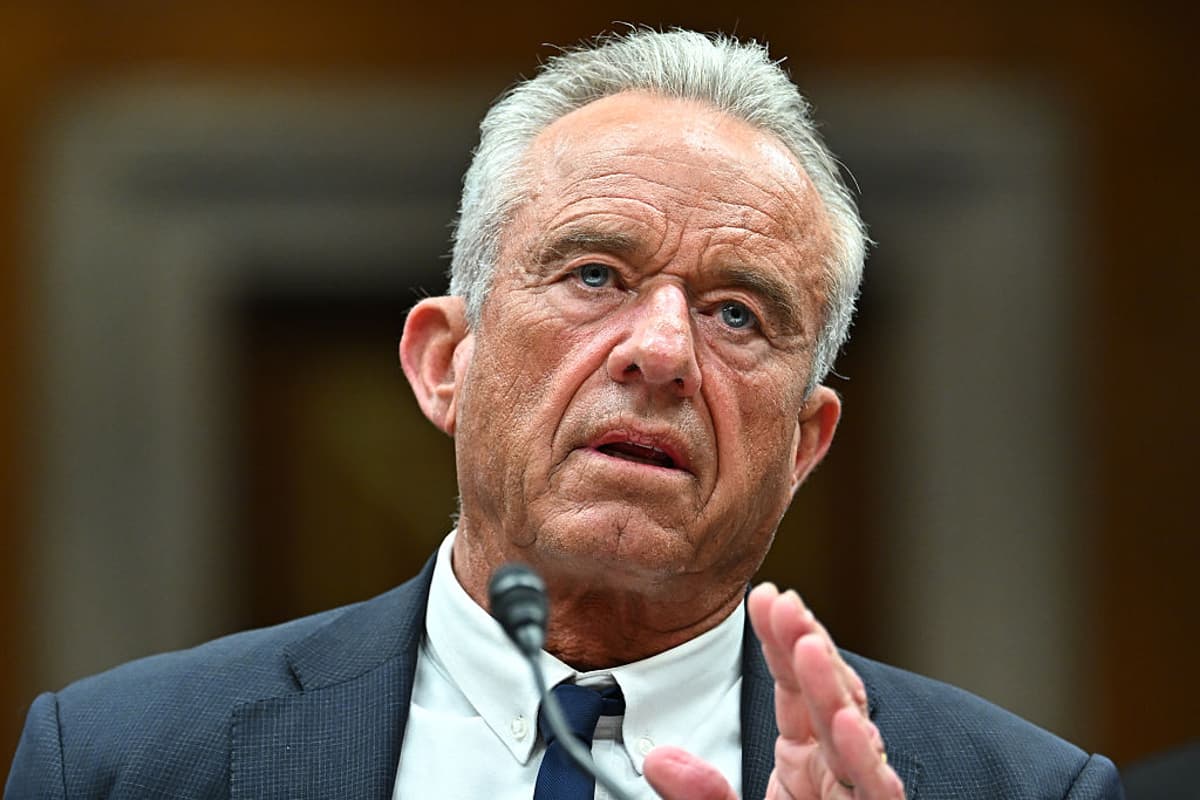
Robert F. Kennedy Jr. Defends Spending Cuts to Health Agencies
Why It Matters
The proposed cuts could cripple federal health research, vaccine development, and global immunization efforts, while the political tug‑of‑war highlights growing partisan divides over public‑health spending.
Key Takeaways
- •Trump budget cuts HHS by 12.5%, targeting NIH and women's health
- •Kennedy claims NIH studies were wasteful, cites gender‑affirming research
- •SAMHSA grant cancellation reversed within 24 hours as “overcorrection.”
- •Kennedy blocks $500 million vaccine funding, disputes mRNA efficacy
- •Congress holds $300 million for GAVI; HHS to appoint liaison
Pulse Analysis
The Trump administration’s FY 2027 budget reflects a stark shift in health‑policy priorities, reallocating funds from domestic health programs to defense spending. By trimming $111.1 billion for HHS, the plan would reduce the department’s budget by roughly $12.5 billion, slashing research grants at the National Institutes of Health and curtailing services aimed at women’s and children’s health. Lawmakers, led by Senate Appropriations Subcommittee Vice Chair Tammy Baldwin, warn that such cuts threaten the nation’s biomedical pipeline and could delay critical innovations in disease prevention.
Secretary Robert F. Kennedy Jr. faced intense scrutiny during his testimony, defending the cuts by labeling many NIH projects as “wasted” money, including studies on gender‑affirming hormone therapy. He also asserted that $500 million earmarked for vaccine research was misdirected, dismissing mRNA technology despite overwhelming scientific consensus of its efficacy. The rapid reversal of a SAMHSA grant cancellation—admitted as an “overcorrection”—underscores internal uncertainty within HHS about balancing fiscal restraint with public‑health obligations. Kennedy’s statements have sparked bipartisan criticism and renewed calls for congressional oversight of agency spending decisions.
Beyond domestic implications, the dispute over a $300 million payment to the global vaccine alliance GAVI highlights the administration’s broader skepticism toward multilateral health initiatives. While Kennedy expressed concerns about GAVI’s ties to the World Health Organization—an agency the United States exited under Trump—he agreed to appoint a liaison to expedite the pending funds, acknowledging the stakes for 1.5 million children. The episode illustrates how budgetary decisions reverberate through international health security, potentially affecting vaccine access in low‑income nations and shaping future U.S. engagement in global health partnerships.
Robert F. Kennedy Jr. Defends Spending Cuts to Health Agencies
Comments
Want to join the conversation?
Loading comments...