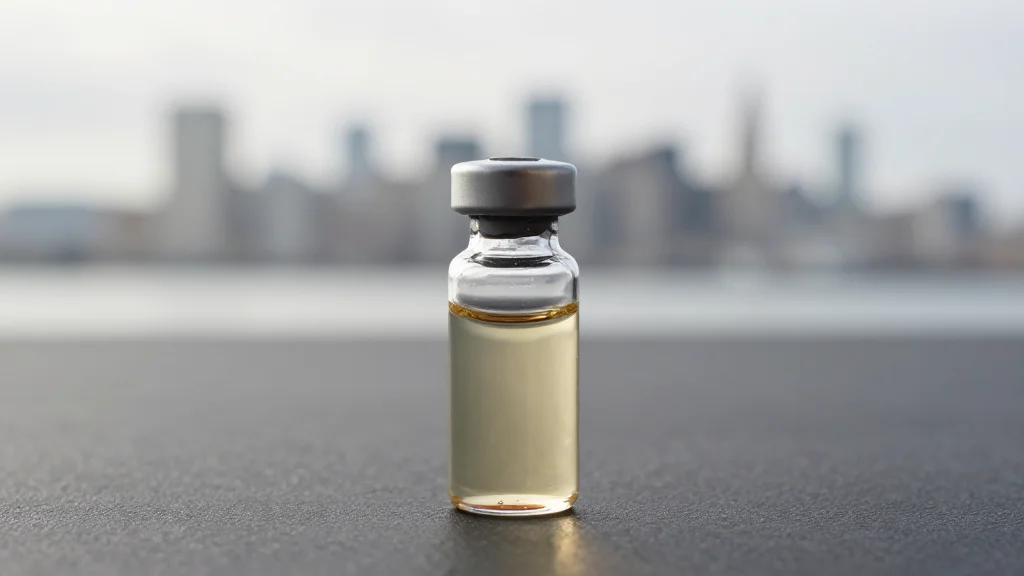
San Francisco Alerts on Isotonitazene, a Synthetic Opioid 20× More Potent Than Fentanyl

Why It Matters
The emergence of isotonitazene threatens to deepen the opioid crisis by introducing a substance that is both more potent than fentanyl and invisible to standard testing methods. Public‑health systems that rely on fentanyl test strips and naloxone may find themselves ill‑equipped to prevent or reverse ISO overdoses, potentially driving up mortality rates. Moreover, the drug’s low production cost and high potency make it attractive to illicit manufacturers, raising the risk of rapid geographic spread beyond San Francisco. If detection technologies and emergency protocols do not evolve, ISO could undermine decades of progress in overdose prevention, strain emergency services, and force policymakers to confront a new class of synthetic opioids that evade existing regulatory frameworks. The situation underscores the need for federal‑state collaboration on surveillance, rapid‑test development, and expanded access to higher‑dose naloxone.
Key Takeaways
- •San Francisco health officials issued an alert after the first ISO‑related overdose death on April 23.
- •Isotonitazene (ISO) is estimated to be about 20 times more potent than fentanyl.
- •DEA reports over 900 ISO seizures since 2019, with a peak of 358 reports in 2021.
- •Standard fentanyl test strips do not detect ISO, and naloxone may be less effective.
- •Activists and law‑enforcement officials are calling for new testing kits and higher‑dose naloxone.
Pulse Analysis
The rise of isotonitazene reflects a broader pattern in illicit drug markets: as law‑enforcement tightens on traditional opioids, traffickers pivot to chemically novel compounds that skirt existing regulations and detection tools. Historically, each wave—from heroin to fentanyl—has forced a recalibration of public‑health responses. ISO’s potency, combined with its ability to evade fentanyl test strips, threatens to repeat that cycle but on a faster, more lethal timescale.
From a market perspective, the drug’s low synthesis cost and high profit margin make it an attractive product for clandestine labs, especially those already equipped to produce fentanyl analogs. This creates a feedback loop where increased supply fuels demand among users seeking stronger effects, while the lack of reliable testing fuels accidental overdoses. The DEA’s warning that naloxone may not reverse ISO overdoses is particularly alarming; it suggests that current emergency protocols could become obsolete, prompting a race to develop higher‑dose formulations or alternative antagonists.
Policy makers must act quickly to close the detection gap. Investment in point‑of‑care testing that can identify a broader spectrum of synthetic opioids, coupled with expanded distribution of high‑dose naloxone, could blunt the drug’s impact. Additionally, coordinated data sharing between city health departments and federal agencies will be essential to track ISO’s spread in real time. Failure to adapt could see ISO become the next dominant driver of overdose deaths, eroding hard‑won gains in the fight against the opioid epidemic.
San Francisco Alerts on Isotonitazene, a Synthetic Opioid 20× More Potent Than Fentanyl
Comments
Want to join the conversation?
Loading comments...