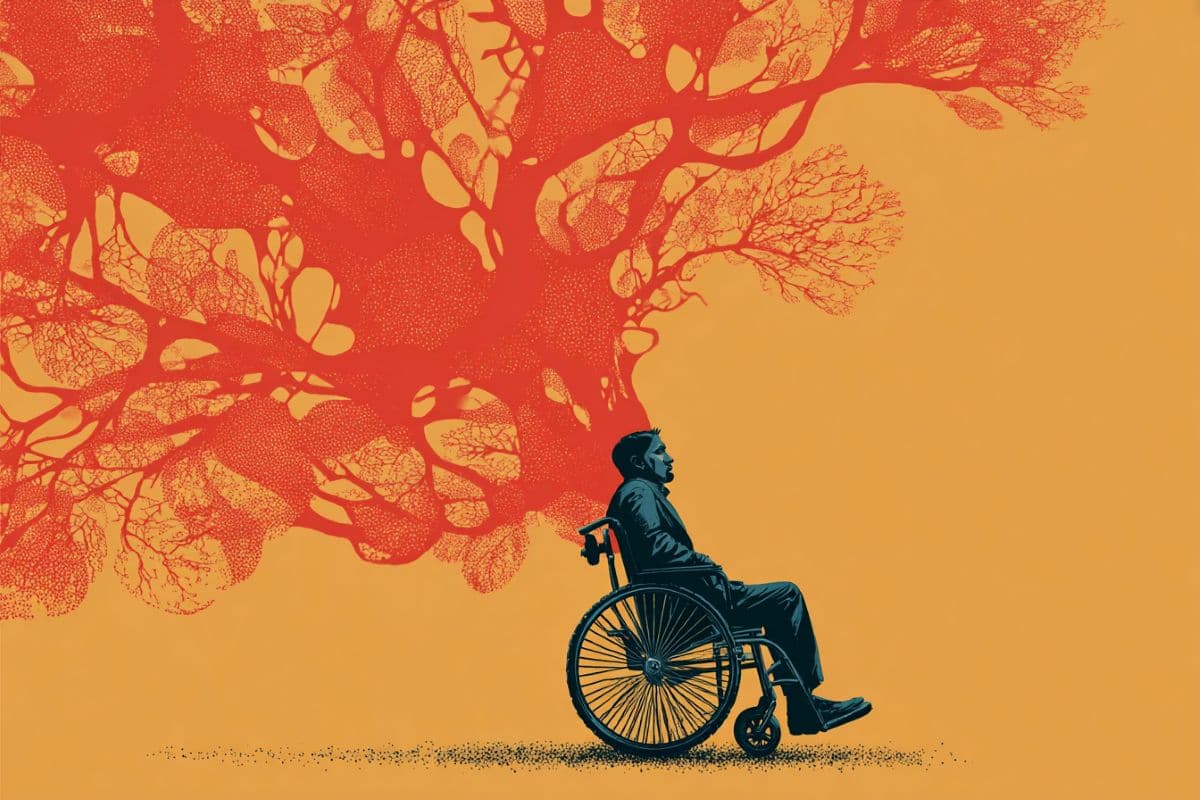
SCI Redefined as a Broken Brain–Body–Environment Loop
Why It Matters
By treating SCI as a network disorder, the model opens pathways for multi‑modal neurotechnology investments and could accelerate commercializable closed‑loop therapies, reshaping the rehabilitation market.
Key Takeaways
- •SCI redefined as communication, state, and learning disorder
- •Neuromodulation palette adds state‑setting, execution, plasticity layers
- •Roadmap progresses from wearables to implantable home ecosystems
- •Integrated BCI solutions promise scalable, adaptive paralysis rehabilitation
Pulse Analysis
The article’s central claim—that spinal cord injury is a breakdown of a brain‑body‑environment feedback loop—mirrors a broader trend in neurotechnology toward systems thinking. Traditional rehabilitation focuses on re‑activating muscles, but the market for closed‑loop brain‑spinal interfaces is projected to exceed $5 billion by 2035 as insurers and payers seek durable functional gains. By framing SCI as a network disorder, the authors provide a clear rationale for venture capital to fund platforms that combine cortical decoding, spinal stimulation, and sensory feedback, rather than siloed devices.
The proposed “neuromodulation palette” operationalizes this vision through three functional layers. State‑setting primes spinal excitability, execution translates decoded intent into precise stimulation, and plasticity‑biasing drives long‑term circuit remodeling. Companies can modularize hardware—non‑invasive EEG caps, transcutaneous stimulators, implantable microelectrode arrays—and software that synchronizes them in real time. Such a stack enables personalized therapy protocols, data‑driven outcome tracking, and rapid iteration, positioning firms to create scalable home‑based rehabilitation ecosystems that adapt to each patient’s residual pathways.
Translating the palette into commercial products faces biological variability, long‑term material durability, and stringent FDA pathways. Data‑governance and patient‑agency concerns add ethical complexity, demanding transparent consent frameworks. Nonetheless, the stepwise roadmap—from wearables to fully implanted systems—offers clear milestones for pilots, reimbursement studies, and regulatory submissions. Early adopters that demonstrate safety and measurable functional improvement could secure reimbursement codes, unlocking a sizable market and accelerating the shift from episodic physiotherapy to continuous, AI‑guided neurorehabilitation.
SCI Redefined as a Broken Brain–Body–Environment Loop
Comments
Want to join the conversation?
Loading comments...