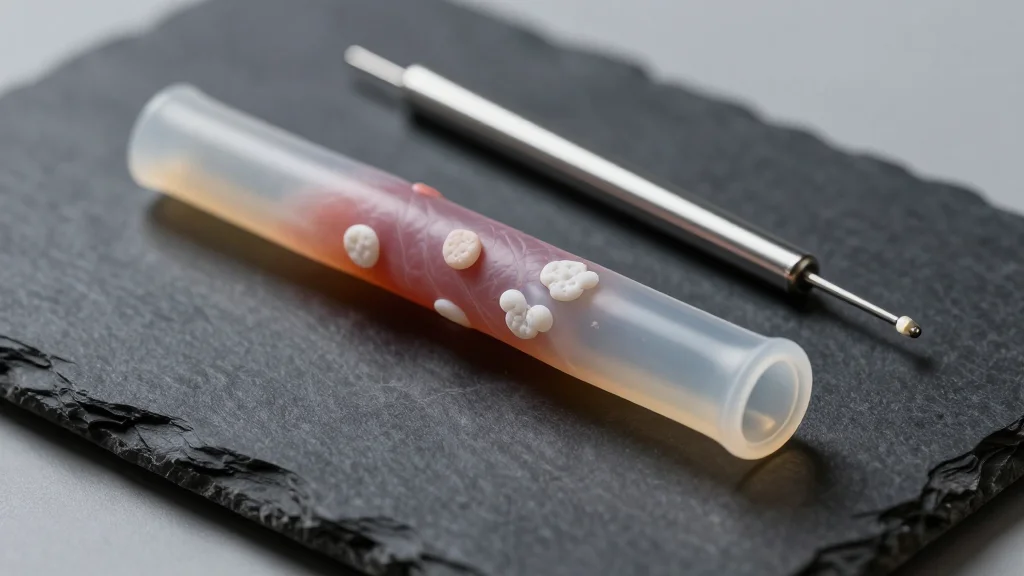
Shockwave Medical's New IVL Catheter Overcomes Previous Limitations
Why It Matters
The faster, more deliverable IVL system gives physicians a safer alternative to atherectomy, driving broader adoption and reshaping coronary calcification treatment.
Key Takeaways
- •New hydrophilic coating improves catheter crossing of tight lesions
- •Flexibility upgrade halves lithotripsy pulse interval to five seconds
- •IVL adoption rose to 15% of US cases, atherectomy fell to 5%
- •Safety advantage drives interventional cardiologists to prefer IVL over atherectomy
- •Standard workflow now uses workhorse wire, no guide extensions
Pulse Analysis
The latest Shockwave Medical IVL catheter addresses long‑standing delivery challenges by marrying a hydrophilic coating with a markedly more flexible shaft. These mechanical tweaks reduce friction and allow the device to glide through heavily fibrotic lesions that previously required bulky guide catheters. By repositioning the lithotripsy emitters and adding a tapered tip, the system also shortens the interval between shockwave pulses from ten to five seconds, effectively cutting procedural time in half while maintaining the same 120‑pulse, 240‑shockwave output.
Beyond engineering, the catheter’s safety profile is reshaping clinical decision‑making. Physicians have historically favored atherectomy or high‑pressure balloons despite comparable efficacy because those tools carry higher perforation risks. The newer IVL platform delivers calcium fracture without the mechanical aggression that can tear arterial walls, a distinction that has propelled its usage from roughly 8% to 15% of calcium‑modification cases in the United States. Concurrently, atherectomy’s share has slipped to about 5%, underscoring a market pivot toward less invasive, more predictable therapies.
Looking ahead, Shockwave’s refinements position IVL as the default strategy for many coronary interventions, especially in community hospitals where operator experience with atherectomy may be limited. The streamlined workflow—relying on standard wires and eliminating guide extensions—lowers the learning curve and procedural cost, further democratizing access. As safety and efficiency become the primary differentiators in interventional cardiology, the company’s next challenge will be scaling production while maintaining quality, ensuring that the technology can meet rising global demand without compromising its core advantages.
Shockwave Medical's new IVL catheter overcomes previous limitations
Comments
Want to join the conversation?
Loading comments...