G2‑PASE offers a faster, reliable alternative to PASI, facilitating real‑world data analysis and reducing documentation burden for dermatology practices.
The Psoriasis Area and Severity Index (PASI) has long been the benchmark for quantifying plaque psoriasis in trials, but its multi‑step calculation and need for precise lesion grading limit routine use in busy dermatology offices. Clinicians often rely on the Physician Global Assessment (PGA) and body surface area (BSA) because these metrics are already recorded during visits. The gap between scientific rigor and practical workflow has spurred a wave of simplified indices, yet many fall short of reproducing PASI’s nonlinear weighting, especially at the lower end of disease severity.
The newly introduced Gulliver‑Gestalt‑Psoriasis Area Severity Estimate (G2‑PASE) bridges that divide by combining PGA with a nonlinear BSA modifier, mirroring the three‑component structure of PASI while remaining calculable in seconds. In a Canadian registry of 1,803 moderate‑to‑severe patients, G2‑PASE achieved a Pearson correlation of 0.83 and a Cronbach’s alpha of 0.91 against recorded PASI scores, indicating both strong concordance and internal consistency. Because the required inputs are standard chart fields, the algorithm can be retrofitted to existing electronic health records, unlocking severity estimates for thousands of cases that lack formal PASI documentation.
Adoption of G2‑PASE could streamline treatment monitoring, support comparative effectiveness research, and reduce documentation time, delivering cost‑efficiency for community practices and health systems. Nonetheless, its validation remains confined to a cross‑sectional Canadian cohort; longitudinal performance, responsiveness to therapy, and applicability across diverse ethnic groups still require confirmation. Moreover, the tool does not capture patient‑reported outcomes or high‑impact anatomical sites, aspects increasingly demanded by value‑based care models. Future studies that integrate these dimensions will determine whether G2‑PASE can become the de‑facto standard for real‑world psoriasis severity assessment.
Rose McNulty · Fact‑checked by: Maggie L. Shaw · February 13 2026
G2‑PASE approximates PASI using routinely captured PGA and BSA, aiming to replace impractical PASI scoring in real‑world clinical settings without sacrificing measurement fidelity.
Strong performance metrics were observed in a large Canadian registry cohort, with Pearson correlation 0.83 and standardized Cronbach α 0.91 versus recorded PASI.
Nonlinear BSA weighting differentiates G2‑PASE from linear proxies (e.g., PGA × BSA), improving alignment with PASI’s nonlinear structure and mitigating low‑PASI underestimation.
Retrospective applicability enables severity estimation from existing charts/registries lacking PASI, potentially expanding real‑world evidence analyses and comparative effectiveness studies.
Generalizability and treatment‑response tracking require confirmation in independent longitudinal and international cohorts; like PASI, the approach omits patient‑reported outcomes and high‑impact site involvement.
A new psoriasis severity tool called G2‑PASE showed a strong correlation with PASI, potentially offering a simpler assessment for clinical practice.
A simplified measure for assessing plaque psoriasis severity demonstrated excellent reliability and a strong correlation with the standard Psoriasis Area and Severity Index (PASI) in a large Canadian cohort, according to research published in JEADV Clinical Practice.
The Gulliver‑Gestalt‑Psoriasis Area Severity Estimate (G2‑PASE) was developed to address a longstanding challenge in dermatology practice: while PASI remains the reference standard for measuring psoriasis severity in clinical trials, its complexity and time requirements make it impractical for routine clinical use, the authors explained.

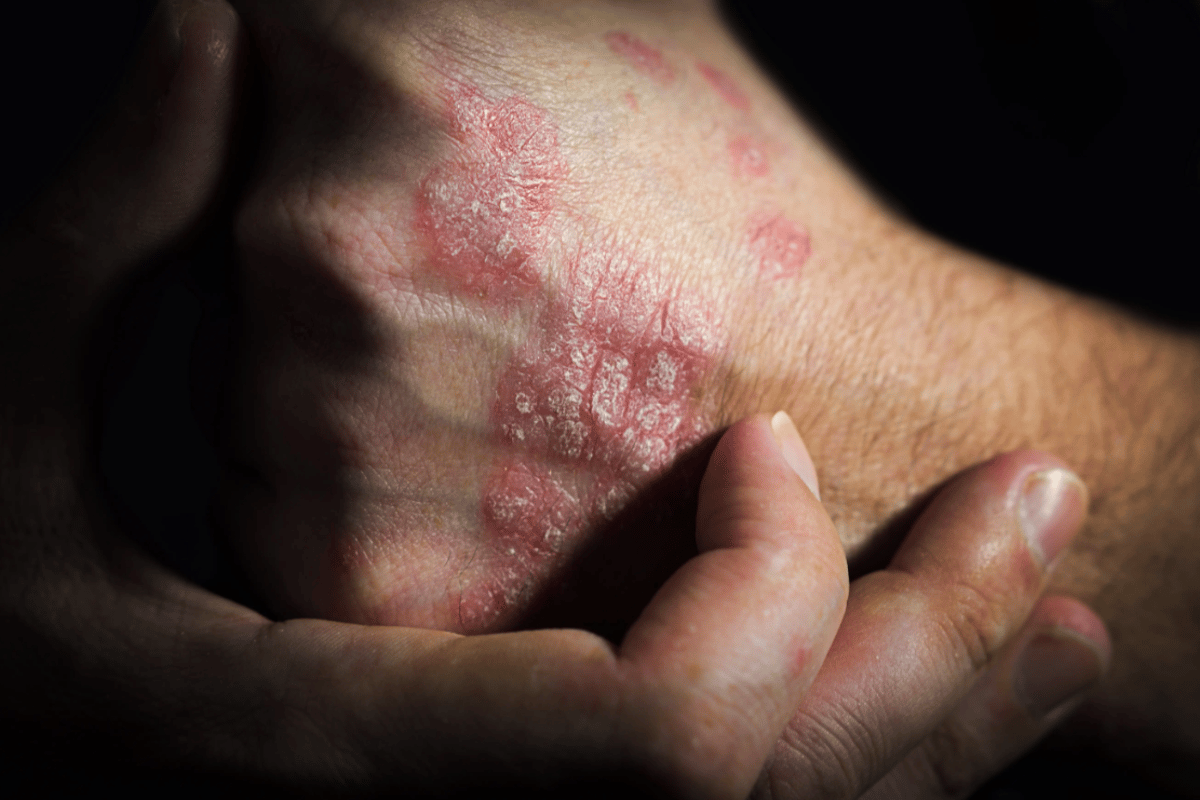
Image credit: SergeVo – stock.adobe.com
The researchers analyzed data from 1,803 Canadian patients with moderate to severe plaque psoriasis enrolled in the Psoriasis Longitudinal Assessment and Registry (PSOLAR). The study calculated G2‑PASE scores using baseline Physician Global Assessment (PGA) and body surface area (BSA), which are values already collected in the registry, and then compared these with recorded PASI scores.
“More straightforward measures such as the simplified PASI, PGA × BSA, and lattice system PGA were developed to improve practicality, but limited validation in diverse settings, weak correlation at the extremes of disease severity, and failure to align closely with the nonlinear weighting of the PASI hindered their clinical adoption,” the authors wrote. “A recent registry analysis suggested that combining BSA and global assessment may best approximate PASI but requires validation.”
The results showed a Pearson correlation coefficient of 0.83, indicating a very strong correlation between the measures. The standardized Cronbach coefficient alpha was 0.91, demonstrating excellent reliability. The mean baseline PASI score was 5.52, and the mean calculated G2‑PASE score was 8.37.
Unlike earlier simplified tools, G2‑PASE incorporates a nonlinear BSA modifier that better aligns with PASI’s nonlinear weighting system. The calculation uses PGA scores multiplied by an arbitrary constant of 3—representing the three qualitative lesion characteristics in PASI (erythema, induration, and scale)—along with a Gestalt BSA value raised to a variable exponent based on disease extent.
“Previous work comparing PASI and PGA measures in randomized trials showed strong overall correlation, yet linear proxies such as PGA × BSA tend to underestimate disease severity at lower PASI values,” the authors wrote. “By incorporating a nonlinear modifier for BSA, G2‑PASE aligns more closely with PASI weighting and appears suitable for patients with moderate to severe disease typical of PSOLAR participants.”
The correlation between G2‑PASE and PASI remained consistent across the full range of observed PASI scores from 0 to 64, indicating the tool performs well across mild, moderate, and severe disease presentations.
One notable advantage of G2‑PASE is its potential for retrospective application. Because it relies on PGA and BSA measurements that dermatologists routinely record, the tool can calculate disease‑severity estimates from existing chart or registry data even when PASI scores were never obtained.
The study analyzed only baseline cross‑sectional data rather than longitudinal outcomes, so G2‑PASE’s performance in tracking treatment response over time remains unexamined.
Findings may apply specifically to populations similar to PSOLAR participants, although the Canadian cohort included 37 sites across diverse geographic and demographic regions.
The study assumed high inter‑rater reliability for the measures used.
Like standard PASI, G2‑PASE focuses on disease characteristics rather than incorporating patient‑reported outcomes or high‑impact site involvement, which also influence disease severity.
“Although PASI remains the gold standard for grading psoriasis severity, its utility is not universally practical. In busy community practices or subspecialty settings where psoriasis is not the primary focus, PASI scoring may not be routinely performed, limiting its usefulness for monitoring and documentation of disease status. The G2‑PASE offers a pragmatic alternative by using PGA and BSA, two measures familiar to dermatologists, and applying a nonlinear correction that mirrors PASI weighting.”
The researchers emphasized that these findings should be viewed as preliminary, requiring confirmation in independent, longitudinal, and international cohorts before broader clinical implementation.
References
Gulliver WP, Langholff W, Guenther L, et al. G2‑PASE: a novel, rapid, and reliable measure of plaque psoriasis severity. JEADV Clin Pract. Published online January 12 2026. doi:10.1002/jvc2.70293
Spuls PI, Lecluse LL, Poulsen ML, et al. How good are clinical severity and outcome measures for psoriasis?: quantitative evaluation in a systematic review. J Invest Dermatol. 2010;130(4):933‑943. doi:10.1038/jid.2009.391
Comments
Want to join the conversation?
Loading comments...