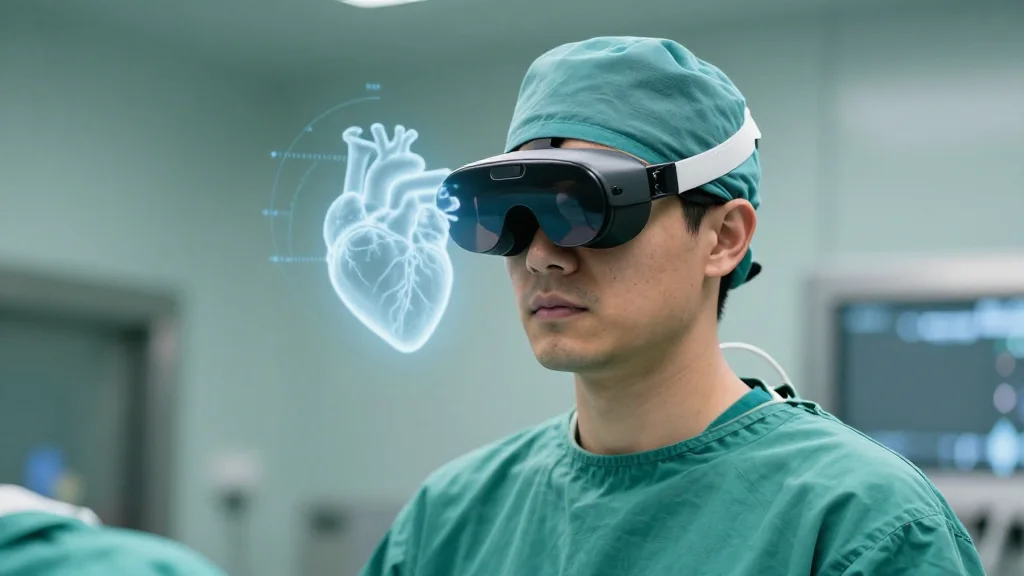
SKIA Secures FDA 510(k) Clearance for AR Surgical Platform
Why It Matters
The clearance opens the U.S. market to a cost‑effective, portable AR navigation tool, potentially reshaping surgical guidance in smaller hospitals and outpatient centers. It signals regulatory confidence in AR’s clinical utility, accelerating broader adoption across specialties.
Key Takeaways
- •SKIA HEAD cleared by FDA for US market entry
- •Tablet‑based AR system uses Structure Sensors for real‑time overlays
- •Partnership with Structure enables hardware integration and distribution
- •Aims to replace bulky navigation systems in smaller hospitals
- •Already used in 80+ Indian hernia procedures
Pulse Analysis
Augmented reality is moving from experimental labs into operating rooms, driven by the need for precise, real‑time visualization without the footprint of traditional navigation rigs. Regulatory milestones, such as FDA 510(k) clearances, act as gatekeepers that validate safety and efficacy, giving surgeons and hospital administrators confidence to invest. SKIA's approval arrives at a time when hospitals are seeking scalable solutions that can be deployed quickly, especially in community settings where capital budgets are tighter.
SKIA HEAD distinguishes itself by leveraging a consumer‑grade tablet platform augmented with Structure’s medical‑grade depth sensors. This combination creates a lightweight, mobile system that scans the patient and operating environment, then overlays three‑dimensional anatomy derived from pre‑operative imaging directly onto the surgeon’s view. The partnership with Structure not only supplies the hardware but also integrates a ready‑made ecosystem for data capture and processing, shortening the path to market. For smaller hospitals, the reduced need for large, fixed navigation towers translates into lower upfront costs and faster installation, enabling more rapid adoption of advanced imaging guidance.
The broader impact could ripple through the surgical technology landscape. As AR platforms like SKIA HEAD demonstrate clinical value and cost efficiency, larger players may accelerate their own AR initiatives, intensifying competition and driving innovation. Moreover, the technology’s flexibility opens doors to new applications—from breast cancer resections to forensic reconstructions—expanding revenue streams beyond traditional orthopedics. If adoption scales, the industry could see a shift toward modular, software‑centric solutions that democratize high‑precision surgery across diverse care settings.
SKIA secures FDA 510(k) clearance for AR surgical platform
Comments
Want to join the conversation?
Loading comments...