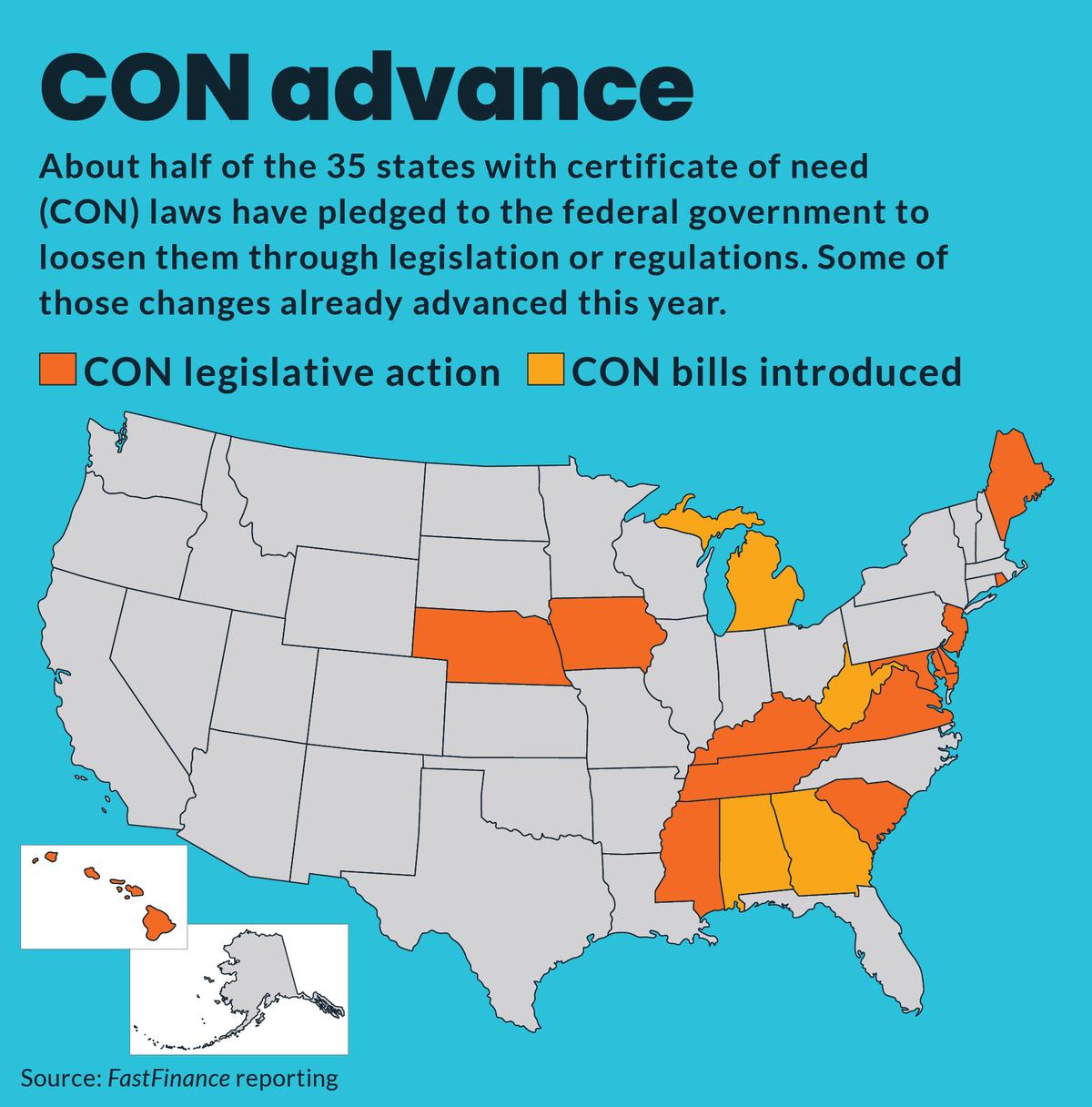
States Overhaul Certificate-of-Need Laws
Companies Mentioned
Why It Matters
Removing CON barriers could boost competition, lower prices and expand access, but raises questions about rural hospital sustainability and care quality. The reforms are directly linked to billions in federal rural‑health funding, shaping state healthcare markets.
Key Takeaways
- •Tennessee ends acute‑care CON by 2030, adds Medicaid‑care licensure
- •Federal RHTP grants incentivize states to loosen CON regulations
- •Hawaii and Maine move to exempt ambulatory surgery centers from CON
- •Maryland proposes CON review for private‑equity health‑system deals
Pulse Analysis
Certificate‑of‑need statutes, once designed to curb excess capacity and control costs, have become a focal point of health‑policy reform across the United States. Tennessee’s SB1369, the most visible change this year, will phase out CON for acute‑care hospitals by 2030, substituting a licensure model that obligates providers to serve Medicaid patients and deliver charity care comparable to peers. Proponents argue that the legacy CON framework now stifles competition, inflates prices, and hampers innovation, especially in underserved regions. Critics, however, warn that without the supply‑control mechanism, rural hospitals could face heightened financial pressure, potentially jeopardizing access for low‑income communities.
The federal Rural Health Transformation Program (RHTP), backed by $50 billion in grants under the One Big Beautiful Bill Act, is a powerful catalyst for these reforms. CMS evaluates each state’s CON overhaul plan when allocating grant money, effectively tying billions of dollars to policy shifts. This incentive structure has motivated 17 states, including Tennessee, to commit to loosening CON requirements, while others like Hawaii and Maine are tailoring exemptions for ambulatory surgery centers and raising capital‑expenditure thresholds. The strategic linkage of grant eligibility to regulatory change underscores a broader federal agenda to modernize health‑care delivery and reduce costs.
Across the nation, states are adopting divergent approaches that reflect local market dynamics and stakeholder pressures. Maryland’s proposal to subject private‑equity health‑system mergers to CON review highlights concerns about consolidation and its impact on competition. Meanwhile, South Carolina, Virginia and other legislatures are either expanding or restricting CON scopes for specific services such as veteran nursing homes or perinatal care. As these reforms unfold, the health‑care industry must navigate a shifting regulatory landscape where increased competition may drive efficiency, but the balance between access, quality, and financial viability remains delicate. Stakeholders will need to monitor how these policy adjustments translate into real‑world outcomes for patients and providers alike.
States overhaul certificate-of-need laws
Comments
Want to join the conversation?
Loading comments...