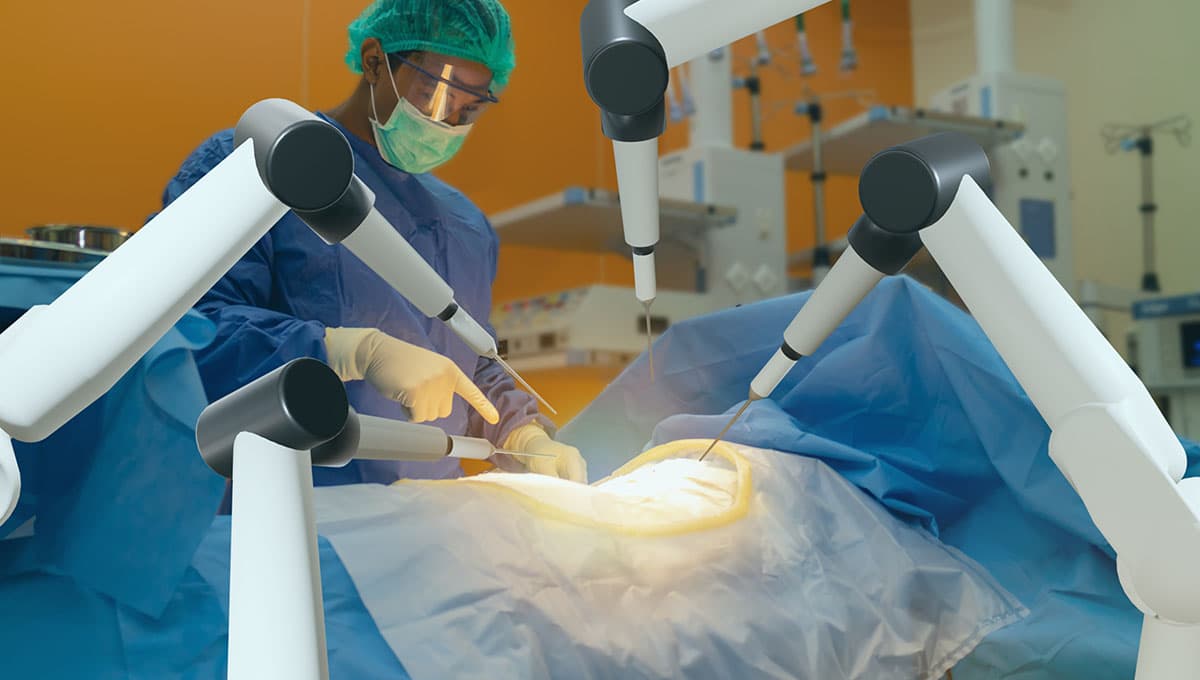
A uniform training framework reduces variability, accelerates safe adoption, and improves patient outcomes in the rapidly growing robotic cardiac market.
Robotic cardiac surgery has moved from experimental labs to mainstream operating rooms, driven by promises of reduced invasiveness, shorter hospital stays, and potentially lower complication rates. Yet the technology’s steep learning curve and high capital costs have created a barrier for many institutions. By publishing a detailed, consensus‑based pathway, the Society of Thoracic Surgeons addresses this gap, offering a clear roadmap that aligns surgeon expertise, team dynamics, and institutional resources. The document’s emphasis on prerequisite experience and fellowship training mirrors similar standards in interventional cardiology and minimally invasive thoracic programs, reinforcing the notion that proficiency, not novelty, should dictate adoption.
The five‑phase structure breaks the implementation process into manageable milestones. Phase Zero ensures that hospitals have the necessary infrastructure and that surgeons possess a minimum of three years of attending practice or a dedicated robotic fellowship. Subsequent phases require systematic team education, on‑site or remote proctoring for the first five cases, and a target of ten cases within six months to build confidence. Crucially, the guideline mandates continuous outcome monitoring, with an observed‑to‑expected ratio below one serving as a safety checkpoint before advancing to more complex procedures. This data‑driven approach not only safeguards patients but also provides administrators with measurable performance metrics to justify ongoing investment.
For the broader healthcare market, the STS pathway could become a benchmark for other specialties embracing robotics, from urology to vascular surgery. Standardized training reduces the risk of adverse events, shortens the time to competency, and may lower the overall cost of program rollout by minimizing trial‑and‑error phases. As remote proctoring and multi‑institutional training hubs mature, hospitals in smaller markets can access expert guidance without extensive travel, democratizing access to cutting‑edge cardiac care. Ultimately, the pathway positions robotic surgery as a sustainable, quality‑first innovation rather than a fleeting technological fad.
With five phases of advancement, teams can become successful working through each type of case, from simple to complex.
NEW ORLEANS, LA—To ensure quality as robotic surgery expands globally, the Society of Thoracic Surgeons (STS) has outlined a new, dedicated pathway for clinicians and institutions to help them adopt the technology and to achieve optimal outcomes.
“The interest in robotic cardiac surgery is surging and remains high, and we all must be committed to adopting and innovating new technologies, but always remembering that we must pursue quality first,” lead author Vinay Badhwar, MD (West Virginia University, Morgantown), who presented the paper at the recent 2026 STS Annual Meeting, told TCTMD.
Badhwar, who serves as STS president, emphasized that the use of robotic surgery is “not [innovation] for innovation’s sake. [Rather], it is for the ability to improve outcomes of our patients. That is really the holy grail that we all pursue.”
The document, which was simultaneously published in the Annals of Thoracic Surgery (https://www.annalsthoracicsurgery.org/article/S0003-4975(26)00022-6/abstract), was co‑authored by expert robotic surgeons from almost a dozen countries. It defines five phases of advancement through which surgical teams can achieve optimal outcomes with the technology:
Zero: prerequisites and preparation
One: baseline team training
Two: initial clinical application
Three: progressive case efficiency
Four: advancement and mastery
While previous consensus papers exist in this domain, especially with regard to training (https://www.jtcvs.org/article/S0022-5223(21)01541-5/fulltext), Badhwar said this document is broader and more detailed. It was designed to help programs that have access to the technology and are dedicated to using it to its full potential. The new teaching paradigm is meant to serve as a “guide to assist surgeons and their teams in ensuring a staged approach to introducing robotic technology to their cardiac operations,” he said.
Specifically, the group recommends having no fewer than three years of attending practice or completing a fellowship in robotic surgery before getting started. Institutional support is also necessary as hospitals work to create a team that will work with the technology.
From there, peer‑to‑peer training can commence with expert centers either on‑site or, potentially, be done remotely. When eventually selecting patients for robotic surgery, a team‑based approach should be used, and up to the first five cases should be proctored, with the first ten cases being completed within six months.
Badhwar recommends starting simply: “in other words, not taking on the most complex case in your first cases.” He also stressed the importance of tracking outcomes by case type and ensuring that the observed‑to‑expected outcomes ratio remains below 1. A minimum of 50 cases of each type is required before moving on to more advanced operations, he said.
At this point, Badhwar said it’s possible to introduce more novel approaches like percutaneous cannulation, endoballoon technology, total endoscopic coronary artery bypass, and even aortic valve replacement or multivalve procedures.
‘Bringing Everyone Along’
Session moderator Katherine Harrington, MD (The Heart Hospital Baylor, Plano, TX), asked what a “safe” rate of conversion to full sternotomy would be for a robotic surgery program.
“That might differ depending on the institution,” Badhwar replied. “However, if your rate is 10%, you should really evaluate and maybe go back to the fundamentals. I think conversion should be … an almost‑never event,” he said, with the caveat that it might be the safest option in certain rare situations.
Tsuyoshi Kaneko, MD (Washington University School of Medicine, St. Louis, MO), who attended the STS session, spoke about the need for collaboration among the entire surgical team when building a robotics program, something Badhwar agreed with.
“The importance of the team cannot be overstated; in any operative field, the team is more important than the surgeon,” Badhwar said. “We’ve talked about that for decades, but in robotics, it’s absolutely true.” Ideally, multiple expert training sites will emerge in the coming years where teams can go to train together, he added, though remote proctoring might also be an option.
Sidney Sanders, MD (Northeast Georgia Medical Center, Norcross), who also attended the session, said that she has dealt with administrative “pushback” in her experience on three different robotic teams.
“Before you even begin, you have to get administrative buy‑in,” said Badhwar. “When you start, I strongly recommend you keep it simple. Try not to layer multiple different new technologies and new teams, such as percutaneous and endoscopic… When you bring your team along with you, you can navigate some of these areas of pushback.”
Comments
Want to join the conversation?
Loading comments...