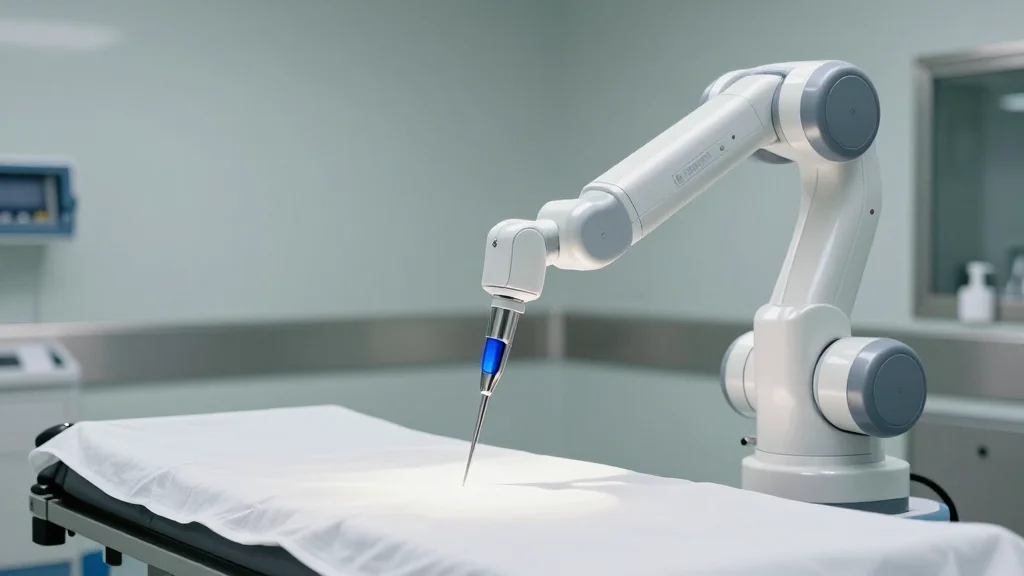
Surgeries Are Moving to ASCs. Distalmotion Wants Its Robot to Drive the Shift.
Companies Mentioned
Why It Matters
Dexter’s lower cost and mobility could democratize robotic surgery in ASCs, expanding access while reducing capital outlay for providers and patients.
Key Takeaways
- •Dexter fits 125 sq ft, wheels between rooms, enabling ASC flexibility.
- •Single‑use instruments eliminate sterilization needs, cutting ASC operational costs.
- •$150 M Series G funding fuels US expansion and regulatory clearances.
- •Cypress Surgery Center chose Dexter over da Vinci for lower price and size.
- •Open architecture lets ASCs integrate existing visualization and energy tools.
Pulse Analysis
The United States is witnessing a decisive shift from hospital‑based operating rooms to ambulatory surgery centers, driven by lower procedural costs, same‑day discharge, and physician ownership models. As insurers and patients demand value‑based care, ASCs have become fertile ground for minimally invasive technologies, yet many lack a soft‑tissue robotic platform due to space and budget constraints. Distalmotion’s entry with the Dexter system directly addresses these gaps, offering a robot that can be wheeled into a standard 125‑square‑foot space, plugged into a regular outlet, and set up in minutes, thereby fitting the fast‑turnover ASC workflow.
Technically, Dexter differentiates itself from legacy platforms like Intuitive’s da Vinci by combining a small footprint with single‑use, sterilization‑free instruments and an open‑architecture interface. The console sits within the sterile field, allowing surgeons to switch seamlessly between robotic and laparoscopic techniques, a feature that enhances procedural versatility without demanding extensive capital investment. This design philosophy resonates with ASC operators who often lack the infrastructure for instrument reprocessing and prefer modular solutions that integrate with existing imaging and energy devices, reducing both upfront and ongoing costs.
Financially, Distalmotion’s recent $150 million Series G raise—backed by Johnson & Johnson’s venture arm—underscores investor confidence in the outpatient robotics niche. The company’s cumulative 3,000‑plus procedures and early adoption by centers like Cypress Surgery Center illustrate market traction, while competitors such as Intuitive are countering with refurbished da Vinci Xi units to capture price‑sensitive buyers. As more ASCs adopt robotics, the industry may segment into two camps: high‑volume, low‑complexity outpatient platforms exemplified by Dexter, and hospital‑centric, high‑complexity systems. This bifurcation could reshape capital allocation, training pathways, and ultimately patient outcomes across the surgical landscape.
Surgeries are moving to ASCs. Distalmotion wants its robot to drive the shift.
Comments
Want to join the conversation?
Loading comments...