Survey Shows Need to Rebuild Trust in Evidence-Based Health Information; Americans More Confident in Career Scientists than Agency Leaders
Why It Matters
The widening trust divide threatens effective public‑health messaging and could hinder policy implementation, making credible scientific voices essential for health outcomes.
Key Takeaways
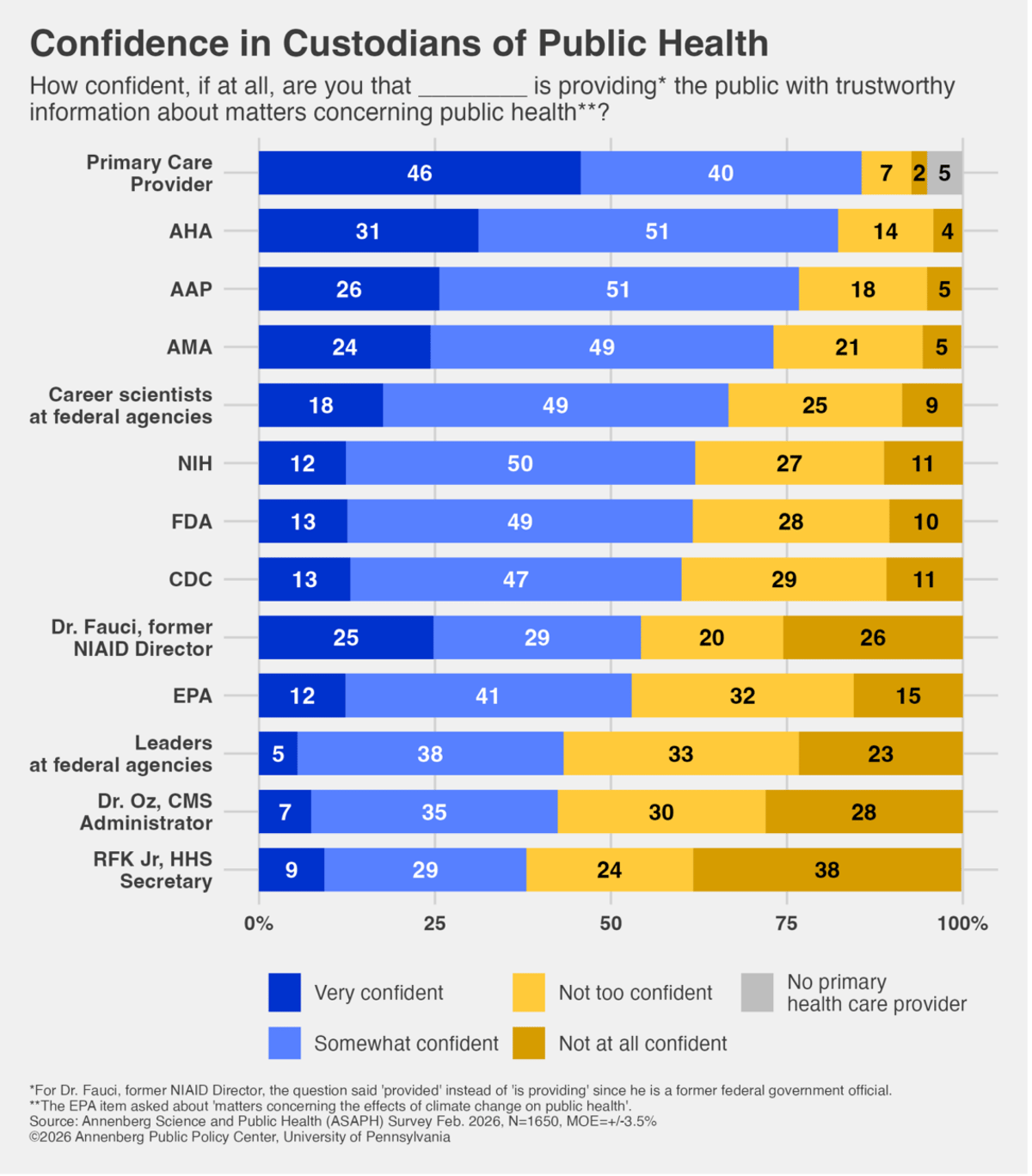
- •Physicians and AMA trusted by 73% of Americans
- •Confidence in CDC/NIH/FDA scientists exceeds trust in leaders
- •Trust gap widening amid misinformation surge
- •AMA urges science-driven communication to rebuild public trust
- •Survey highlights need for transparent health messaging
Pulse Analysis
The latest Annenberg survey arrives at a pivotal moment when misinformation proliferates across social platforms and traditional media alike. While the American Medical Association and practicing physicians retain strong credibility, the data shows a notable decline in confidence toward federal health agencies. This divergence suggests that the public distinguishes between the scientific expertise embedded within agencies and the political or administrative figures steering them, a nuance that can shape how health directives are received.
Career scientists at the CDC, NIH and FDA continue to command higher trust than agency leaders, highlighting a paradox within public‑health institutions. Their perceived independence from political pressures reinforces the belief that scientific evidence remains the bedrock of reliable guidance. Yet, the leadership’s lower standing may impede the translation of research into policy, especially when swift, coordinated responses are required during health crises. Bridging this gap demands transparent decision‑making processes and visible alignment between scientists and administrators.
For the health sector, the survey’s implications are clear: rebuilding trust hinges on consistent, evidence‑based communication that foregrounds scientific authority while demystifying leadership roles. The AMA’s call for science‑driven messaging reflects a broader industry push toward clarity and accountability. By amplifying the voices of trusted clinicians and career researchers, and by ensuring agency leaders are seen as credible stewards of that science, policymakers can strengthen public confidence, improve compliance with health recommendations, and ultimately safeguard population health.
Survey shows need to rebuild trust in evidence-based health information; Americans more confident in career scientists than agency leaders
Comments
Want to join the conversation?
Loading comments...