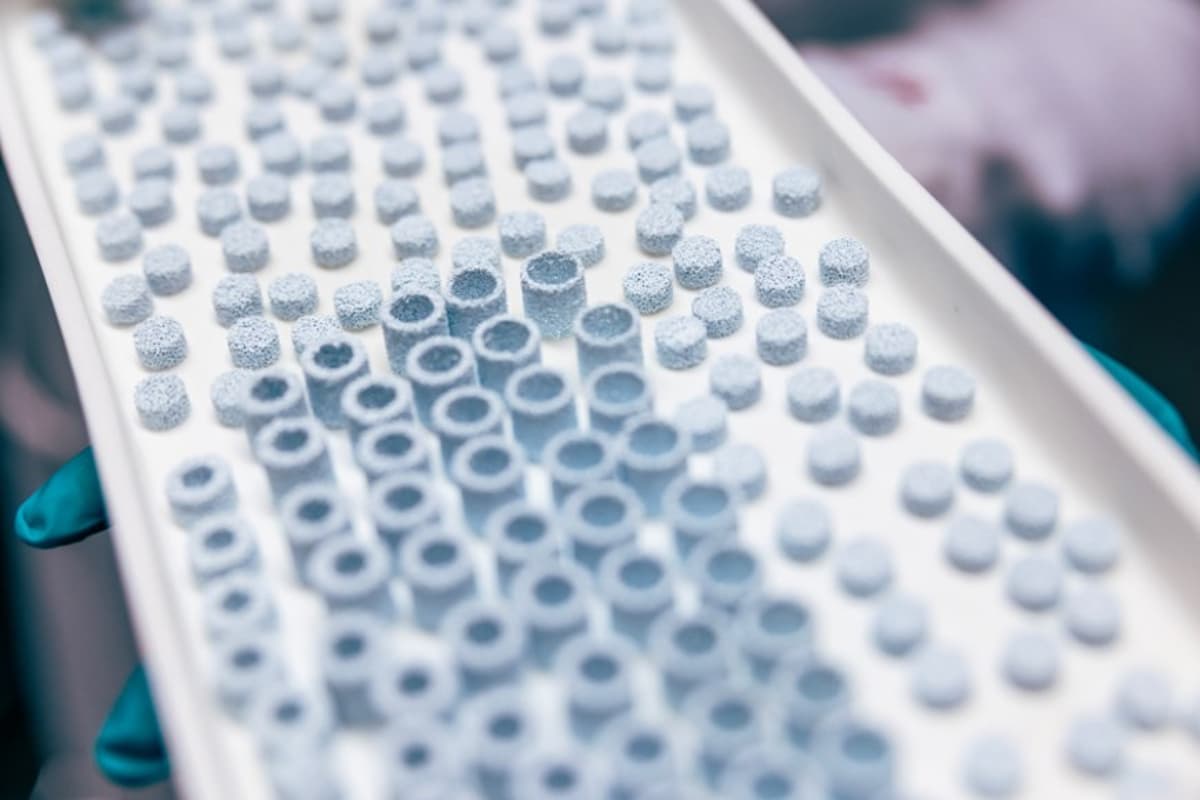
Tampere Team 3D Prints Bone-Like Ceramic That Guides the Body’s Own Repair
Why It Matters
The technology offers a drug‑free, off‑the‑shelf alternative to traditional bone grafts, easing supply constraints and reducing surgical complexity. It advances regenerative medicine by demonstrating that precise architecture and surface chemistry can drive true bone healing without donor tissue.
Key Takeaways
- •Hydroxyapatite scaffold replicates natural bone mineral and pore architecture.
- •400 µm pores and 45% porosity optimize cell infiltration and strength.
- •High sintering temperatures alter surface chemistry, hindering cell attachment.
- •Digital design enables patient‑specific implants, reducing donor dependence.
- •Clinical adoption expected within ten years, reshaping bone regeneration market.
Pulse Analysis
Bone grafting remains the second‑most common tissue transplantation worldwide, yet reliance on autografts and allografts strains supply chains and imposes surgical burdens. As aging populations generate more fractures and degenerative defects, the market has turned to synthetic alternatives, but most have failed to capture bone’s intricate micro‑architecture that guides cellular activity. This gap has spurred a wave of research into biomimetic scaffolds that combine structural fidelity with biological cues, positioning 3D printing as a pivotal tool for next‑generation orthopaedic solutions.
The Tampere University team tackled the challenge by printing hydroxyapatite—a calcium‑phosphate mineral identical to bone’s inorganic matrix—using ceramic vat photopolymerization. Their systematic study identified a sweet spot: pores around 400 µm and 45% overall porosity, which together maximize nutrient flow while preserving load‑bearing capacity. Crucially, they discovered that high sintering temperatures can modify surface chemistry, reducing cell adhesion, underscoring that material processing is as vital as composition. By integrating patient‑specific imaging data into the design workflow, the resulting implants can be tailored to exact defect geometries, eliminating the compromises of generic grafts.
Commercially, the breakthrough aligns with emerging products such as Dimension Inx’s FDA‑cleared CMFlex and UNSW’s biodegradable bone scaffolds, suggesting a converging market for personalized, biologically active implants. If Tampere’s projections hold, a decade from now hospitals could routinely replace donor bone with digitally fabricated, off‑the‑shelf ceramic scaffolds, slashing costs, shortening recovery times, and expanding access to advanced regenerative care. Investors and healthcare providers should monitor regulatory pathways and scaling strategies, as the convergence of additive manufacturing, biomaterials science, and patient‑specific design promises to reshape the orthopaedic implant landscape.
Tampere Team 3D Prints Bone-Like Ceramic That Guides the Body’s Own Repair
Comments
Want to join the conversation?
Loading comments...