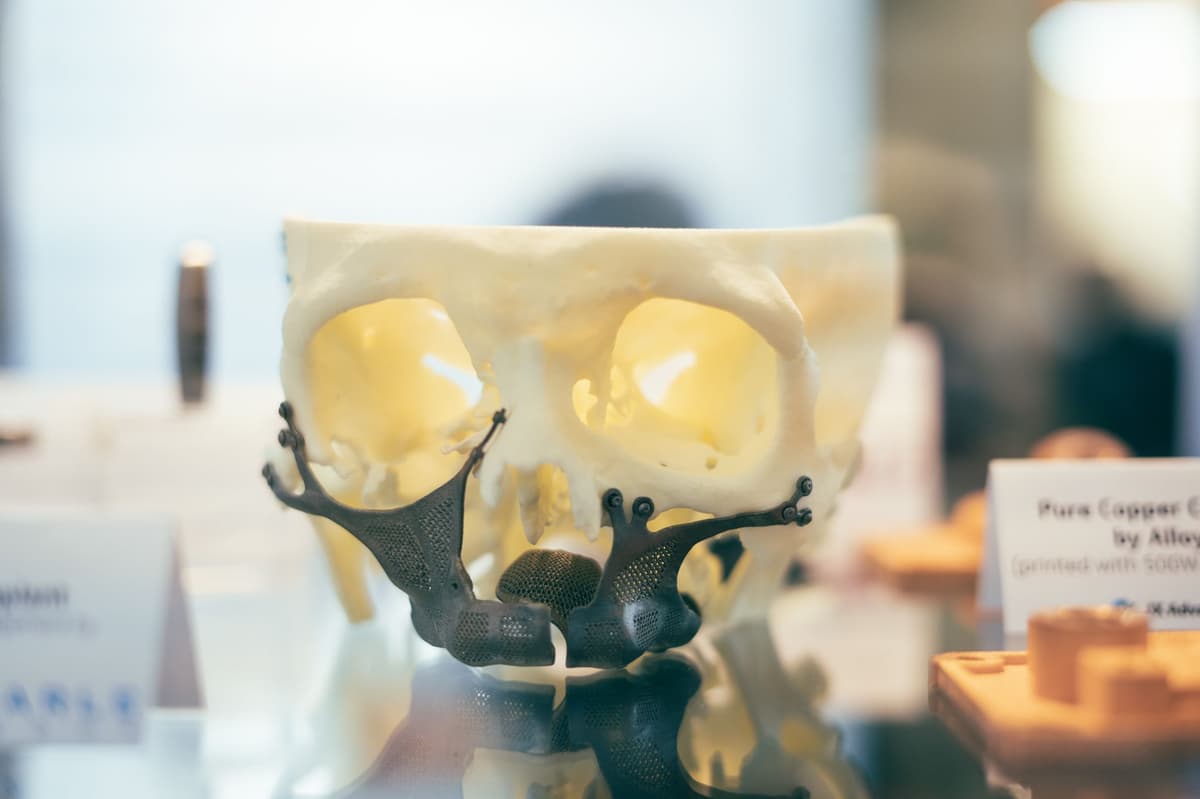
TANIOBIS Enables Patient-Specific Implants With Tantalum and Niobium Alloys
Companies Mentioned
Why It Matters
The launch accelerates the transition away from titanium, offering clinicians implants with fewer adverse reactions and longer lifespan, while opening a high‑growth market for advanced additive‑manufacturing materials.
Key Takeaways
- •TANIOBIS launches AMtrinsic powders for tantalum‑niobium alloys
- •Ti‑6Al‑4V triggers ion release in ~20% of patients
- •New alloys match bone elasticity, cutting stress shielding
- •Additive manufacturing enables up to 70% porous lattices
- •Industry pivots to permanent, patient‑specific implants beyond titanium
Pulse Analysis
Titanium‑6Al‑4V has been the workhorse of orthopedic and dental implants for decades, but its stiffness and the release of aluminum and vanadium ions have sparked clinical concerns, especially in one in five patients. These drawbacks have spurred research into metals that can deliver comparable strength without compromising biocompatibility. TANIOBIS’s introduction of tantalum‑niobium alloy powders taps into this demand, offering a material that forms a stable oxide layer, eliminating ion leaching while delivering mechanical properties that more closely resemble natural bone.
Additive manufacturing is the catalyst that makes these alloys viable for widespread clinical use. Powder‑bed fusion processes such as laser beam melting and electron beam melting can precisely fuse the gas‑atomized, spherical powders into complex geometries derived from patient imaging data. Designers can embed porous lattice structures with up to 70% porosity, allowing bone tissue to infiltrate and lock the implant in place. This level of customization not only improves osseointegration but also enables engineers to fine‑tune elasticity, directly addressing the stress‑shielding phenomenon that has plagued titanium implants.
The market implications are significant. As hospitals and implant manufacturers seek to reduce revision surgeries and improve patient outcomes, demand for metal alloys that combine strength, corrosion resistance, and biological harmony will rise. Regulatory pathways are becoming clearer for non‑titanium metals, and competitors such as 3D Systems and Osteopore are already showcasing alternative materials in clinical settings. TANIOBIS’s AMtrinsic line positions the company to capture a share of the growing segment of permanent, patient‑specific implants, potentially reshaping supply chains and prompting a broader industry migration away from titanium dominance.
TANIOBIS Enables Patient-Specific Implants With Tantalum and Niobium Alloys
Comments
Want to join the conversation?
Loading comments...