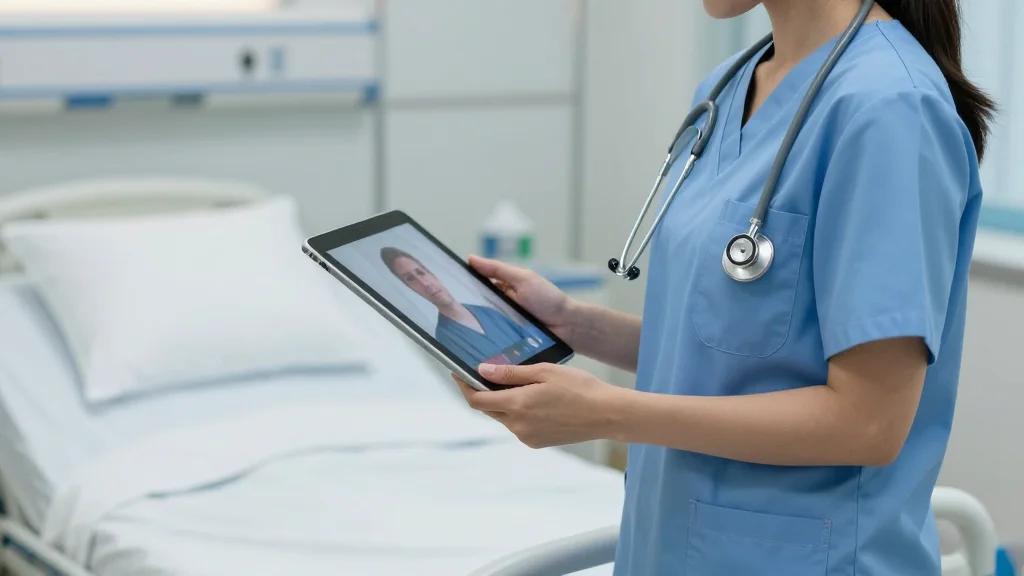
Tele-Hospitalists Can Help with More Challenges than Most Realize
Why It Matters
By augmenting limited on‑site staff, tele‑hospitalists improve throughput, lower costs, and preserve compassionate care, making hospitals more resilient to volume spikes and staffing shortages.
Key Takeaways
- •Tele‑hospitalists can admit patients directly from ED, cutting boarding time.
- •They provide after‑hours cross‑cover, freeing on‑site staff for critical cases.
- •Rural hospitals use tele‑hospitalists to retain staff and avoid patient transfers.
- •Real‑time support improves clinician communication with patients and families.
- •Flexible staffing reduces burnout and enhances clinician work‑life balance.
Pulse Analysis
Hospital operations are increasingly volatile, with sudden ED surges, high‑acuity admissions, and staffing shortages testing traditional hospitalist models. Tele‑hospitalists act as a scalable, on‑demand extension of the care team, instantly evaluating patients in the emergency department, placing admission orders, and initiating treatment plans. This rapid response trims boarding times, accelerates patient flow, and allows bedside physicians to concentrate on complex interventions, ultimately preserving the quality and safety standards expected in acute care settings.
Real‑world deployments illustrate the tangible impact of virtual physicians. In one hospital, a tele‑hospitalist coordinated a critical resuscitation, reviewing labs and guiding medication administration in real time, which helped stabilize a critically ill patient. At another facility, the introduction of tele‑hospitalists cleared an ED backlog within hours, reducing wait times and freeing on‑site staff to address the most urgent cases. These examples underscore how remote clinicians can restore operational control, improve throughput, and sustain compassionate communication with patients and families during peak demand periods.
Beyond surge management, tele‑hospitalist programs are reshaping care delivery in rural and small hospitals. By providing 24/7 clinical support, they eliminate the need for costly patient transfers, bolster local provider confidence, and create flexible staffing models that mitigate burnout. The resulting improvements in clinician retention and work‑life balance translate into more stable, high‑quality inpatient services for underserved communities. As health systems seek resilient, cost‑effective solutions, tele‑hospitalist adoption is poised to become a cornerstone of modern hospital medicine.
Tele-hospitalists can help with more challenges than most realize
Comments
Want to join the conversation?
Loading comments...