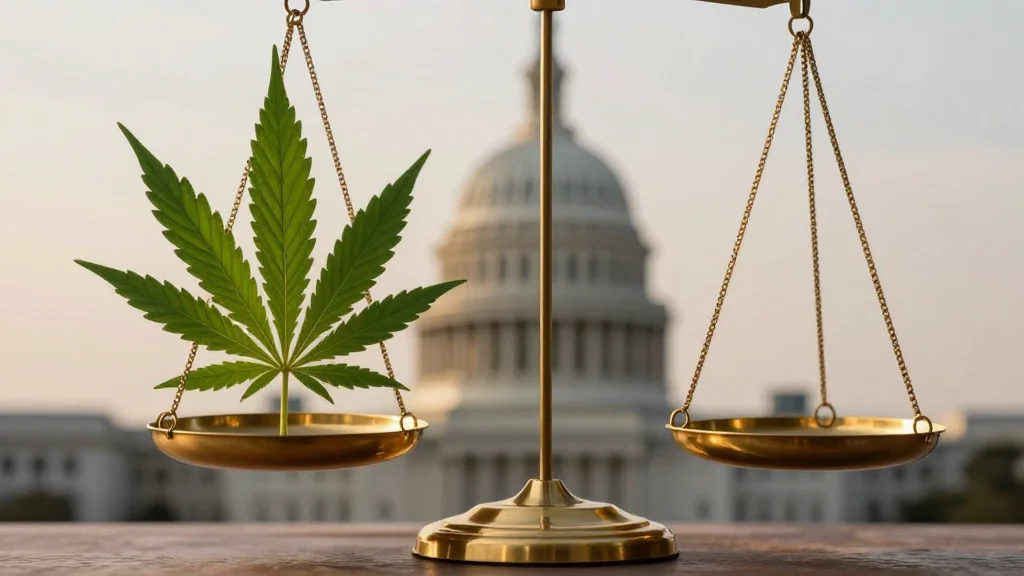
The Federal Government Didn’t Legalize Marijuana. Here’s What Actually Changed.
Why It Matters
The reclassification could boost the financial health of medical‑cannabis businesses and accelerate scientific studies, while states and regulators must still navigate safety and public‑health challenges.
Key Takeaways
- •DOJ moved medical cannabis to Schedule III, enabling tax deductions.
- •Reclassification does not legalize recreational use at federal level.
- •Researchers can now study commercial cannabis without violating federal law.
- •Cannabis use disorder affects up to 30% of regular users.
- •Marijuana impairment doubles fatal crash risk in European study.
Pulse Analysis
The Justice Department’s decision to shift qualified medical cannabis products to Schedule III marks the first federal acknowledgment that marijuana can have legitimate therapeutic value. By moving the drug into a lower schedule, the government allows businesses to deduct ordinary expenses and claim retroactive tax refunds, a financial relief that could improve cash flow for dispensaries and growers. Moreover, the policy eases the cumbersome approval process for researchers, who can now obtain cannabis from commercial sources rather than limited government‑controlled channels, potentially accelerating clinical trials on pain, epilepsy, and mental‑health applications.
While the rescheduling does not equate to nationwide legalization, it aligns federal policy with the reality that 40 states and D.C. already permit medical use and 24 jurisdictions allow recreational consumption. This alignment reduces the regulatory friction between state‑level markets and federal tax codes, encouraging investment and expansion in the cannabis sector. However, public perception often overstates safety; data show that 22‑30% of regular users develop cannabis‑use disorder, and the substance remains the second‑most common drug‑use disorder after alcohol. Understanding these risk profiles is essential for insurers, employers, and policymakers crafting responsible access frameworks.
Public‑health concerns persist, especially around impaired driving. Studies consistently link THC exposure to slower reaction times and increased lane deviations, with European research indicating nearly double the likelihood of fatal crashes among drivers testing positive for cannabis. As states contemplate broader legalization, lawmakers must balance economic incentives with robust education campaigns and enforcement strategies. The upcoming June 29 hearing on full rescheduling will likely shape the next phase of federal‑state coordination, influencing everything from banking access to workplace safety standards.
The federal government didn’t legalize marijuana. Here’s what actually changed.
Comments
Want to join the conversation?
Loading comments...