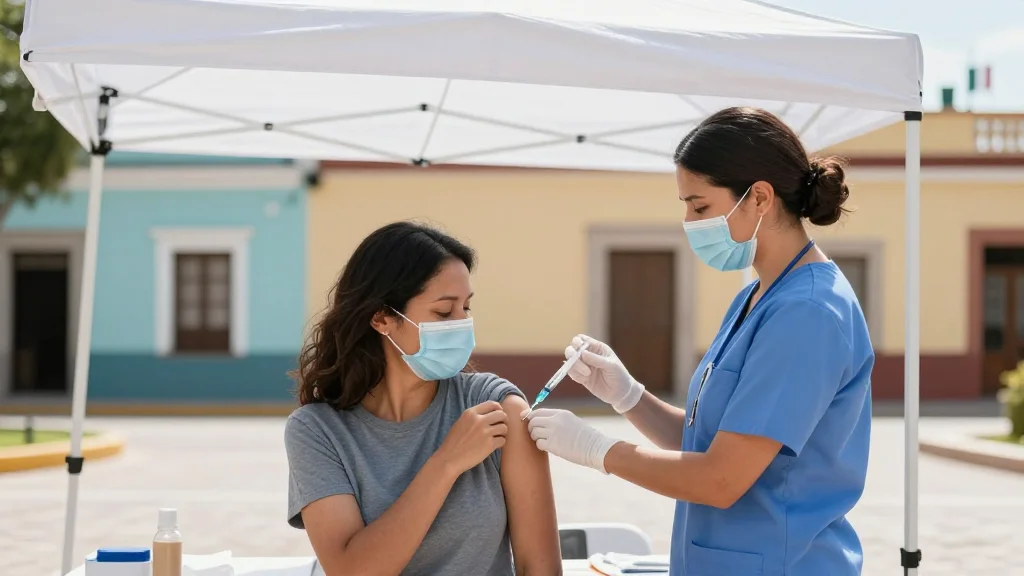
There's a Massive Measles Vaccine Campaign in Mexico. Is the Public on Board?
Why It Matters
The outbreak threatens to reverse decades of progress in Mexico’s disease control and could spill over into neighboring countries, highlighting the urgency of restoring vaccination coverage. It also illustrates how funding, misinformation and inequality can undermine large‑scale public‑health campaigns.
Key Takeaways
- •2.5 million vaccinations targeted weekly across Mexico.
- •Outbreak caused >36,000 suspected cases, 15,000 confirmed.
- •Vaccination rates fell below 95% herd‑immunity threshold.
- •Funding cuts and COVID‑19 created immunity gaps.
- •TikTok misinformation fuels vaccine hesitancy in rural areas.
Pulse Analysis
The resurgence of measles in Mexico has forced the health ministry to launch an unprecedented emergency drive, aiming to deliver up to 2.5 million doses each week. Since January 2025 the country has logged more than 36,000 suspected cases, with roughly 15,000 confirmed and 35 deaths, according to daily government bulletins. The campaign floods urban centers with pop‑up stations in malls, bus terminals and even bakeries, while QR‑coded posters guide residents to the nearest clinic. Early weeks saw long queues and high public enthusiasm, especially among parents protecting young children.
Despite the visible rollout, officials now report a sharp drop‑off in demand and in the number of pop‑up sites operating. Experts point to a confluence of factors: chronic under‑funding of the public‑health system, which stopped matching budget growth to population increases; the COVID‑19 pandemic that disrupted routine childhood immunizations and left a sizable immunity gap; and a surge of vaccine skepticism amplified by TikTok videos and deep‑seated mistrust in rural and indigenous communities. Logistical hurdles such as cold‑chain gaps, limited staff and the absence of a national immunization registry further blunt the campaign’s efficiency.
The episode underscores the need for a more data‑driven, equity‑focused approach. Targeting the most under‑immunized regions—such as the Mennonite enclaves in Chihuahua and remote indigenous villages—could raise coverage without expending resources on already saturated urban sites. Digital tools like QR‑code locators and real‑time wait‑time alerts can improve access, but they must be paired with community outreach that counters misinformation and rebuilds trust. For Latin America, Mexico’s experience serves as a cautionary tale: sustained financing, robust registries and culturally resonant communication are essential to keep measles—and other preventable diseases—at bay.
There's a massive measles vaccine campaign in Mexico. Is the public on board?
Comments
Want to join the conversation?
Loading comments...