Ultralow-Temperature Cryoablation Shows Promise for VT
Why It Matters
The therapy offers a deeper, less invasive alternative to traditional VT ablation, potentially lowering drug dependence and improving outcomes for a high‑risk cardiac population.
Key Takeaways
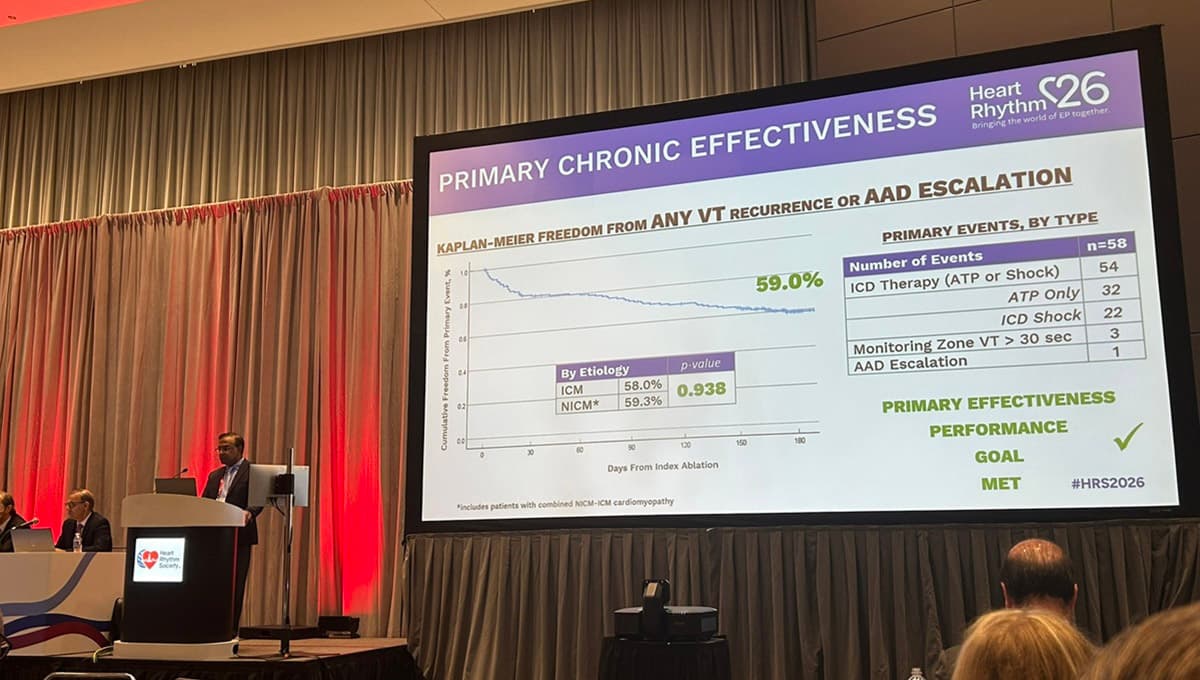
- •59% free from VT, ICD therapy, and drug escalation at 6 months
- •Major adverse events within 7 days occurred in 2.4% of cases
- •Amiodarone use dropped 60% relative, with 72% patients reduced or off drug
- •Acute procedural success reached 98% non‑inducibility of targeted VTs
- •FDA granted breakthrough designation; CE Mark approved in Europe
Pulse Analysis
Ventricular tachycardia remains one of the most challenging arrhythmias to treat, largely because the arrhythmic substrate often lies deep within the myocardium. Conventional radiofrequency ablation struggles to reach these mid‑myocardial or epicardial zones without invasive epicardial access, leading to suboptimal outcomes and high complication rates. Ultralow‑temperature cryoablation, delivering temperatures as low as ‑120 °C, creates lesions up to 10 mm deep with controlled freeze times, promising a more reliable method to target the elusive VT substrate while preserving surrounding tissue.
The single‑arm FULCRUM‑VT trial, presented at Heart Rhythm 2026, demonstrated that 59% of patients were free from sustained VT, ICD therapy, and antiarrhythmic escalation at six months—a figure comparable to prior VT ablation studies but achieved with markedly lower drug reliance. Acute procedural success was impressive, with 98% of targeted VTs rendered non‑inducible, and the incidence of major adverse events within the first week was only 2.4%. Notably, amiodarone use fell by a relative 60%, and 72% of participants either reduced dosage or discontinued the drug entirely, highlighting a significant shift toward medication‑sparing management.
Regulatory momentum underscores the technology’s promise: the vCLAS system carries CE Mark approval in Europe and has earned FDA breakthrough device designation in the United States. A next‑generation catheter, featuring an 8.5‑Fr sheath and reduced freeze cycles, is already in expansion trials, aiming to further cut procedure times and complication risk. If broader studies confirm these early results, ultralow‑temperature cryoablation could reshape the VT treatment landscape, offering electrophysiologists a deeper, safer ablation tool and delivering tangible cost and quality‑of‑life benefits for patients.
Ultralow-Temperature Cryoablation Shows Promise for VT
Comments
Want to join the conversation?
Loading comments...