US Pediatric Mortality Rate Surpassed Peer Nations Decades Ago
Why It Matters
The widening pediatric mortality gap signals deep‑rooted public‑health failures, demanding urgent policy focus on injury prevention, mental‑health services, and maternal care. Addressing these gaps could reduce U.S. child deaths by up to 30 % and improve long‑term population health.
Key Takeaways
- •U.S. pediatric mortality exceeded peer nations after 1975.
- •Adolescents' mortality gap began in 1952, highest disparity.
- •Infant mortality gap emerged in 1975, 1.5× higher than peers.
- •Injuries, violence, self‑harm drive adolescent deaths; maternal health drives infant deaths.
Pulse Analysis
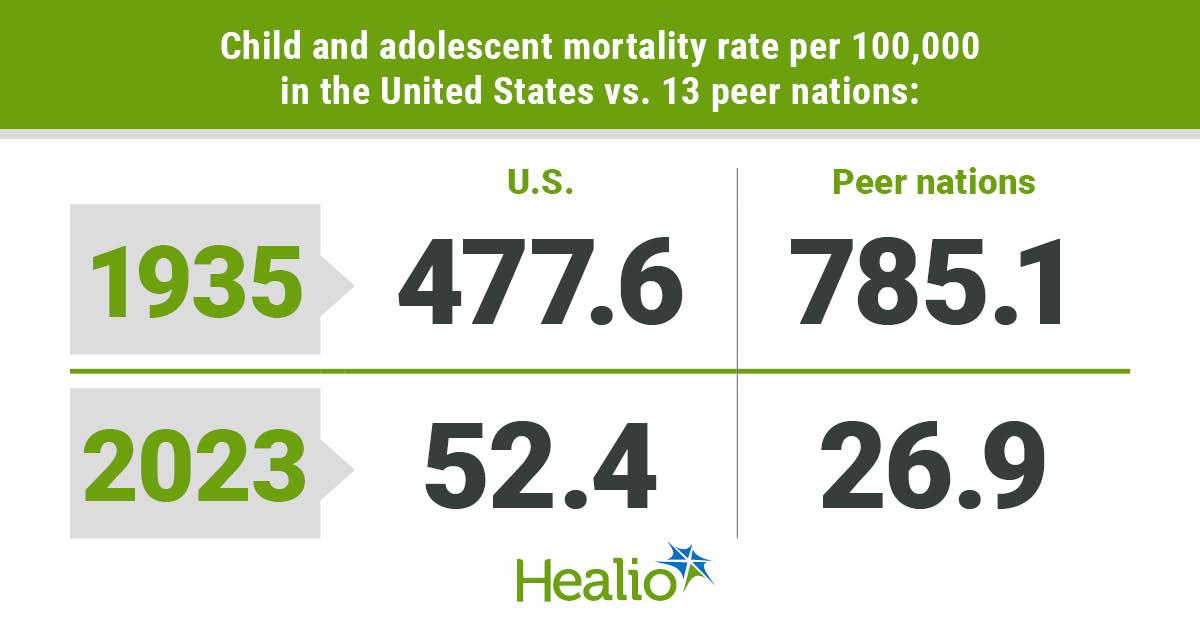
The longitudinal analysis presented at the Pediatric Academic Societies meeting reveals that the United States’ pediatric mortality advantage evaporated in the mid‑1970s, leaving the nation consistently above the pooled OECD average for the past half‑century. By comparing vital‑statistics records from 1935 to 2023, researchers showed an 89 % decline in U.S. child deaths versus a 96.6 % decline abroad, underscoring a slower pace of health improvement that has compounded over generations.
A deeper dive into age‑specific trends highlights two distinct problem areas. Adolescents (15‑19) first fell behind peers in 1952, a gap now approaching threefold, driven largely by injuries, violence, firearms and mental‑health crises. Infants entered the disparity in 1975, remaining 1.5 times more likely to die, reflecting persistent challenges in prematurity, maternal health, and postnatal care access. These patterns suggest that the mortality gap is less about acute medical treatment and more about upstream social and environmental determinants.
For policymakers and health leaders, the findings demand a dual‑track strategy. For teens, expanding injury‑prevention programs, tightening firearm safety regulations, and scaling mental‑health services could close the gap rapidly. For infants, investing in maternal health initiatives, prenatal care equity, and prematurity reduction programs is essential. By targeting the structural roots identified in the study, the United States can reverse a decades‑long trend and align its child health outcomes with those of its peer nations.
US pediatric mortality rate surpassed peer nations decades ago
Comments
Want to join the conversation?
Loading comments...