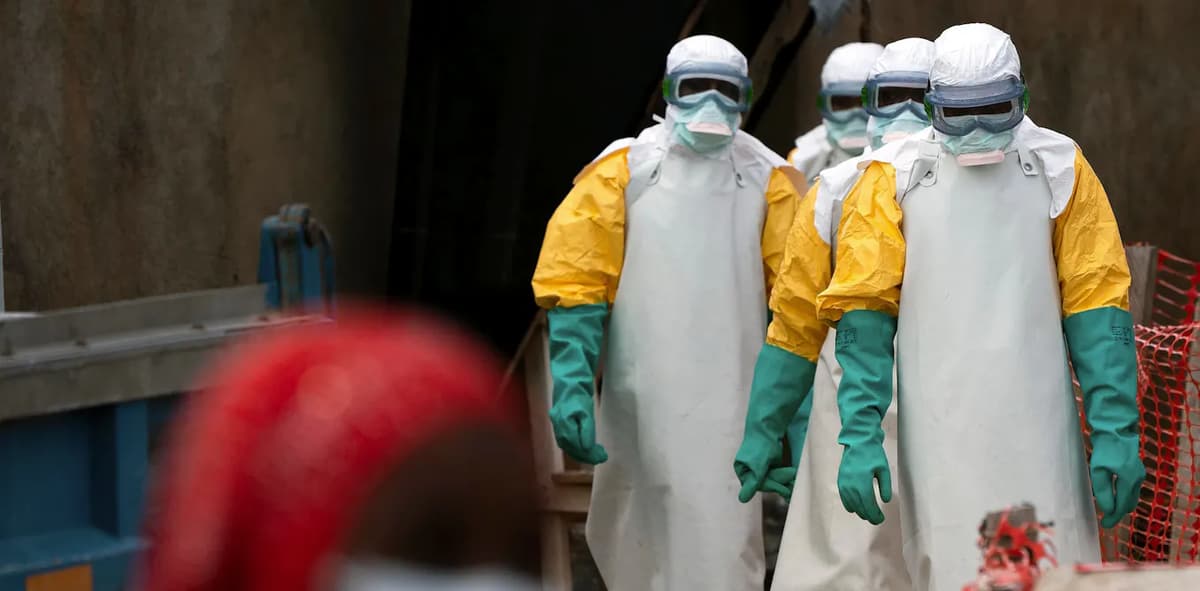
What You Need to Know About the Ebola Outbreak that Has the WHO Concerned
Why It Matters
The PHEIC designation mobilizes global resources and coordination, essential for containing a high‑mortality virus lacking a vaccine. Failure to contain could destabilize already fragile health systems and threaten broader international health security.
Key Takeaways
- •336 infections reported in DRC and Uganda, 88 deaths
- •Bundibugyo strain lacks approved vaccine, increasing risk
- •WHO declared PHEIC, urging coordinated international response
- •Contact tracing, isolation, and safe burials drive containment
- •Conflict‑ridden mining region amplifies cross‑border transmission
Pulse Analysis
The latest Ebola flare‑up in central Africa marks the 17th recorded outbreak of the disease, but its profile is distinct. Identified in early May, the Bundibugyo strain has already infected 336 individuals across the Democratic Republic of Congo and Uganda, with a case‑fatality rate hovering around 40%. While this is lower than the 70‑plus percent seen in the 2014‑16 West Africa epidemic, the absence of an approved vaccine for Bundibugyo heightens the urgency. The WHO’s declaration of a public health emergency of international concern (PHEIC) signals that the situation exceeds national capacities and requires coordinated multinational action.
Containment efforts are hampered by a confluence of logistical and socio‑political challenges. The outbreak’s epicenter lies in Ituri province, a conflict‑prone mining corridor where workers routinely traverse porous borders, facilitating viral spread. Health‑care workers face heightened exposure, with at least four fatalities reported, underscoring gaps in infection‑prevention protocols. In the absence of strain‑specific vaccines, treatment remains supportive, focusing on fluid management and symptom control. Rapid diagnostic tools, including PCR and antigen tests, are being deployed, but limited laboratory capacity and rugged terrain impede timely case identification and isolation.
From a global health perspective, the Bundibugyo episode reinforces the need for robust surveillance networks and flexible vaccine platforms capable of rapid adaptation. While travel advisories for regions like Australia remain low‑risk, the WHO’s emphasis on enhanced contact tracing and expanded laboratory testing serves as a template for future emergent pathogens. Investing in cross‑border health coordination, strengthening local health infrastructure, and accelerating research into pan‑ebolavirus vaccines will be pivotal in averting a repeat of past catastrophic outbreaks.
What you need to know about the Ebola outbreak that has the WHO concerned
Comments
Want to join the conversation?
Loading comments...