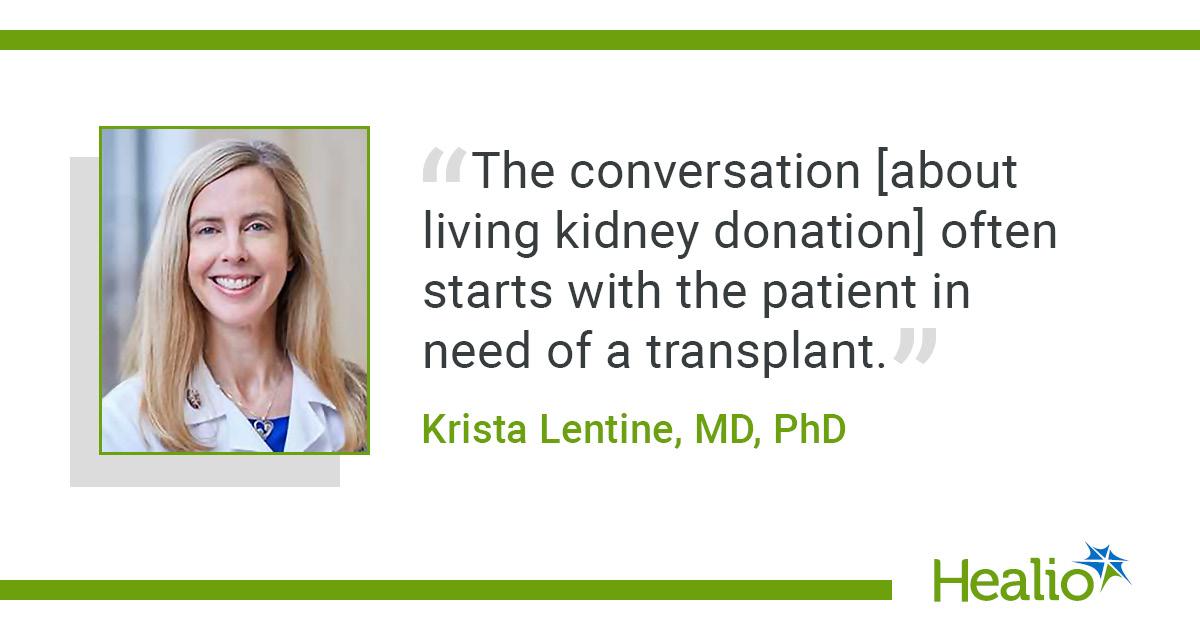
What’s New in Living Kidney Donation, Evaluation and Counseling
Why It Matters
By lowering clinical barriers and improving counseling, the innovations can increase the living‑donor pool, shorten transplant wait times, and improve outcomes for patients with kidney failure.
Key Takeaways
- •Race‑neutral eGFR reduces donor exclusion for Black candidates
- •Hypertension thresholds lowered; older donors with controlled BP now eligible
- •Paired‑exchange programs expand compatible matches for otherwise incompatible donor pairs
- •Clinicians should counsel CKD stage 3b‑4 patients about living‑donor options early
- •Celebrity donations, like Jesse Eisenberg’s, raise public awareness of nondirected kidneys
Pulse Analysis
Living kidney donation remains a critical solution to the chronic shortage of organs for patients with end‑stage renal disease. While dialysis sustains life, it carries high morbidity and mortality, and the average wait for a deceased‑donor kidney exceeds five years. Living donors offer superior graft survival and quality of life, yet historically stringent evaluation criteria have limited the pool. Recent KDIGO‑inspired research highlights how refined risk assessments—especially around blood pressure and kidney function—are reshaping eligibility, allowing more candidates to be considered without compromising safety.
One of the most consequential shifts is the adoption of a race‑neutral eGFR equation. The previous race‑based formula often overestimated glomerular filtration in Black donors, inadvertently disqualifying viable candidates. By relying on measured GFR or 24‑hour urine collections, transplant centers can more accurately gauge donor kidney health, fostering equity and expanding the donor base. Simultaneously, updated hypertension guidelines recognize that well‑controlled blood pressure in donors over 50 does not preclude donation, reducing unnecessary exclusions. Complementary tools such as comprehensive genetic panels further stratify risk, identifying hereditary kidney disease before transplantation.
For clinicians, the practical takeaway is to embed living‑donor education early in the CKD care pathway, targeting stage 3b‑4 patients before dialysis initiation. Paired‑exchange and voucher programs now enable even incompatible donor‑recipient pairs to achieve transplantation, while high‑visibility stories—like Jesse Eisenberg’s nondirected donation—serve as powerful outreach catalysts. As policymakers consider incentives and support structures, the momentum generated by these clinical and cultural advances is poised to reshape national transplant strategies and improve outcomes for thousands of patients awaiting kidneys.
What’s new in living kidney donation, evaluation and counseling
Comments
Want to join the conversation?
Loading comments...