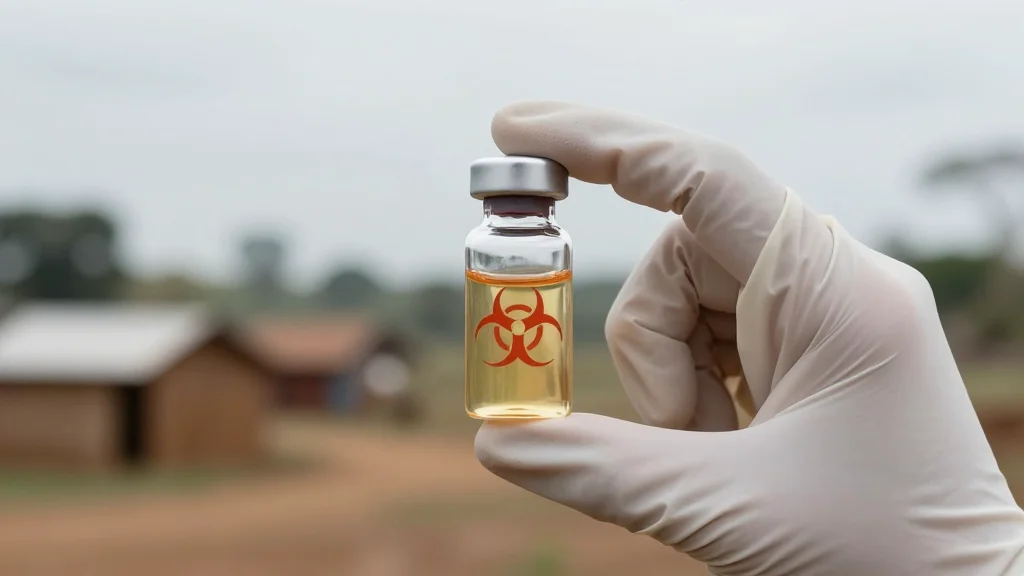
WHO Raises DRC Ebola Risk to "Very High" As Cases Top 800, US and Thailand Impose Travel Bans

Why It Matters
The DRC Ebola surge threatens to destabilize an already fragile region where conflict, displacement, and food insecurity intersect with public‑health emergencies. A failure to contain the outbreak could overwhelm neighboring health systems, jeopardize trade routes, and trigger secondary crises such as measles or cholera outbreaks among displaced populations. Internationally, the response tests the balance between protective travel measures and the risk of stigmatizing entire nations. Overly broad bans can hinder humanitarian access, delay aid delivery, and fuel misinformation, while insufficient screening may allow cases to cross borders, as seen in the isolated U.S. infection that required evacuation to Germany. The situation underscores the need for coordinated, science‑driven policies that protect both global health security and the livelihoods of affected communities.
Key Takeaways
- •WHO upgrades DRC Ebola risk to "very high" as cases exceed 800 and deaths surpass 180.
- •CDC bans entry for travelers from DRC, Uganda, South Sudan; routes U.S. nationals through Dulles for screening.
- •Thailand designates DRC and Uganda as Ebola‑affected zones, requiring health declarations and quarantine for arrivals.
- •Bundibugyo strain lacks approved vaccine; experimental candidates may take 2‑9 months to become available.
- •Treatment centre in Rwampara burned after community protest, highlighting mistrust and burial‑practice conflicts.
Pulse Analysis
The current DRC Ebola episode illustrates how pathogen emergence can rapidly outpace both local capacity and global preparedness when geopolitical instability is present. Historically, the 2014‑16 West Africa outbreak demonstrated the catastrophic cost of delayed detection and fragmented response; this time, the rare Bundibugyo strain slipped past standard diagnostic panels, delaying identification and amplifying spread. The lack of a ready‑made vaccine forces reliance on non‑pharmaceutical interventions—contact tracing, safe burial practices, and community engagement—yet these are precisely the tools eroded by years of conflict and mistrust.
Travel restrictions, while politically popular, risk creating a paradox: they may shield destination countries but also impede the flow of aid workers, medical supplies, and critical intelligence. The CDC’s targeted screening approach, coupled with Thailand’s layered quarantine system, represents a more nuanced strategy that balances border security with the need to keep humanitarian corridors open. However, the effectiveness of such measures hinges on rapid data sharing and the ability to scale up isolation facilities, both of which are currently strained.
Looking ahead, the outbreak’s trajectory will likely be shaped by three variables: the speed of experimental vaccine rollout, the willingness of armed groups to cooperate with health authorities, and the international community’s financial commitment. If funding gaps persist, the DRC could become a protracted hotspot, feeding spillover into neighboring countries and potentially reigniting global concern. Conversely, a coordinated push to fast‑track vaccine candidates, coupled with culturally sensitive community outreach, could contain the virus before it breaches the "very high" risk threshold, preserving both lives and regional stability.
WHO Raises DRC Ebola Risk to "Very High" as Cases Top 800, US and Thailand Impose Travel Bans
Comments
Want to join the conversation?
Loading comments...