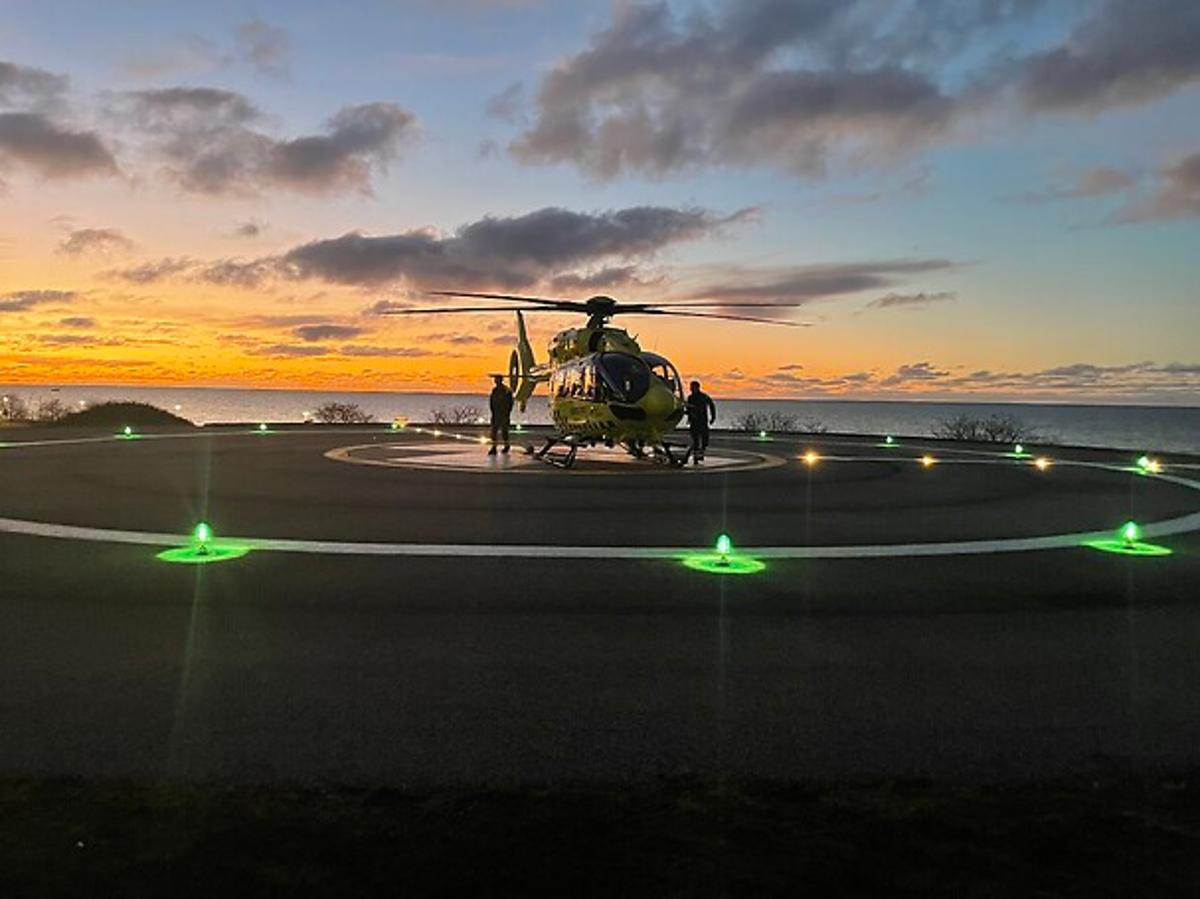
Winter Wonder: Sweden’s Helicopter Emergency Medical Services
•March 8, 2026
0
Companies Mentioned
Why It Matters
The expanded H145 fleet improves response times and patient outcomes in Sweden’s hard‑to‑reach regions, reinforcing HEMS as a vital component of national healthcare infrastructure.
Key Takeaways
- •Avincis operates 13 helicopters from 10 Swedish bases
- •H145 completed 124 missions over three‑day June 2025 period
- •New five‑bladed H145s increase Stockholm fleet to four
- •Aircraft handles low‑visibility IFR and urban visual approaches
- •One‑skid landings enable rapid patient extraction on islands
Pulse Analysis
Sweden’s rugged archipelagos and harsh winter weather make helicopter emergency medical services (HEMS) uniquely demanding. Pilots must navigate low cloud ceilings over the Baltic, contend with ice, snow, and sudden wind shifts, and often execute one‑skid landings on rocky terrain or frozen fields. These conditions compress response times, turning aerial transport into a critical lifeline for remote islands such as Gotland, where ground or ferry routes would add hours to a patient’s journey.
Avincis Sweden, part of a broader Scandinavian air‑ambulance network, operates 13 helicopters from ten bases, supplemented by eight fixed‑wing stations in Norway. In a three‑day window from 21‑23 June 2025 the service logged 124 missions, with Stockholm’s archipelago alone accounting for over 80 sorties. To sustain this tempo, Avincis introduced two new five‑bladed H145s in June, bringing its Stockholm fleet to four of the latest model, a move that bolsters range, payload and cold‑weather reliability.
The five‑bladed H145’s 3,800 kg maximum take‑off weight permits extra fuel reserves, extending range for alternate routing in volatile weather. Its rear‑loading bay and Aerolite medical interior accommodate up to two stretchers, oxygen tanks, IV drips and a chest‑compression device, enabling both emergency evacuations and scheduled inter‑facility transfers. Pilots like Captain Kate Lindvall cite the aircraft’s smooth handling and rapid transition from instrument to visual flight as decisive factors that improve patient comfort and outcomes, positioning the H145 as a benchmark for future HEMS fleets in Scandinavia. This capability also reduces hospital admission delays, a key metric in trauma care. As climate patterns shift, such versatile platforms become increasingly vital.
Winter wonder: Sweden’s helicopter emergency medical services
0
Comments
Want to join the conversation?
Loading comments...