Key Takeaways
- •SMH ETF up 36% in six weeks, outpacing broader market.
- •Intel, Micron, Qualcomm each gained over 80% since March lows.
- •Nvidia call options skew at 99.2%, making calls extremely pricey.
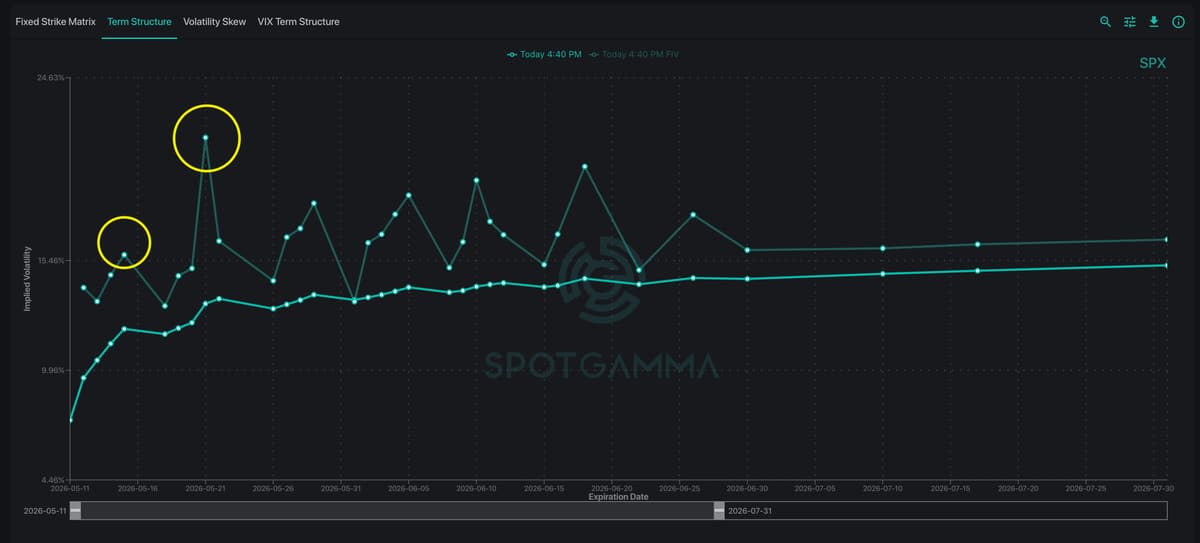
- •OPEX (May 15) and Nvidia earnings (May 20) could trigger volatility spike.
- •Gamma-driven SPX 0DTE buying pushed index past 7,360 resistance.
Pulse Analysis
The AI‑driven market surge has turned semiconductors into the rally’s engine, propelling the sector far beyond historical growth rates. While the broader S&P 500 has risen 15%, the semiconductor‑focused SMH ETF has outperformed with a 36% gain, and heavyweight names such as Intel, Micron and Qualcomm have posted multi‑hundred‑percent jumps. This rapid reallocation reflects investors’ bets on continued demand for AI chips, yet it also inflates valuations and raises questions about the sustainability of such parabolic moves.
Underlying this price action is an options market that is both crowded and expensive. Nvidia’s call‑option skew sits at an unprecedented 99.2%, indicating that calls are priced at a premium relative to puts. Call volumes in AI‑related stocks have even eclipsed the index‑wide average, and implied volatility remains elevated ahead of two pivotal dates: the May 15 monthly options expiration (OPEX) and Nvidia’s earnings on May 20. The forward volatility curve suggests the market may be underpricing the potential for post‑event price swings, especially as the VIX expiration on May 19 adds another layer of uncertainty.
For investors, the convergence of a gamma‑rich SPX position, high‑priced options, and looming event risk creates a volatile crossroads. Traders who have built large 0‑day‑to‑expiration (0DTE) call bets could see rapid profit erosion if the market reverses after OPEX or Nvidia’s results. Conversely, volatility sellers may find opportunities as premiums compress, only to face sudden expansions if earnings miss expectations. Portfolio managers should monitor gamma exposure, implied volatility levels, and the evolving sentiment around AI chip demand to navigate the thin line between continued rally and a sharp correction.
The AI Trade Roars — But for How Long?
Comments
Want to join the conversation?