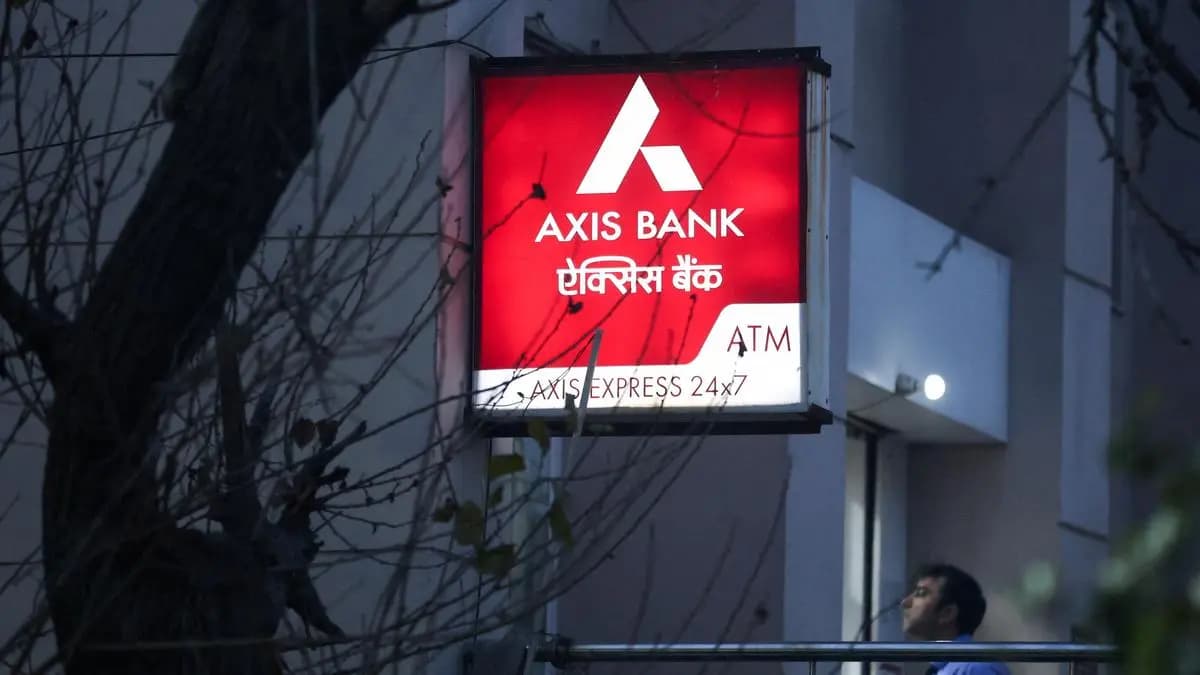
Axis Bank Shares Lead Nifty 50 Losers After Q4 Results, Brokerages Flag Mixed Performance
Why It Matters
The results underscore a broader tension in Indian banking: solid credit expansion is being offset by margin compression, which could temper investor confidence and affect sector valuations if not resolved.
Key Takeaways
- •Axis Bank shares fell ~5% after Q4 earnings.
- •Net profit slipped to ₹7,071 crore (~$852 million), down YoY.
- •Loan portfolio grew 6.4% YoY, asset quality improved.
- •Net interest margin compressed, fee income weakened.
- •Brokers keep buy/neutral ratings, targets ₹1,475‑₹1,629.
Pulse Analysis
India’s banking landscape is at a crossroads, with lenders juggling rapid credit growth against tightening margins. Axis Bank’s latest quarter illustrates this dynamic: a 6.4% loan expansion signals confidence in demand, yet the modest net profit decline to ₹7,071 crore (about $852 million) reflects headwinds from lower other income and a one‑time provision. The bank’s asset‑quality metrics, including reduced non‑performing assets, remain a bright spot, suggesting that risk management is on track despite a volatile macro environment.
Profitability, however, is the crux of the narrative. Net interest margin compression, driven by competitive funding costs and regulatory rate caps, eroded earnings, while fee‑based income lagged expectations. Operating expenses rose, further squeezing pre‑provision operating profit. Compared with peers such as HDFC and ICICI, Axis’s return ratios still trail, prompting analysts to flag the need for a sustainable margin recovery. The mixed broker commentary—Elara Capital’s buy with a ₹1,629 target, JM Financial’s revised ₹1,575 target, and Motilal Oswal’s neutral stance at ₹1,475—reflects divergent views on how quickly the bank can translate its balance‑sheet strengths into higher earnings.
Looking ahead, the bank’s growth outlook remains constructive, buoyed by steady deposit inflows and a disciplined credit strategy. Yet external factors, including geopolitical tensions in West Asia and potential shifts in RBI policy, could influence funding costs and loan demand. Investors will watch for signs of margin improvement, cost‑containment initiatives, and any acceleration in fee‑based services. If Axis can deliver consistent profitability upgrades, it may justify a rerating and support its stock’s upside potential; otherwise, the current caution could keep the share price under pressure.
Axis Bank shares lead Nifty 50 losers after Q4 results, brokerages flag mixed performance
Comments
Want to join the conversation?
Loading comments...