Barclays Lifts AMD Price Target to $665, Betting on Agentic AI Surge

Companies Mentioned

Why It Matters
The upgrade signals a potential re‑balancing of AI‑related investment away from a pure GPU focus toward a more diversified compute stack. For large‑cap investors, AMD’s elevated target highlights the importance of CPU exposure in a sector traditionally dominated by GPU narratives. If agentic AI drives the predicted surge in server‑CPU spending, AMD could capture a sizable share of a market that may rival the current size of the GPU segment, reshaping revenue growth trajectories for the broader semiconductor industry. Moreover, the move illustrates how analyst firms are adjusting their models to incorporate emerging AI workloads, which could influence portfolio allocations across technology funds, index trackers, and institutional mandates that track large‑cap tech performance. A sustained rally in AMD would also pressure peers to articulate their own CPU strategies, potentially accelerating innovation and competitive pricing across the sector.
Key Takeaways
- •Barclays raises AMD price target to $665 from $500, implying ~29% upside
- •AMD shares up ~109% YTD and have tripled over the past 12 months
- •Analyst cites agentic AI driving a shift toward CPU demand, forecasting a $200 bn server‑CPU market by 2030
- •CEO Lisa Su says agentic AI is boosting demand for high‑performance CPUs and accelerators
- •Barclays also lifts Intel target to $100 but keeps it below current price, favoring AMD’s positioning
Pulse Analysis
Barclays’ upgrade of AMD reflects a broader market pivot as the AI narrative matures beyond the initial GPU‑heavy hype. The firm’s emphasis on agentic AI—a class of applications that orchestrate multiple models and tools—highlights a structural demand shift toward CPUs that can handle complex, latency‑sensitive inference workloads. This is a departure from the early‑stage AI trade, where capital was funneled almost exclusively into GPU capacity for model training.
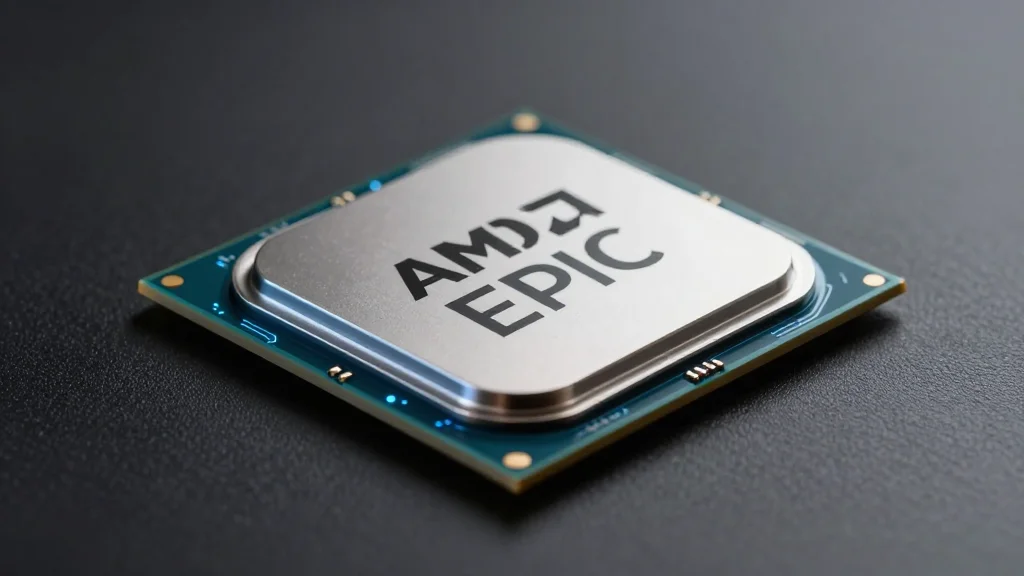
Historically, semiconductor giants have benefited from clear, singular technology cycles—think the rise of smartphones for Qualcomm or the data‑center boom for Nvidia. The emerging agentic AI cycle is more nuanced, requiring a balanced compute stack. AMD’s heterogeneous architecture, which couples high‑performance CPUs with integrated GPU capabilities, gives it a strategic edge. The company’s recent product roadmap, featuring the MI450 accelerator and next‑gen EPYC processors, is designed to serve both training and inference workloads, positioning it as a one‑stop shop for hyperscalers seeking to reduce system complexity.
From an investment perspective, the upgrade could catalyze a re‑weighting within large‑cap tech indices. Funds that have heavily tilted toward Nvidia may need to consider adding AMD to capture the upside of the CPU side of the AI equation. However, the upside is not without risk: AMD’s valuation is already premium, and execution on new product ramps, especially in a geopolitically tense environment, remains a key uncertainty. Analysts will be watching quarterly shipments, server‑CPU market share data, and the pace of agentic AI adoption in enterprise settings to gauge whether the $200 bn market forecast is realistic. In the near term, the price‑target hike is likely to boost AMD’s momentum, but sustained outperformance will hinge on the company’s ability to translate the agentic AI thesis into tangible revenue growth.
Barclays lifts AMD price target to $665, betting on agentic AI surge
Comments
Want to join the conversation?
Loading comments...