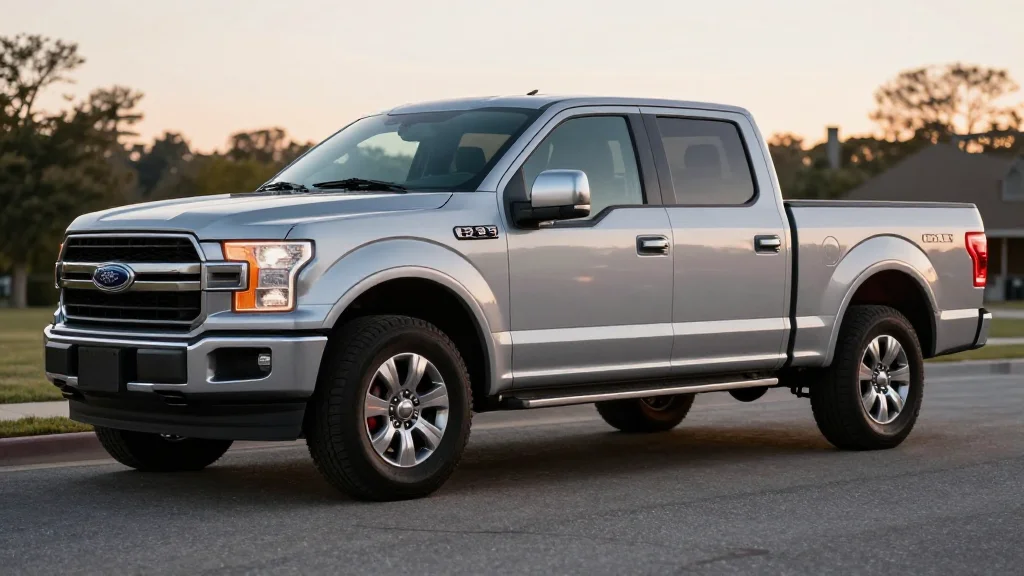
Ford Recalls 1.4 Million F‑150 Pickups over Gearshift Defect

Companies Mentioned
Why It Matters
The recall hits Ford’s flagship F‑150, a key revenue driver that accounts for a sizable portion of the automaker’s profit margins. A defect affecting 1.4 million units not only imposes direct repair costs but also raises questions about the reliability of Ford’s electronic control systems, which are central to its push toward connected and autonomous vehicles. For investors, the episode highlights the financial risk large-cap automakers bear when software‑related failures surface, potentially influencing valuation models that factor in recall exposure and warranty liabilities. Beyond Ford, the incident may prompt other OEMs to re‑evaluate their transmission sensor architectures, especially as the industry accelerates the integration of over‑the‑air updates and advanced driver‑assist features. Regulators could also tighten reporting requirements for electronic component failures, shaping future compliance costs for the entire sector.
Key Takeaways
- •Ford recalls ~1.4 million F‑150 pickups built 2014‑2017 due to transmission sensor fault
- •Defect can cause unintended downshift into second gear, risking loss of control
- •NHTSA reports two injuries and one crash linked to the issue
- •444 warranty claims and 105 customer service reports logged as of early April
- •Owners to receive mail notifications starting April 27; repairs at Ford/Lincoln dealers
Pulse Analysis
Ford’s recall arrives at a pivotal moment as the company doubles down on electrification and software‑centric vehicle platforms. The F‑150 remains the best‑selling truck in the United States, and any blemish on its reliability record can erode consumer confidence, especially as rivals like Chevrolet and RAM vie for market share with newer, tech‑heavy models. Historically, large‑scale recalls have pressured automakers to accelerate quality‑control investments; the 2009 Toyota recall, for example, reshaped the firm’s approach to supplier oversight. Ford is likely to allocate additional resources to its electronic control unit (ECU) testing pipelines, a move that could tighten margins in the short term but safeguard long‑term brand equity.
From a market perspective, the recall’s immediate impact on Ford’s share price was muted, suggesting that investors have already priced in a degree of operational risk for legacy models. However, the broader implication is a heightened sensitivity to software‑related defects across the sector. As OEMs push over‑the‑air updates and advanced driver‑assist systems, the line between a routine firmware patch and a safety‑critical recall blurs. Analysts may begin to factor recall risk premiums into valuation models for large‑cap auto stocks, especially those with extensive legacy fleets.
Looking ahead, Ford’s ability to swiftly execute the recall and communicate transparently will be a litmus test for its crisis‑management capabilities. Successful remediation could reinforce confidence ahead of the launch of its next‑generation electric F‑150 Lightning, while any missteps might amplify skepticism about the company’s readiness to lead the industry’s software transition.
Ford recalls 1.4 million F‑150 pickups over gearshift defect
Comments
Want to join the conversation?
Loading comments...