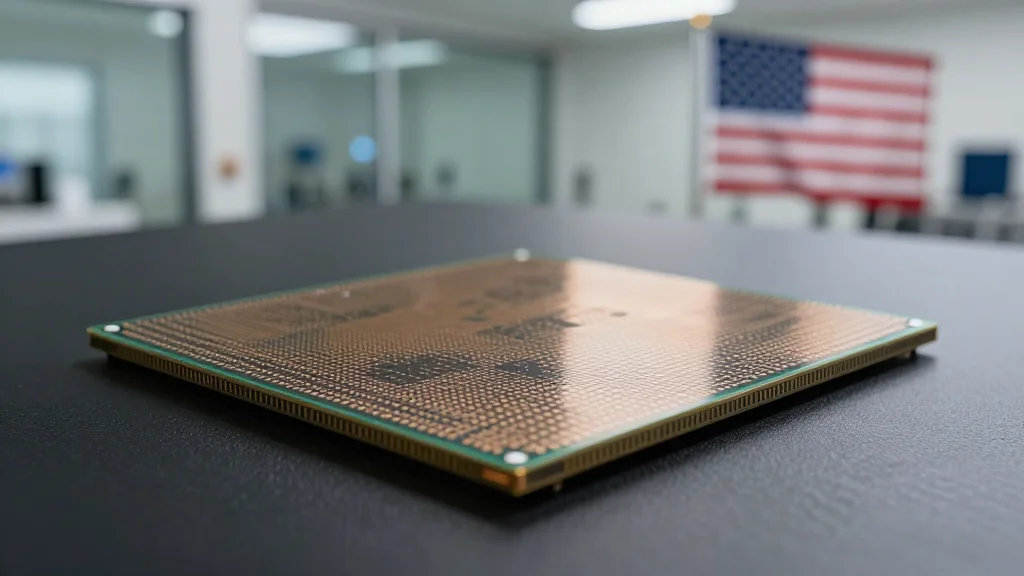
Micron Starts 1α DRAM Production in Virginia, $2 B Expansion Boosts U.S. Memory Supply

Companies Mentioned
Why It Matters
Micron's Virginia expansion marks a rare instance of a large‑cap U.S. semiconductor company building advanced memory capacity on American soil, directly addressing supply‑chain vulnerabilities that have plagued the industry for years. By quadrupling DDR4 output, the project not only secures critical components for high‑growth sectors like autonomous vehicles and defense but also strengthens the United States' strategic autonomy in a market dominated by Asian manufacturers. The $2 billion investment signals confidence in sustained AI‑driven demand for memory, reinforcing Micron's position as a bellwether for the broader large‑cap memory segment. Investors will gauge how quickly the new capacity translates into earnings, while policymakers will assess whether similar incentives can catalyze further reshoring of semiconductor production.
Key Takeaways
- •Micron inaugurated 1α DRAM production at its Manassas, Virginia fab on May 22, 2026.
- •The expansion involves a $2 billion investment, creating over 3,100 direct jobs.
- •DDR4 wafer supply at Manassas will be quadrupled, supporting automotive, defense, aerospace and AI markets.
- •Qualified 1α DRAM production is expected by the end of calendar year 2026.
- •The project is part of Micron's broader $200 billion U.S. memory manufacturing and R&D plan.
Pulse Analysis
Micron's decision to pour $2 billion into a domestic DRAM fab is a strategic hedge against both geopolitical risk and the cyclical nature of memory pricing. Historically, large‑cap memory makers have relied on offshore fabs to achieve economies of scale; Micron is now betting that proximity to key customers and the ability to guarantee supply will outweigh higher per‑unit costs. This shift could compress margins in the short term but may unlock premium pricing for long‑lifecycle chips used in safety‑critical applications.
From a market‑share perspective, the Manassas plant could erode the dominance of Asian rivals in the DDR4 segment, especially as U.S. automakers and defense contractors prioritize domestically sourced components. If Micron can deliver on its 2026 qualification timeline, it may capture a larger slice of the $30 billion U.S. memory market, bolstering its earnings outlook and supporting its large‑cap valuation. Conversely, any delays or cost overruns could expose the company to criticism from investors wary of capital‑intensive projects.
Looking forward, the success of the Virginia fab will likely influence the next wave of U.S. semiconductor policy. A smooth ramp‑up could validate the current incentive framework and encourage additional public‑private partnerships, while setbacks might prompt a reassessment of reshoring strategies. For investors, Micron's domestic expansion offers a tangible narrative of growth beyond the traditional memory cycle, positioning the stock as a play on both technology leadership and national security imperatives.
Micron Starts 1α DRAM Production in Virginia, $2 B Expansion Boosts U.S. Memory Supply
Comments
Want to join the conversation?
Loading comments...