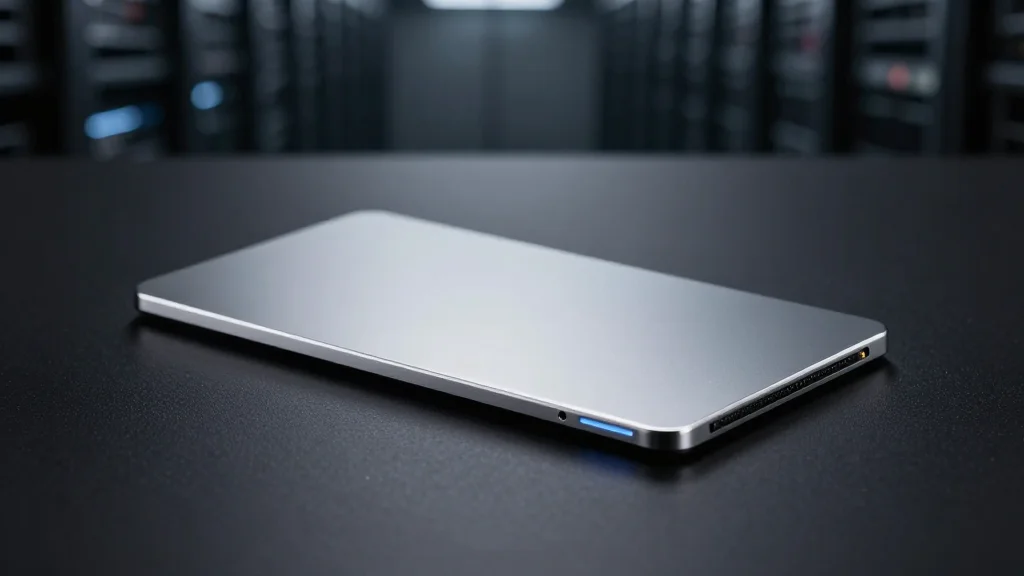
Micron Tops $700 B Market Cap After Debut of 245TB SSD

Companies Mentioned
Why It Matters
Micron’s breach of the $700 billion market cap marks a watershed for the memory‑chip segment, confirming that AI‑driven demand can elevate a pure‑play memory maker into the mega‑cap tier traditionally occupied by diversified tech giants. The launch of a 245TB SSD not only expands the technical envelope of storage but also offers data‑center operators a tool to mitigate power‑budget limits, a growing concern as AI workloads scale. If Micron can sustain supply, it could lock in high‑margin contracts and reshape the economics of AI infrastructure, pressuring rivals to accelerate their own high‑capacity roadmaps. The development also has macro implications for equity markets. Large‑cap investors now have a new proxy for AI exposure that is less correlated with GPU manufacturers, diversifying risk and potentially attracting capital to the broader semiconductor ecosystem. The market’s reaction suggests that investors are pricing in a longer‑term shift where memory capacity, not just compute power, becomes a decisive factor in AI competitiveness.
Key Takeaways
- •Micron’s shares rose 11% on Tuesday, pushing market cap above $700 billion.
- •The company began shipping a 245‑terabyte SSD, the highest‑capacity drive available.
- •Jeremy Werner said the drive offers a “critical new lever” for data‑center cost and power efficiency.
- •CEO Sanjay Mehrotra warned customers receive only 50%‑66% of memory needs due to supply shortages.
- •Micron joins the top‑10 U.S. tech mega‑caps, highlighting AI‑driven memory demand.
Pulse Analysis
Micron’s ascent into the $700 billion club underscores a structural pivot in the semiconductor hierarchy: memory is no longer a peripheral component but a core enabler of AI. Historically, memory makers have been viewed as commodity players, vulnerable to price cycles and inventory swings. The current environment, however, is defined by an AI‑induced demand shock that has turned capacity into a strategic asset. Micron’s 245TB SSD is a tangible manifestation of that shift, offering a solution to the power‑density constraints that have limited data‑center expansion. By delivering more storage per rack with lower energy draw, Micron can command premium pricing and lock in longer‑term contracts, potentially smoothing the volatility that has plagued its earnings.
From a market‑structure perspective, the rally also reflects a re‑pricing of risk. Investors are rewarding firms that can demonstrate tangible progress in scaling memory supply, a narrative that has been dominated by Nvidia’s GPU hype. Micron’s ability to translate AI hype into real‑world product shipments differentiates it from peers that remain focused on incremental process improvements. The next inflection point will be whether Micron can sustain its supply ramp without eroding margins—a balance that will be scrutinized in its upcoming earnings.
Looking ahead, the competitive response will be critical. Samsung and SK Hynix have the scale to quickly match or exceed Micron’s capacity breakthroughs, and any lag in Micron’s production could cede market share. Moreover, the broader AI ecosystem may shift toward alternative memory technologies, such as emerging non‑volatile memory or photonic interconnects, which could dilute the long‑term relevance of NAND‑based SSDs. For now, Micron’s market‑cap milestone signals that the memory market is a front‑line battleground in the AI arms race, and its performance will be a bellwether for the next wave of AI‑driven capital allocation.
Micron tops $700 B market cap after debut of 245TB SSD
Comments
Want to join the conversation?
Loading comments...