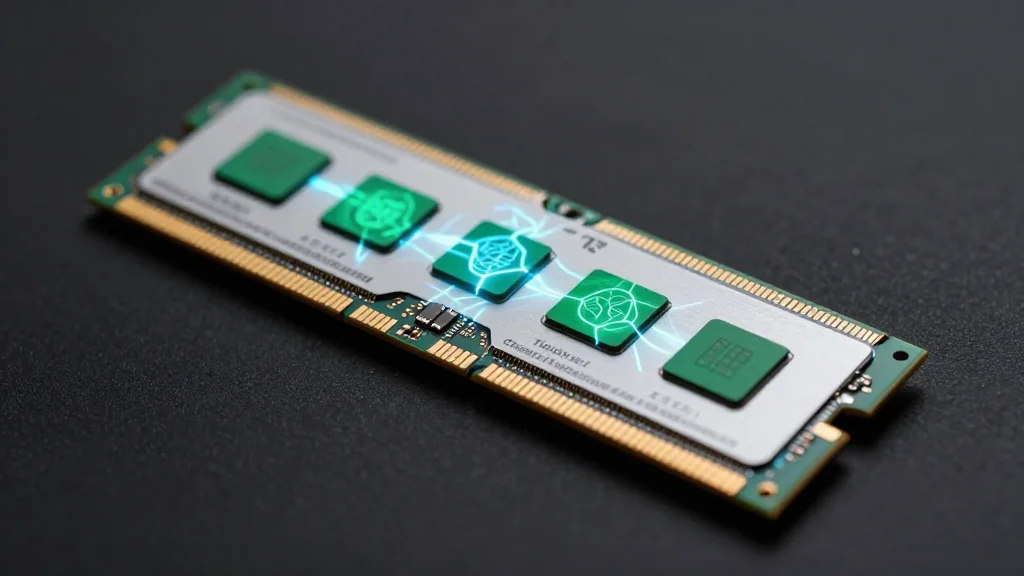
Samsung Hits $1 Trillion Market Cap as AI‑driven Profit Surges Eightfold

Companies Mentioned

Why It Matters
Samsung’s ascent to a $1 trillion market cap signals that AI‑related semiconductor demand can rapidly reshape the valuation landscape for non‑U.S. mega‑caps. The company’s profit surge highlights how high‑bandwidth memory, a niche yet critical component for generative AI models, has become a new earnings driver for hardware manufacturers. This development also underscores the strategic importance of diversifying chip supply chains, as Apple’s exploratory talks with Samsung and Intel suggest a potential shift away from a single‑source model dominated by TSMC. For investors, Samsung’s performance offers a template for how Asian technology firms can capture AI tailwinds, prompting a re‑evaluation of portfolio allocations toward companies with advanced memory capabilities. The broader market impact may also accelerate capital spending on AI‑optimized fabs, influencing global semiconductor capacity planning and potentially reshaping competitive dynamics among Samsung, SK Hynix, and TSMC.
Key Takeaways
- •Samsung’s market cap surpassed $1 trillion on May 5, 2026, after shares rose >15%.
- •Q1 operating profit jumped eightfold to 57.2 trillion won (≈$44 bn), beating full‑year 2025 profit.
- •Revenue hit a record 133.9 trillion won (≈$103 bn), driven by AI memory demand.
- •Samsung began mass production of HBM4 chips, targeting Nvidia’s Vera Rubin AI architecture.
- •Apple is in exploratory talks with Samsung and Intel to source chips for future devices.
Pulse Analysis
Samsung’s breakthrough illustrates a broader market inflection where AI compute needs are redefining semiconductor economics. Historically, memory manufacturers have operated on thin margins, but the AI boom has turned DRAM and NAND into high‑margin, scarcity‑driven assets. Samsung’s ability to convert this scarcity into an eightfold profit surge demonstrates operational agility and strategic foresight in scaling HBM4 ahead of rivals. This advantage, however, is not guaranteed to last; SK Hynix is rapidly expanding its own HBM portfolio, and any acceleration in fab construction could dilute the current supply‑tightness.
From a valuation perspective, the trillion‑dollar milestone may be more symbolic than sustainable if memory shortages ease faster than anticipated. The company’s next earnings report will be a litmus test for whether the AI‑driven premium can be maintained without relying on extraordinary demand spikes. Moreover, the potential Apple‑Samsung partnership could open a new revenue stream beyond traditional memory sales, but it also introduces execution risk tied to Apple’s design cycles and geopolitical considerations.
Investors should monitor three key variables: (1) the pace of new memory capacity coming online across the industry, (2) the outcome of Apple’s supplier diversification, and (3) regulatory developments affecting semiconductor subsidies in South Korea and the United States. If Samsung can navigate these variables successfully, it may not only retain its AI‑memory leadership but also set a precedent for other Asian mega‑caps to leverage AI demand for valuation upgrades.
Samsung hits $1 trillion market cap as AI‑driven profit surges eightfold
Comments
Want to join the conversation?
Loading comments...