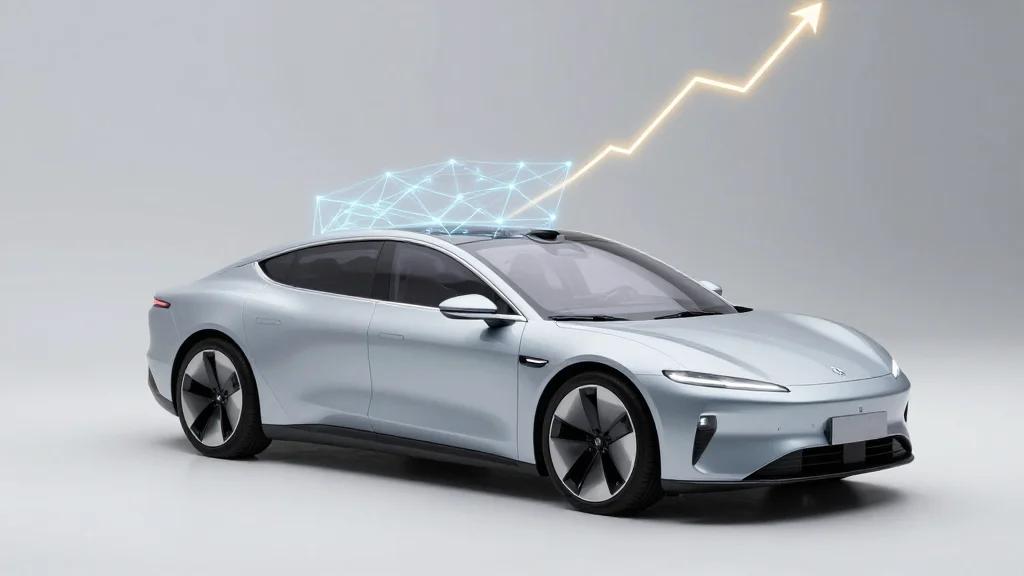
Tesla EPS: Rising CAPEX Fuels AI Pivot
Why It Matters
Higher CAPEX signals Tesla’s aggressive pivot to AI and robotics, reshaping its revenue mix beyond traditional EV sales. The reaffirmed 2026 product timelines and attractive valuation could re‑ignite investor confidence in a company poised for a new growth phase.
Key Takeaways
- •Tesla confirms 2026 volume production for Cybercab, Semi, Megapack 3
- •Adjusted EPS $0.41 beats $0.34 forecast, second consecutive beat
- •CAPEX guidance rises to $25 billion, up $5 billion from January
- •EV business remains stable, funding heavy AI and robotics investments
- •Shares briefly reclaimed 200‑day moving average, valuation appears attractive
Pulse Analysis
Tesla’s latest earnings beat underscores a rare blend of operational resilience and strategic ambition. While the legacy electric‑vehicle segment shows modest growth, the $0.41 adjusted EPS demonstrates that the company can still generate profit amid a capital‑intensive transformation. Analysts view the beat as validation that Tesla’s cash flow remains sufficient to fund its burgeoning AI initiatives, a crucial factor as the firm seeks to monetize autonomous driving, robotics, and other physical‑AI applications.
The $25 billion capital‑expenditure outlook, a $5 billion uplift from the January forecast, signals a decisive shift toward AI‑first investments. By confirming 2026 volume production for the Cybercab, Tesla Semi, and Megapack 3, the company signals that its long‑delayed timelines are finally solidifying, reducing execution risk for investors. This spending surge is expected to depress short‑term cash flow, but the payoff—advanced AI chips, factory automation, and next‑generation vehicle platforms—won’t materialize until at least 2027, positioning Tesla to capture a larger share of the emerging autonomous‑mobility market.
Market reaction has been mixed: after‑hours trading saw the stock dip, yet the share price briefly reclaimed the 200‑day moving average, a technical bullish signal. With a price‑to‑sales multiple of 14.42×—comparable to early‑2010s levels—the valuation appears attractive for a firm with diversified growth levers, including a $2 billion stake in SpaceX and potential IPO proceeds. Investors weighing the near‑term cash burn against long‑term AI upside may find Tesla’s risk‑reward profile compelling, especially as the company stands at the nexus of automotive, robotics, and space‑technology ecosystems.
Tesla EPS: Rising CAPEX Fuels AI Pivot
Comments
Want to join the conversation?
Loading comments...