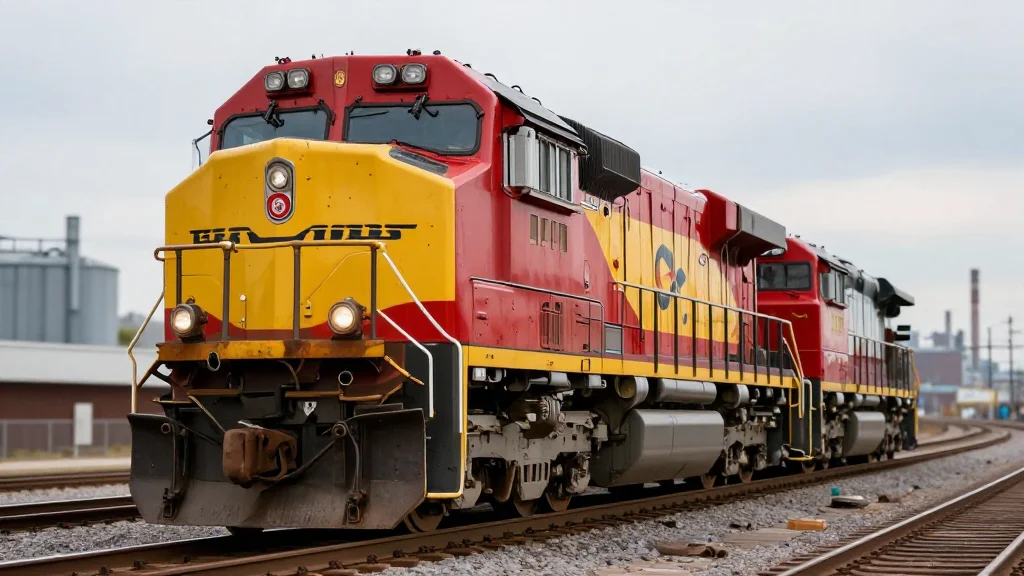
Union Pacific Posts Record Q1 Revenue of $6.22 B, Beats Forecasts

Companies Mentioned
Why It Matters
Union Pacific’s earnings beat reinforces the importance of large‑cap transportation stocks as a bellwether for the broader industrial economy. Strong freight demand, especially in bulk commodities, suggests that supply‑chain bottlenecks are easing and that manufacturers are maintaining production levels. The improved operating ratio and higher free cash flow also highlight the company’s ability to generate shareholder‑friendly cash, a key metric for index funds that prioritize cash‑rich mega‑caps. The results also have implications for portfolio construction. As one of the highest‑weighted constituents in the S&P 500, Union Pacific’s performance can sway index returns, influencing passive fund flows. A sustained earnings beat could attract additional institutional capital, while any slowdown in the premium segment may prompt analysts to reassess growth assumptions for the transportation sector as a whole.
Key Takeaways
- •Operating revenue reached $6.22 billion, up 3% YoY.
- •Diluted EPS of $2.87 beat consensus estimates.
- •Operating ratio improved to 60.5%, adjusted ratio 59.9%.
- •Free cash flow rose 35% to $631 million.
- •Company reaffirmed $3.3 billion 2026 capital plan and mid‑single‑digit EPS growth outlook.
Pulse Analysis
Union Pacific’s Q1 results underscore a broader shift in the transportation mega‑cap space toward efficiency‑driven profitability. The company’s ability to lift freight revenue across bulk, industrial, and grain segments while trimming the premium segment reflects a nuanced demand landscape: commodity flows remain robust, but automotive and intermodal volumes are still sensitive to macro‑economic cycles. This divergence suggests that rail operators with diversified freight mixes are better positioned to weather sector‑specific downturns.
From a valuation perspective, the earnings beat narrows the discount to historical earnings multiples that some investors have applied to UNP amid concerns over fuel price volatility. The improved operating ratio, now approaching the high‑50s target range, signals that cost‑control initiatives—such as precision‑scheduled railroading and technology upgrades—are beginning to pay off. If Union Pacific can sustain these efficiency gains, the stock may see a re‑rating by growth‑oriented analysts who have historically penalized the company for slower earnings momentum.
Looking forward, the key risk lies in the premium segment’s lagging performance. A prolonged dip could erode margin expansion, especially if automotive production remains subdued. However, the company’s sizable capital plan provides a lever to invest in higher‑margin intermodal services and network enhancements that could offset the premium shortfall. Investors should monitor the Q2 earnings release for signs that the operating ratio continues to improve and that cash generation remains strong enough to support dividend growth or share buybacks, both of which would reinforce Union Pacific’s status as a cornerstone large‑cap holding in index‑based portfolios.
Union Pacific Posts Record Q1 Revenue of $6.22 B, Beats Forecasts
Comments
Want to join the conversation?
Loading comments...