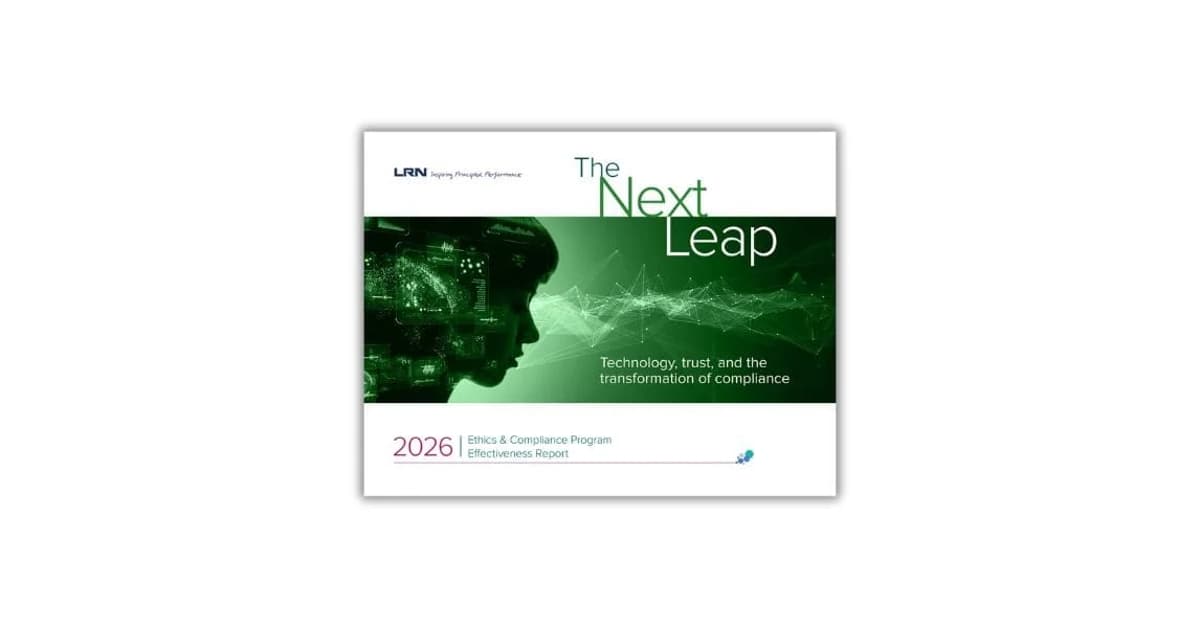
2026 E&C Program Effectiveness Report
•February 11, 2026
0
Why It Matters
The report highlights that without robust AI governance and consistent middle‑manager engagement, compliance programs risk becoming superficial, undermining regulatory resilience and competitive advantage.
Key Takeaways
- •High-impact programs integrate culture, analytics, outpacing peers.
- •AI adoption rising, but governance and measurement lag.
- •Ethical culture improves modestly; leadership modeling crucial.
- •Middle managers fail to consistently reinforce values.
- •Technology integration uneven across organizations.
Pulse Analysis
The 2026 LRN report arrives at a crossroads where rapid technological evolution collides with heightened regulatory scrutiny. Organizations are eager to embed artificial intelligence and advanced analytics into ethics and compliance (E&C) workflows, yet the data shows a disconnect between tool adoption and strategic oversight. This gap creates a false sense of progress, where superficial tech deployment masks deeper deficiencies in risk assessment, data integrity, and policy enforcement. For compliance officers, understanding the nuance between digitization and genuine transformation is now a strategic imperative.
A striking insight from the study is the widening performance gap between high‑impact programs and the broader field. Companies that fuse cultural initiatives with real‑time analytics achieve measurable risk reduction and stronger stakeholder trust. Conversely, firms that merely layer technology onto legacy processes see limited impact, especially in AI governance where oversight mechanisms lag behind deployment rates. The report also underscores persistent leadership trust gaps; senior executives may champion ethical values, but without middle‑manager reinforcement, those values rarely permeate daily operations, diluting program credibility.
To close the divide, leaders must prioritize integrated governance frameworks that align AI tools with clear accountability metrics and embed ethical considerations into every decision node. Investing in middle‑management training, establishing cross‑functional oversight committees, and leveraging continuous data‑driven feedback loops can turn technology from a compliance checkbox into a catalyst for cultural change. As regulatory expectations tighten globally, organizations that successfully blend technology, leadership commitment, and operational reinforcement will not only mitigate risk but also unlock sustainable competitive advantage.
2026 E&C Program Effectiveness Report
0
Comments
Want to join the conversation?
Loading comments...