Claude for Legal and Access to Justice: The Good, the Bad, and the Unknown
Key Takeaways
- •Anthropic launched 20+ legal connectors for Claude AI
- •Integrations cover Word, Outlook, Excel, PowerPoint, boosting workflow
- •Early adopters report faster drafting but raise confidentiality concerns
- •Impact on access to justice remains uncertain pending regulation
Pulse Analysis
Anthropic’s latest push for Claude marks a watershed moment in legal AI, moving beyond generic language models to a suite of purpose‑built tools. By embedding 20+ connectors and practice‑area plugins directly into the Microsoft Office ecosystem, Claude can draft contracts, summarize case law, and generate discovery requests without leaving familiar applications. This tight integration lowers the technical barrier for firms of all sizes, promising productivity gains that could compress billable hours and democratize sophisticated analytics that were once the domain of elite boutique practices.
The upside, however, is tempered by practical and ethical concerns. Lawyers report that Claude can produce first drafts in minutes, freeing senior staff for higher‑value work, yet the model’s propensity to hallucinate or embed subtle biases remains a liability. Confidentiality is another flashpoint; feeding privileged client data into a cloud‑based AI raises questions about data residency, encryption standards, and compliance with rules of professional conduct. Firms are therefore adopting a hybrid approach—using Claude for preliminary work while instituting rigorous human review checkpoints to mitigate risk.
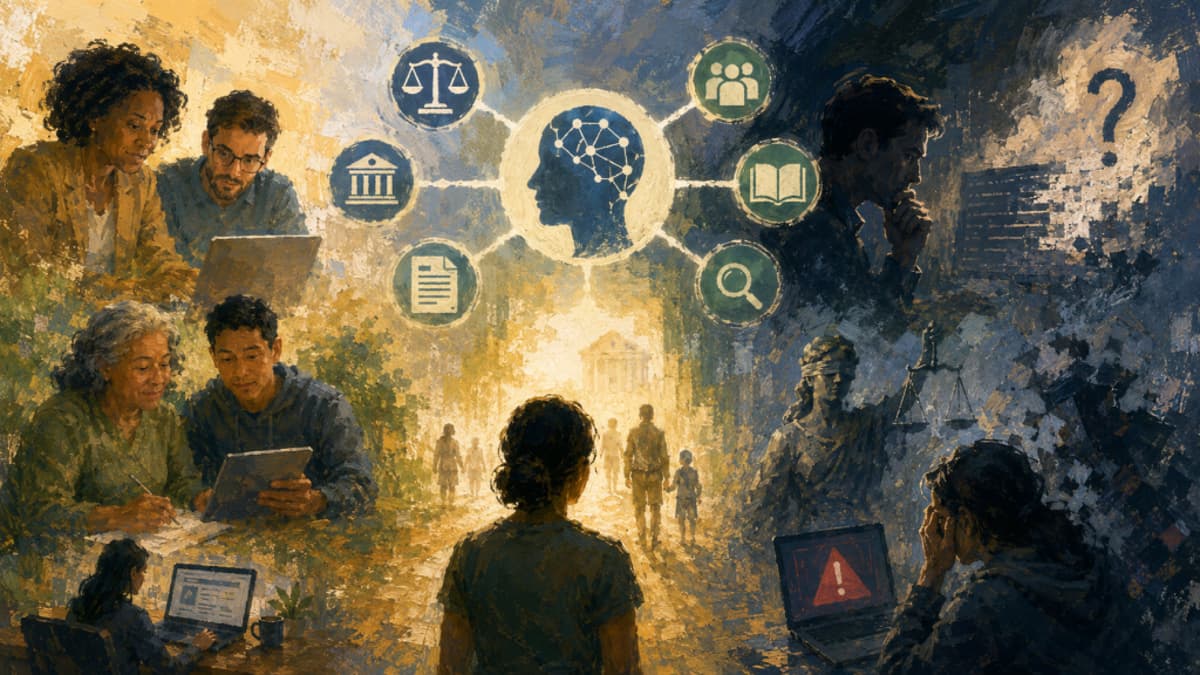
For the broader access‑to‑justice landscape, Claude’s capabilities could be a double‑edged sword. Pro bono organizations and legal aid clinics may leverage the technology to scale advice and document preparation for underserved populations, potentially narrowing the justice gap. Conversely, without clear regulatory guidance, the proliferation of AI‑generated legal content could exacerbate misinformation or create new inequities if only well‑funded entities can afford premium integrations. Stakeholders—from bar associations to policymakers—must grapple with these unknowns to ensure that AI augments, rather than undermines, the fairness and integrity of the legal system.
Claude for Legal and Access to Justice: The Good, the Bad, and the Unknown
Comments
Want to join the conversation?