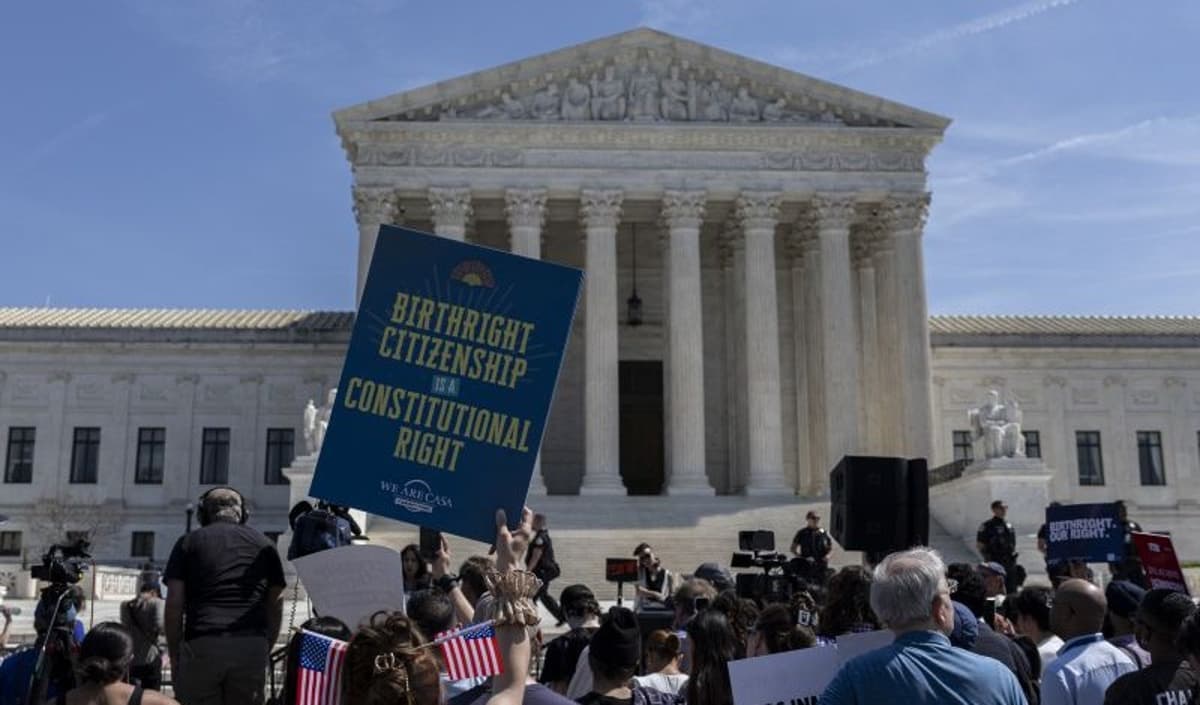
History, Ambassadors, and Birthright Citizenship
Key Takeaways
- •Trump's EO treats children of undocumented parents as non‑citizens.
- •Supreme Court will decide if 14th Amendment guarantees birthright citizenship.
- •Scholars debate 'subject to jurisdiction' meaning, citing historical exceptions.
- •Originalist justices may rely on 19th‑century legal texts.
- •Outcome could affect citizenship status of millions of future U.S. births.
Pulse Analysis
The United States has long embraced birthright citizenship, a principle anchored in the 14th Amendment’s guarantee that anyone born on U.S. soil “subject to the jurisdiction thereof” is a citizen. President Trump’s 2025 executive order upended this tradition by declaring children of undocumented immigrants non‑citizens, igniting a legal battle that now sits before the Supreme Court in Trump v. Barbara. The case not only tests the text of the Constitution but also forces the nation to confront the practical implications of redefining who qualifies for citizenship at birth.
Legal scholars are divided along originalist and more expansive interpretive lines. Professor Michael Ramsey traces the jurisdiction phrase to 19th‑century maritime law, suggesting it excludes only those not fully under U.S. authority, such as foreign diplomats and certain Native American tribes. Yale’s Keith Whittington emphasizes the historical continuity of birthright citizenship, arguing the amendment merely reaffirmed an existing rule. Conversely, University of Richmond’s Kurt Lash argues the clause requires allegiance to the United States, proposing a narrow reading that could justify the executive order. These competing frameworks highlight how historical context and judicial philosophy will shape the Court’s analysis.
The stakes extend far beyond academic debate. A ruling that narrows birthright citizenship could affect millions of children born to undocumented families, altering their legal status, access to education, and future pathways to naturalization. It would also signal a broader shift in immigration enforcement, potentially prompting states to adopt stricter residency policies. Conversely, upholding the traditional interpretation would preserve the status quo, reinforcing the United States’ reputation as a nation of immigrants and maintaining a clear, uniform citizenship rule for all births on American soil.
History, Ambassadors, and Birthright Citizenship
Comments
Want to join the conversation?