Ninth Circuit Allows TOS Amendment by Email–Ireland-Gordy V. Tile
•March 5, 2026
0
Key Takeaways
- •Email notice deemed sufficient inquiry notice for TOS changes
- •Court applied three‑factor test: context, disclosure, missing notices
- •Arbitration clause now enforceable despite earlier unconscionability
- •Decision may expand email‑based TOS amendment enforcement
- •Critics note court ignored TOS amendment procedures and email deliverability
Summary
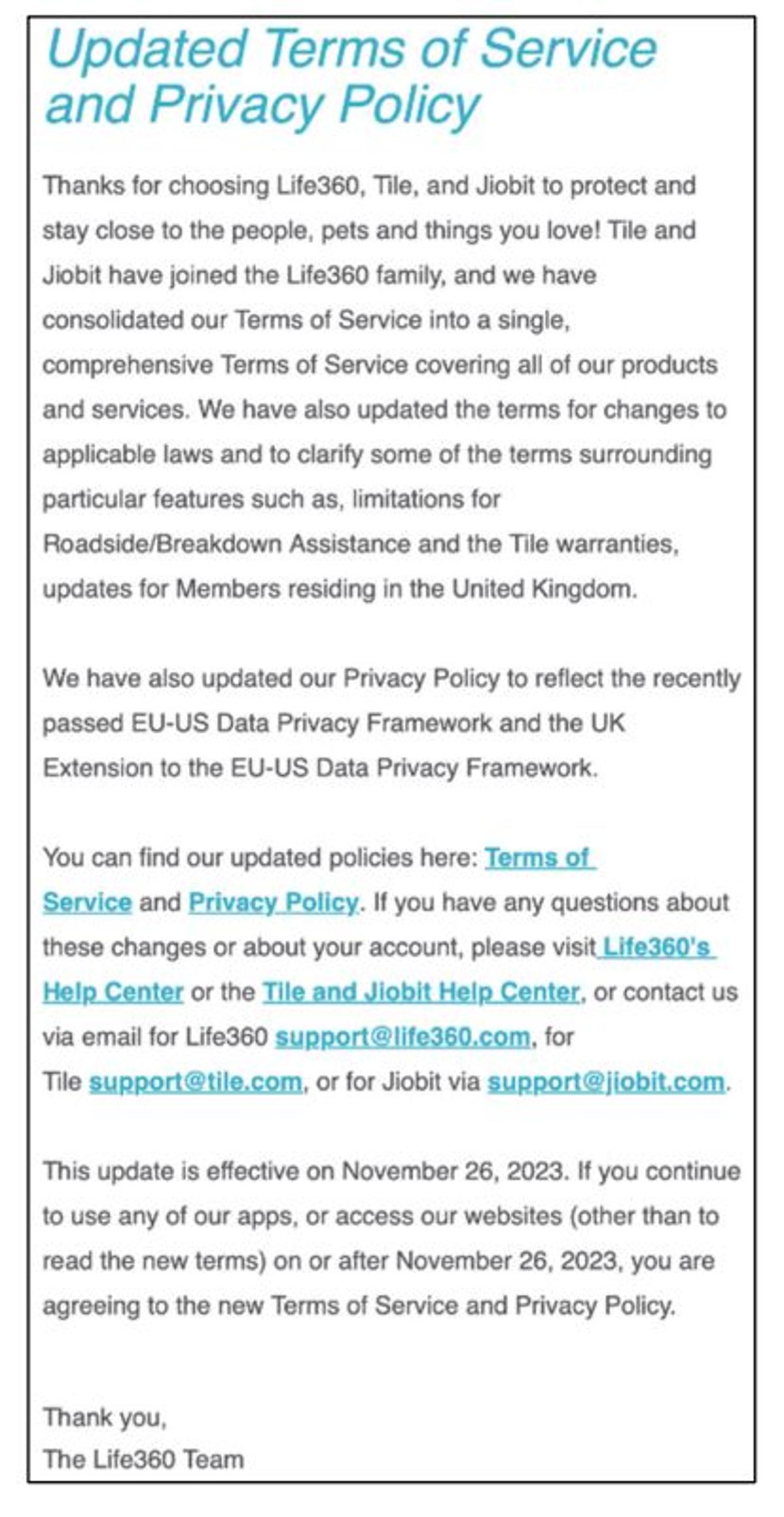
The Ninth Circuit ruled that Tile’s October 2023 email update provided sufficient inquiry notice to bind users to the revised Terms of Service, including a new arbitration clause. The court applied a three‑factor test—transaction context, reasonable disclosure, and lack of alternative notices—to determine notice adequacy. Both plaintiffs, who continued using Tile after the notice date, were deemed to have manifested assent, sending the dispute to arbitration. The opinion marks a rare acknowledgment that mass‑email notifications can effectuate TOS amendments despite prior unconscionability findings.
Pulse Analysis
The Ninth Circuit’s recent opinion in Ireland‑Gordy v. Tile underscores a pivotal shift in how courts assess electronic notice for contract amendments. By treating a standard update email as adequate inquiry notice, the panel sidestepped a detailed analysis of Tile’s own amendment provisions, instead relying on a three‑factor framework that weighs the transaction context, the conspicuousness of the disclosure, and the absence of supplemental notices. This approach effectively validates the arbitration clause embedded in Tile’s updated Terms, sending the class‑action claims to arbitration despite earlier findings of partial unconscionability.
Legal scholars see the decision as both innovative and contentious. The multi‑factor test for inquiry notice is novel within the Ninth Circuit, diverging from prior reliance on explicit consent mechanisms such as click‑wrap agreements. By emphasizing reasonable notice over strict procedural compliance, the court opens the door for other service providers to rely on mass‑email updates to enforce contractual changes, even when users may miss or ignore the communication. Critics argue that the opinion glosses over essential questions about email deliverability, spam filtering, and the contractual language governing amendments, leaving a murky precedent for future disputes.
For businesses, the ruling signals a need to revisit notification strategies. While an eye‑catching email may now satisfy legal standards, companies should consider layered approaches—push notifications, in‑app banners, or mandatory acceptance screens—to mitigate the risk of challenges based on insufficient notice. Consumers, meanwhile, may face a higher likelihood of being bound by undisclosed terms, especially arbitration clauses that limit litigation avenues. As courts grapple with the balance between efficient digital contracting and consumer protection, the Tile case will likely be cited in forthcoming debates over the legitimacy of electronic contract modifications.
Comments
Want to join the conversation?