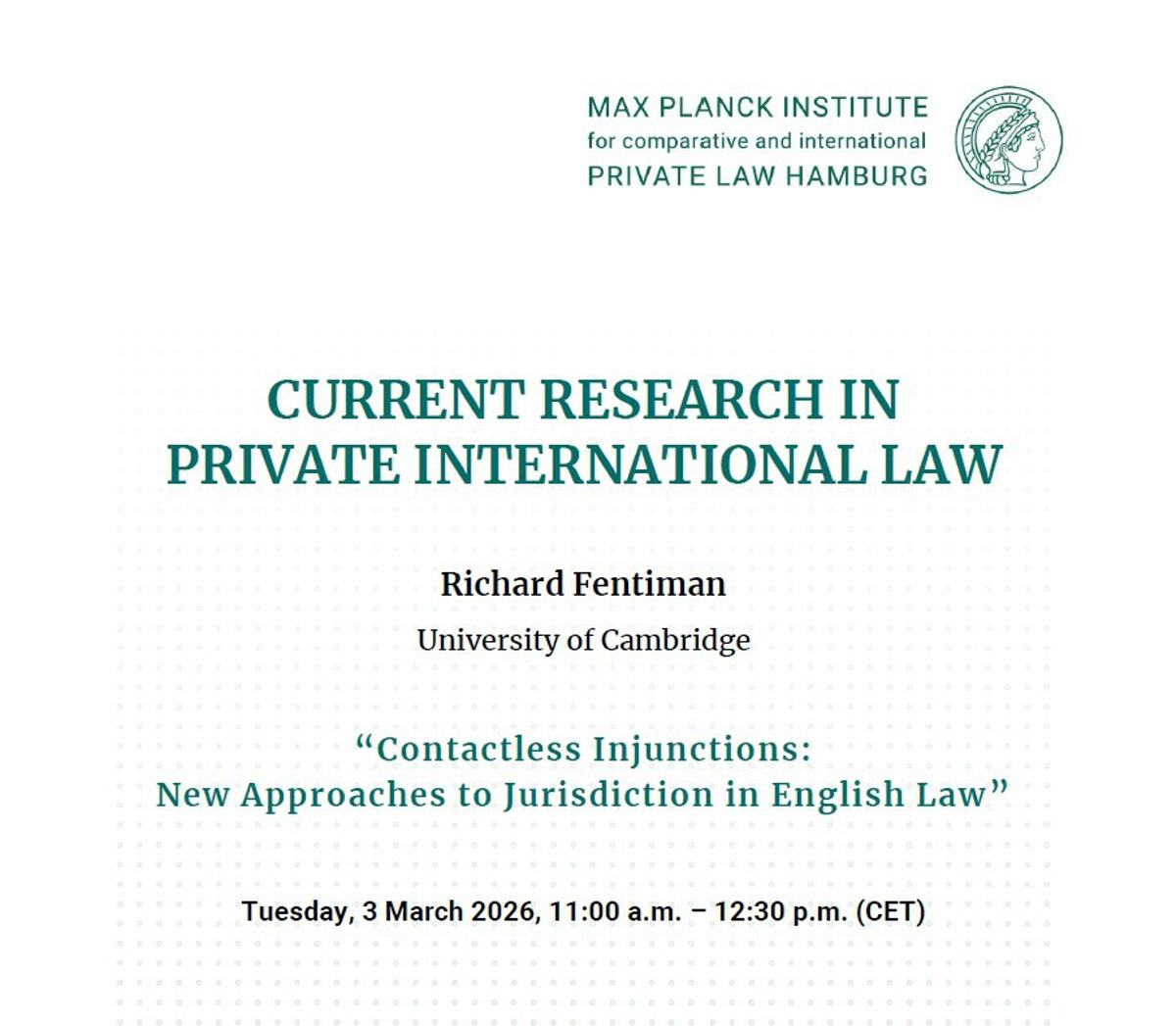
Richard Fentiman’s Lecture on Contactless Injunctions in English Law
Key Takeaways
- •English courts now grant extraterritorial injunctions without material link
- •Contactless injunctions target foreign assets, bypassing traditional jurisdiction
- •Raises questions on private international law jurisdiction standards
- •Could influence global commercial litigation strategies and asset protection
- •Max Planck workshop offers platform for scholarly debate on reforms
Pulse Analysis
The emergence of contactless injunctions marks a notable departure from the historic requirement that English courts possess a substantive connection to the dispute before exercising jurisdiction. By authorising orders that freeze assets abroad or pre‑empt foreign proceedings without any material link to England, the judiciary is redefining the balance between sovereign authority and cross‑border fairness. This shift reflects a broader trend in common‑law jurisdictions to prioritize the protection of domestic claimants over strict territorial constraints, raising fresh doctrinal questions about the limits of equitable remedies.
For international commercial litigators, the new approach introduces both opportunities and risks. Companies with assets in multiple jurisdictions may now face pre‑emptive restraints that could disrupt cash flow, supply chains, or strategic transactions. Conversely, claimants gain a powerful tool to secure enforcement before foreign courts can intervene, potentially accelerating settlements. The practice also pressures rival jurisdictions to reconsider their own interim relief mechanisms, fostering a competitive environment where the most assertive legal frameworks attract cross‑border business.
Scholars and policymakers are watching closely, as the Max Planck Institute’s workshop provides a forum to dissect the doctrinal underpinnings and policy implications of these injunctions. Future reforms may seek to calibrate the balance between preventing forum shopping and safeguarding due process for foreign defendants. Practitioners will need to adapt risk‑assessment models, incorporate jurisdictional foresight into contract drafting, and monitor evolving case law to advise clients effectively in an increasingly fluid international legal landscape.
Richard Fentiman’s Lecture on Contactless Injunctions in English Law
Comments
Want to join the conversation?