Key Takeaways
- •Court rules IEEPA lacks authority to impose tariffs
- •Decision applies major questions doctrine to executive trade actions
- •Potential $200 billion refunds for importers remain unresolved
- •Ruling reinforces congressional control over tariff legislation
- •Dissent warns of uncertainty for existing trade agreements
Summary
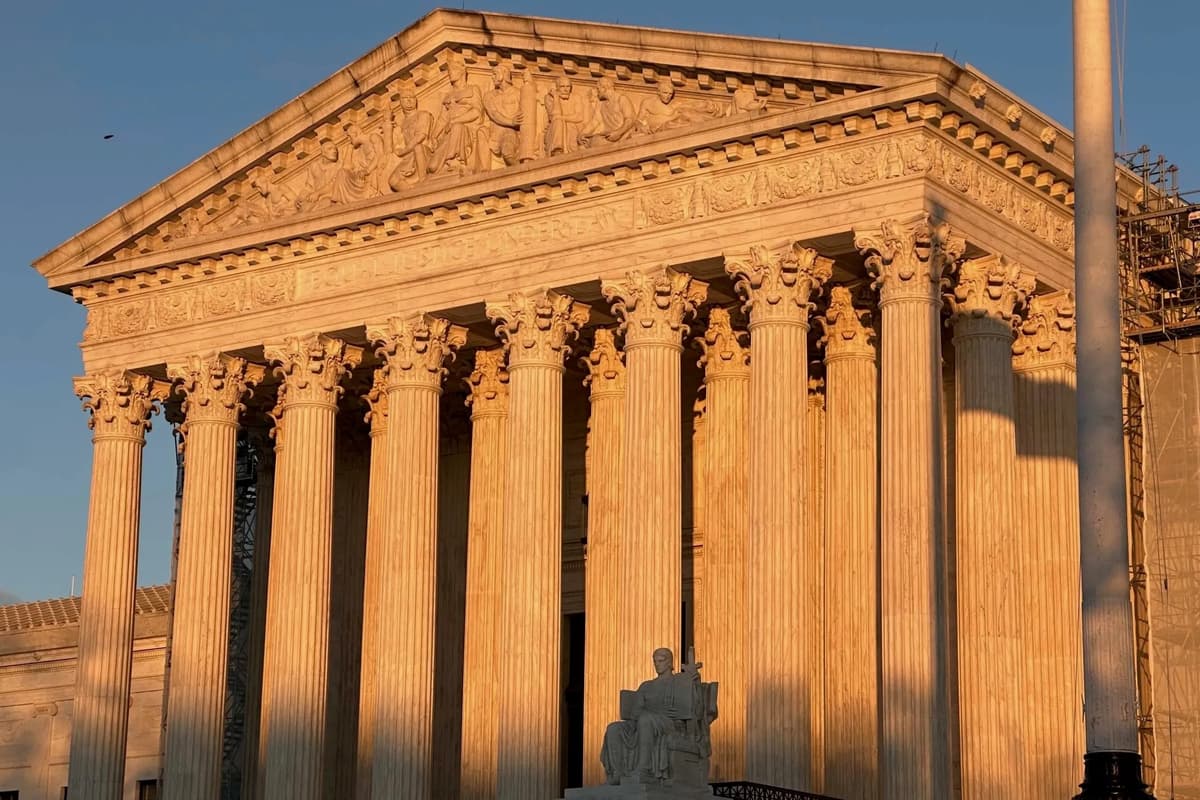
The Supreme Court, in a 6‑3 ruling, invalidated the sweeping tariffs imposed by former President Donald Trump, finding that the International Emergency Economic Powers Act (IEEPA) does not grant the president authority to levy tariffs. The justices applied the major questions doctrine, emphasizing that Congress must clearly delegate such significant economic powers. The Court stopped short of addressing whether the federal government must refund importers, who could face over $200 billion in charges. A dissent warned that the decision could create uncertainty for existing trade agreements.
Pulse Analysis
The Supreme Court's decision marks a pivotal moment in the balance of power between the executive branch and Congress over trade policy. By interpreting IEEPA narrowly and invoking the major questions doctrine, the justices reaffirmed that only clear congressional language can authorize sweeping economic measures such as tariffs. This approach underscores the judiciary's role in checking expansive claims of presidential authority, especially when statutes are ambiguous. Legal scholars view the ruling as a template for future challenges to executive actions that rely on emergency powers.
Economically, the judgment reverberates through a market that could see up to $200 billion in potential refunds to importers who paid the contested duties. Companies that incorporated the tariffs into pricing strategies now face the prospect of retroactive adjustments, while consumers may experience price volatility as firms reassess cost structures. Moreover, the decision injects uncertainty into trade agreements that were negotiated under the assumption of stable tariff regimes, prompting multinational corporations to revisit risk assessments and supply‑chain contracts.
Looking ahead, the administration will likely pivot to other statutory authorities, such as the Trade Expansion Act or Section 301 investigations, to pursue tariff objectives. However, the Court’s insistence on explicit congressional delegation sets a higher bar for any future executive attempts to bypass legislative oversight. Businesses should monitor forthcoming legislative proposals and potential litigation, as the precedent established here will shape the legal landscape for trade‑related executive actions for years to come.
Comments
Want to join the conversation?