US Solar Firm’s Lawyer Sentenced to 11-Year Prison Term for Ponzi Scheme Role | Reuters
•March 11, 2026
0
Key Takeaways
- •Ari Lauer received 11-year prison term for DC Solar fraud.
- •Scheme involved roughly $912 million in fabricated solar investments.
- •Lauer pleaded guilty to 23 counts, including bank fraud.
- •Largest fraud case ever in Eastern District of California.
- •Attorney's failure underscores governance risks in renewable startups.
Summary
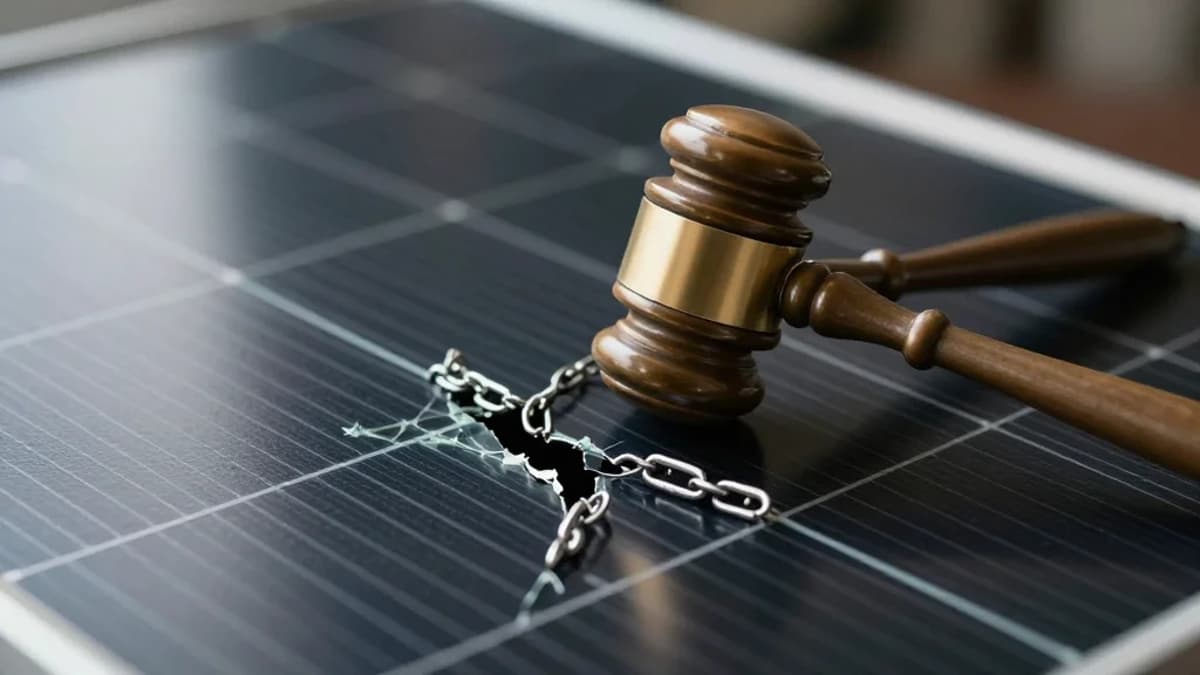
Federal judge in Sacramento sentenced Ari Lauer, the outside counsel for DC Solar, to more than 11 years in prison for his role in a $912 million Ponzi scheme. Lauer pleaded guilty to 23 counts, including bank and wire fraud, just days before his trial. Prosecutors called the case the largest criminal fraud in the Eastern District of California. The sentencing underscores the legal fallout from the collapsed solar financing operation.
Pulse Analysis
The federal sentencing of Ari Lauer, a 61‑year‑old attorney, marks a decisive moment in the fallout from DC Solar’s $912 million fraud. Lauer, who served as outside counsel for the California‑based solar installer, entered guilty pleas to 23 counts ranging from bank fraud to wire fraud, and was handed a sentence of more than 11 years behind bars. Prosecutors described the case as the largest criminal fraud ever prosecuted in the Eastern District of California, underscoring the scale of the deception that lured investors with promises of high‑yield solar contracts. The judgment also serves as a deterrent for other firms seeking to capitalize on the booming renewable‑energy boom through deceptive practices.
Lauer’s conviction sends a stark warning to legal professionals operating in fast‑growing clean‑energy markets. As the sole attorney involved, he was expected to spot irregularities and advise the board, yet the court found he enabled the scheme by overlooking red flags. The episode highlights the heightened compliance burden on startups that rely on complex financing structures, prompting investors to demand stronger oversight, independent audits, and clearer fiduciary responsibilities from counsel and executives alike. Law firms are now revising engagement letters to include explicit fraud‑risk clauses and mandatory reporting triggers.
The broader market impact extends beyond DC Solar, as the renewable sector grapples with reputational risk and tighter regulatory scrutiny. Investors now scrutinize the provenance of solar project financing, and regulators are likely to intensify enforcement actions against fraudulent schemes that exploit green‑energy incentives. While the sentencing does not directly affect DC Solar’s remaining assets, it reinforces the message that misconduct in the sustainability space will be met with severe penalties, shaping future due‑diligence standards across the industry. Stakeholders anticipate that insurers will adjust coverage terms for green projects, reflecting the heightened risk profile.
Comments
Want to join the conversation?